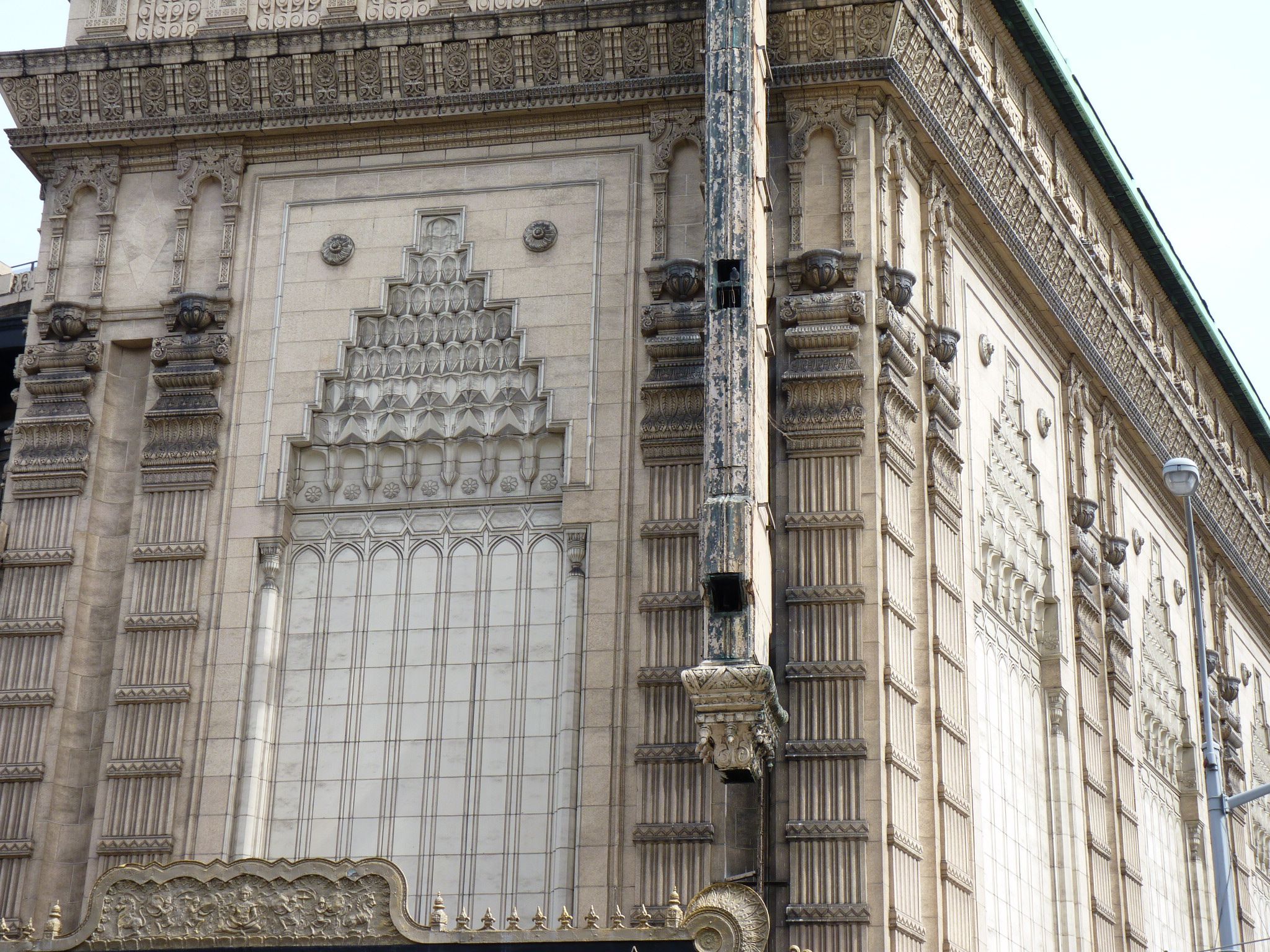
Movie theatre at 175th St. and Broadway in Manhattan. Photo by Julie Seyler.
April 4, 2013 10:00 am
Movie theatre at 175th St. and Broadway in Manhattan. Photo by Julie Seyler.
The Mayfair Theater in Asbury Park in its prime. Photo courtesy of noweverthen.com
When I started going to the movies as a “grown-up,” i.e. without parent chaperones, my friends and I went to Saturday matinees at the St. James, Mayfair or Lyric Theatre in Asbury Park. Big old carnival-like palladiums that were demolished – now it seems pointlessly. Probably the riots that sparked in Asbury Park in the summer of 1970 initiated the slow demise of each of the grand old palaces. One of our parents would drop us off and we would walk through the lobby into a cavernous auditorium, where a heavy, red-velvet curtain protected the mile-wide screen. The curtain would part, and the movie, sans any commercials, would begin. The first time I saw “Gone with the Wind” (falling crazy for Clark Gable), was at one of those baroque confections, so different from the modern seven-screen cineplex.
So, it was with great glee when, a couple of weeks ago, I found myself on the corner of Broadway and 175th Street staring up at a magnificent, albeit broken-looking, movie palace. I could only guess it was built in the late ’20s, early ’30s. It was a city-block wide; the original box office in place. And the entire facade of the building was decorated with intricately carved fretwork. What looked to be a Hindu god graced the marquee high above the street. It is now the United Church, but I closed my eyes and imagined what glory it must have commanded in its day, especially since its architectural splendors still dazzle.

Fretwork.
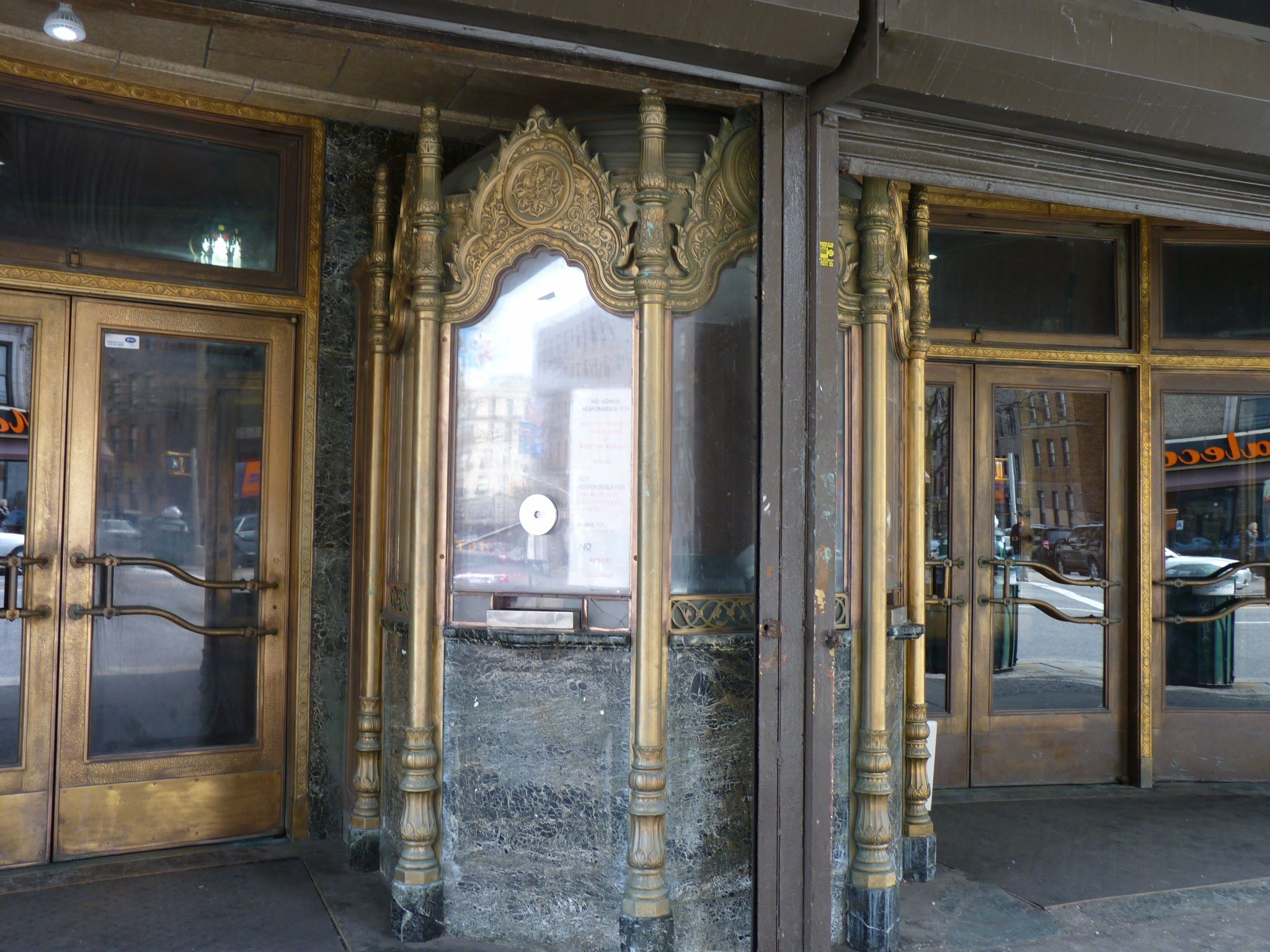
Ticket booth at the old Loew’s on 175th Street and Broadway.
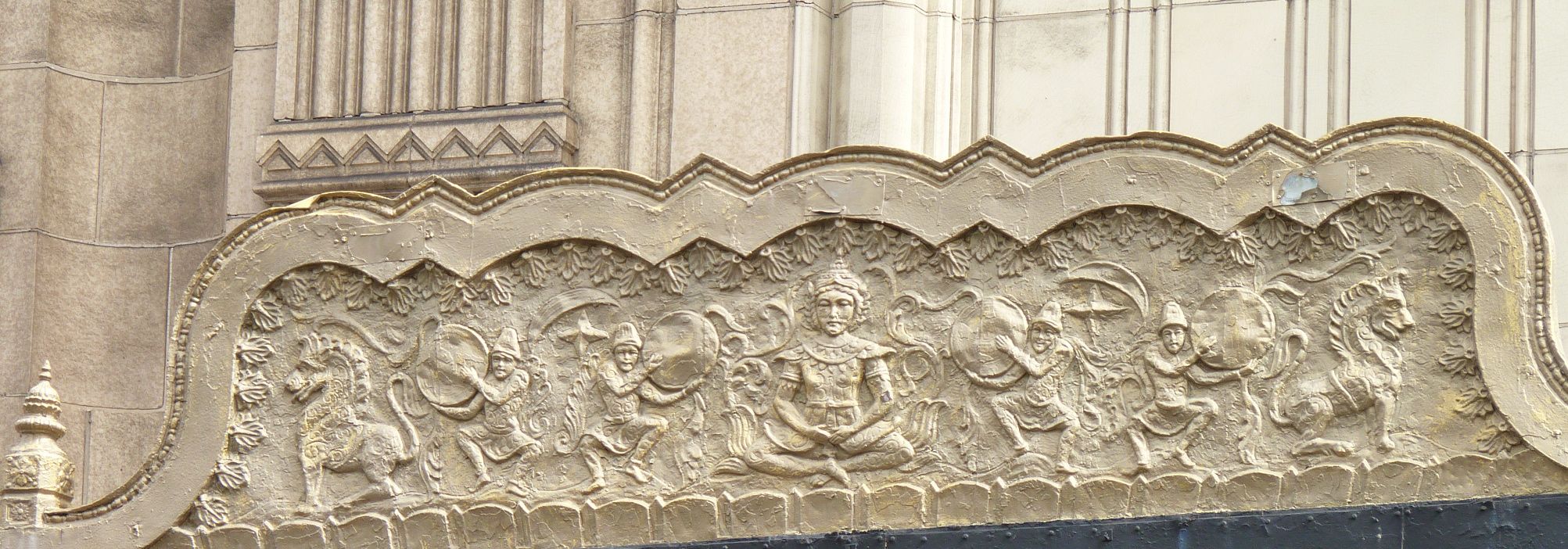
The marquee.
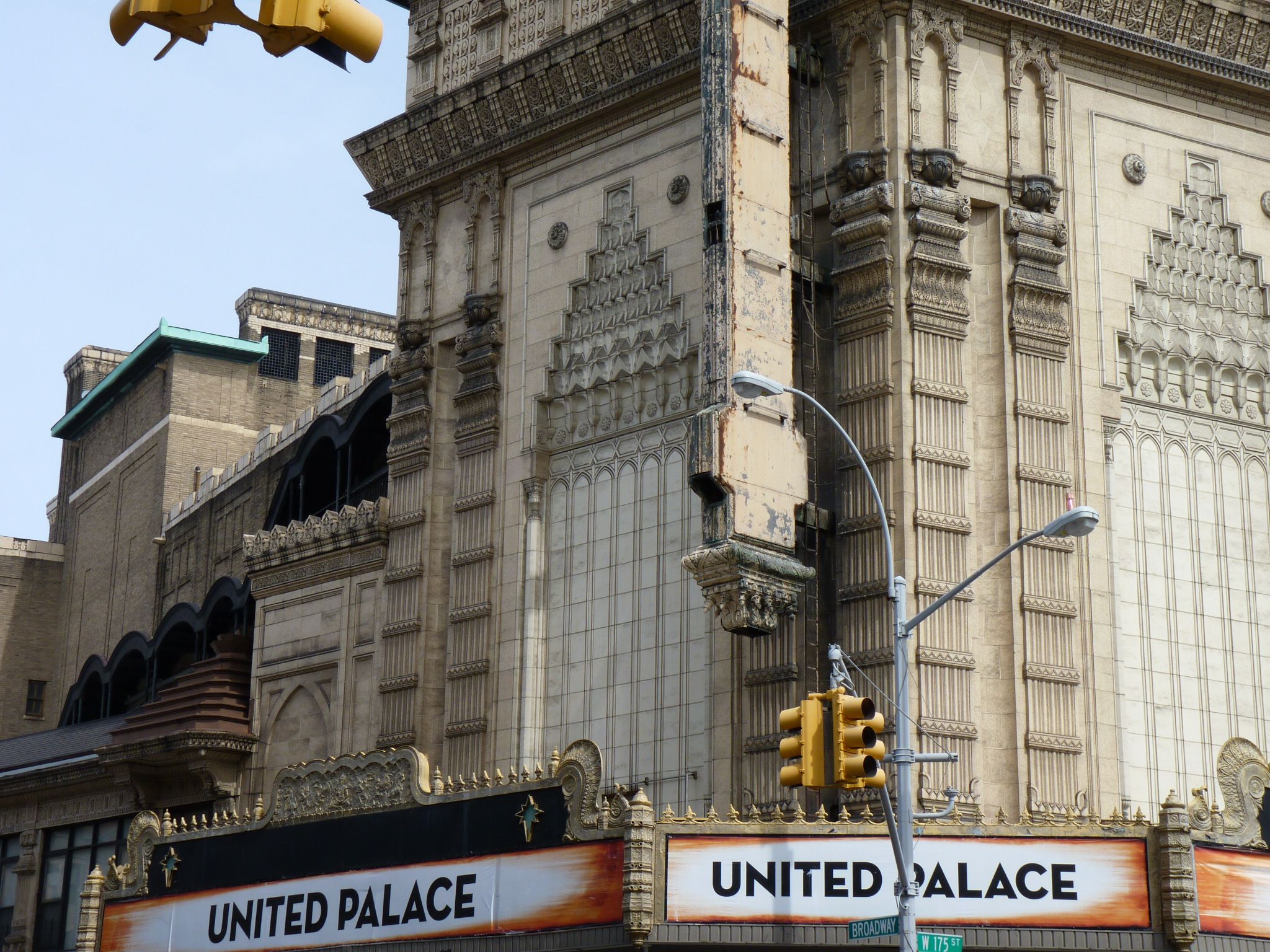
The marquee today.
In the back of the theatre, facing Wadsworth Avenue, a balcony had been built on the second floor. I couldn’t figure out if the stars used that space to come out and bow to their fans, or if it was just a place to cool off on a hot summer night because the theatre was built way before air conditioning.
When I got home I called my mother, because she grew up in that neighborhood. I thought she might know what the mystery building was before it became a church. “Of course. It’s the Old Loew’s Palace where I saw ‘Gone with the Wind’ when it first came out in 1939. I was 11.”
Posted by WS50
Categories: Art, Confessional
Tags: Asbury Park, Cineplex Entertainment, Gone With the Wind, Lowes Palace, Lyric Theater, Mayfair Theater, Movie theater, St. James Theater
Mobile Site | Full Site
Get a free blog at WordPress.com Theme: WordPress Mobile Edition by Alex King.
great photos. The apple doesn’t fall far from the tree does it!
By steve on April 4, 2013 at 11:44 am
It wasn t called a “palace” when I was a young girl–just Loew s 173rd St. All the Loews’ theaters throughout the city were magnificent “palaces” harkening to unbridled love for Hollywood . The Greta Garbos, John Barrymores, Robert Taylors, Lana Turners, Tyrone Powers……. were the kings and queens we bowed to.
My recollection of seeing GWTW involved the loyalty and love I felt for my parents. It was a special treat to go to the movies with Mom and Pop. But it required a specific seating arrangement. Mom was near-sighted, and had to sit in the front of the theater. Papa was far sighted and he sat in the rear of the theater. And to show that I loved them equally, I sat with Mom for the first half and with Papa, the second half.
By anita615 on April 4, 2013 at 5:12 pm
[…] from school and turning on Channel 9 at 4:00 to watch the Million Dollar Movie? When I was in my Clark Gable movie phase, I was able to catch a myriad of his pre and post “Gone with the Wind […]
By How Freud (and Montgomery Clift) Unlocked My Psyche | The Write Side of 50 on May 16, 2013 at 10:35 am