
Autumn’s coming – show your true colors.

21 Saturday Sep 2013
Posted in Art
Autumn’s coming – show your true colors.
20 Friday Sep 2013

Everything’s connected. Mobile by Julie Seyler.
Does being generous in spirit lead to a better sex life?
Does being kind really beget kindness?
Is it true that if we give good karma to the universe, we will be showered with good karma back?
Do positive thoughts contribute to good health?
Does it matter if any of this is true, if the simple thought of it reduces stress to less?
Is it better to feel the pain as deep and hard as you can so you can thereafter embrace pure joy?
If you walk through a storm is there a rainbow at the end?
Can a good telepathic connection get you what you want when you need it most?
Who knows. But answering, “Yes!,” to all of those questions can’t hurt a thing.
19 Thursday Sep 2013
Posted in Confessional
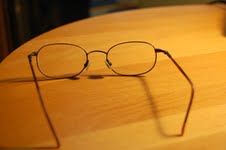
Birding Blind. Photo by Margo D. Beller.
Despite the best effort of advertisers to make those of us of a certain age think we can stay young forever, there are times when you know you aren’t.
Mine came after a Saturday eye exam.
I was a nearsighted child who became farsighted as an adult. Sometimes, I am a little too farsighted – worrying about things to come that I can’t control.
Like the other body parts, eyes age. The last time I saw the eye doctor, she decided to put drops in to dilate my pupils for a closer exam.
My eyes turned out to be fine, but coming into the sunshine, I was literally struck blind. My husband had to run to the car for my sunglasses. It was after this that we went birdwatching, as usual, on a sunny Saturday.
I can’t think of a more essential body part when birding than the eyes. I fear the day that I can’t see well when I want to do something I enjoy.
I have met older birders who sit in one place and wait for the birds to come to them because they can’t walk very well. There may be blind or deaf birders out there, but I’ve never seen one.
It is hard enough to find a small bird in a fully leafedout tree with binoculars and two good eyes. It is a major challenge to find them when everything you see is surrounded by a corona of fuzziness.
I’ve come to depend on my ears and knowledge of bird shape and habit more than my eyes, but on this day I discovered not being able to focus on details such as color and streaking put me at a severe disadvantage. At one point, MH and I were in a bird blind, a structure designed to allow you to look out without scaring anything. We were looking down from a small height to see if anything was skulking around in the brush.
Bird blind, I thought. I’m a birder blind. Great.
Going from sunny meadow (where I had to use my sunglasses) to shady woods, I could barely see at all. When something big flew from a tree at our approach, I had to depend on MH for a description. Based on that, and the vague shape I saw, I could only guess we had spooked a roosting owl – likely a barred owl. Barred owls can be active during the day. What I saw was too big to be a screech owl and not as white as a barn owl. It might also have been a great horned owl. I’ll never know.
Meanwhile, MH had managed to turn his foot the wrong way and had to walk slowly. So he was limping. And I was nearly blind. Not exactly what the commercials portray of the golden years.
The fuzziness is gone now, and I can identify the familiar birds in my backyard just fine. I am having a harder time ignoring my farsightedness.
18 Wednesday Sep 2013
Posted in Confessional, Men
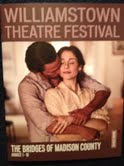 Robert and Francesca.
Those who follow my writings on this blog may have picked up on a theme that runs through most of my favorite books, movies and even songs. I am a lover of stories about people who meet, enjoy a brief time together, and then are forced to move on. It’s been described as ships-passing-in-the-night fiction.
A famous example of this is, “Casablanca.” Rick and Ilsa enjoy a short time together in both Paris and Casablanca, but they part at the airport. And as Rick reminds Ilsa, “We’ll always have Paris.” And that’s the way I like to refer to these stories. To me they are the, “We’ll-always-have(fill in the blank)” stories.
Over the years there have been many, “We’ll-always-have” stories. One of my favorites is, “Two For The Seesaw,” a 1962 film starring Shirley MacLaine and Robert Mitchum that was made into the musical, “Seesaw” a decade later. Stories like this are naturals for musicalization because the emotional level is so high.
A more recent example of this is, “The Bridges of Madison County.” A few weeks ago I saw a performance of the pre-Broadway run of, “Bridges” up in Williamstown, Massachusetts. Most people known the story from the 1995 Clint Eastwood/Meryl Streep movie, but the original Robert James Waller novel is much more heartfelt. Anyway, the musical version of the story comes to Broadway early next year and I heartily recommend it for those who love a good, “We’ll-always-have” story.
For the uninitiated, “The Bridges of Madison County” revolves around Francesca Johnson, an Italian-born war bride who marries an American GI right after World War II, and accompanies him home to his farm in Winterset, Iowa. She raises a family and has a good life there. But then one day a photographer named Robert Kincaid arrives at her farmhouse. He’s lost and looking for directions to a nearby covered bridge. Francesca is home alone because her family is at the Illinois State Fair. What transpires over the next week is one of the great love stories of all time. But just as Rick knew that the right thing to do was to let Ilsa go off with her husband, Robert and Francesca painfully reach the same decision. Francesca must stay with her husband and children. And so, even though they would never see each other again, they’d always have that week in Winterset.
But perhaps you have experienced your own “We’ll-always-have” story in real life. It doesn’t have to have been the love of your life. Maybe you had a dear childhood friend, and the family had to move away. I can imagine a tearful farewell scene where you promised to write, and never forget one another.
I had that kind of tearful farewell 40 years ago at a train station in Baden-Oos, Germany (now known as Baden-Baden). My cousin Bob and I were in college, and backpacking through Europe. We met two sisters in Budapest, and hit it off so well that we couldn’t bear to say goodbye when our planned time there ended. So they invited us to visit them at their home on a Canadian military base in Germany. We had such a tremendous time in those few days that there were tears at the train station when we had to get back to Munich for our flight home. We promised to write, and I did diligently for several years. Eventually life moved on for all of us. But even though Bob and I are not likely to ever meet Rosemary or Linda again, we’ll always have Germany.
While there is something sad about two friends or lovers separated by life, what makes these stories bittersweet rather than tragedies is the fact that they did enjoy a brief time of true happiness. In fact their happiness is so strong that it’s enough to last a lifetime. So whether it’s Robert and Francesca, Rick and Ilsa or even you and that special someone you had to leave behind, there is much truth in the words of Tennyson: “‘Tis better to have loved and lost than never to have loved at all.”
And we’ll always have our memories.
17 Tuesday Sep 2013
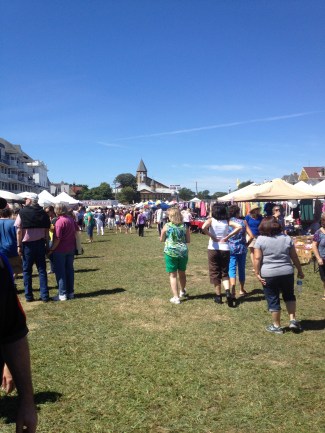
Photos by Bob Smith.
On a recent Saturday, we went to the annual Ocean Grove Flea Market, which is probably the largest such event held in Monmouth County each year. Over 300 vendors set up tables and booths on Ocean Pathway, the wide swath of grass between the Great Auditorium and Ocean Avenue. (The Great Auditorium itself is pretty impressive. Built in 1894, and featuring seating for over 6,000, it’s supposedly the largest enclosed auditorium in New Jersey.)
But this day wasn’t about the auditorium, it was about the flea market – hundreds of sellers displaying every trinket, doodad, and outright junk you could imagine. It was sunny and pleasantly warm – the kind of September day that sweeps away all memory of the humid August doldrums, and makes you wish summer would never end. At the center of the event were food vendors selling sausage and pepper sandwiches, meats of dubious provenance barbecued on a stick, Italian ice, hot dogs, lemonade, calzones, and candied popcorn. The smoke and steam rising from the clustered food trucks combined to give the day a carnival air.
We promptly fell into a predictable pattern: the women in our group lingered at the jewelry and clothing tables, while my brother Jim and I poked through adjacent displays of moldy books and magazines, glassware, tools, candles, board games, and toys.
There were impressive collections of refurbished antique furniture, carefully glued together and polished for resale. There were concrete lawn ornaments shaped like geese, frogs, turtles, lizards, and grimacing gremlins. There were carved wooden replicas of African tribal masks, brightly painted gourds, and an array of meat cleavers in varying sizes for all your cleaving needs.

There was a phalanx of shiny metallic figures, each resembling a dentist, lawyer, accountant, surgeon, or other professional – all inexplicably fashioned from cheese graters. There were Ghostbusters action figures, and an anonymous pile of molded green soldiers, twelve for a dollar. There were handmade doilies, baseball cards, bayonets, and real World War II army helmets – both Allied and German (none with bullet holes). We picked them up, and marveled at their dull weight, and at how much more effective the German helmets seemed, with their sides extending down over the ears and neck in back like an angular ’60s flip hairdo.
We allowed one hawker to spot-test a cosmetic depilatory on one of the women. He buttered a wide piece of tape with the magic goo, laid it on her arm for two seconds, then peeled it off and proudly displayed the result: a hairy piece of tape. He assured us it was equally effective on mens’ ears, chests, noses, and sensitive parts of the female anatomy. We were duly impressed, but weren’t willing to lay out $35 for a gallon jug of the stuff, which based on that demonstration would appear to be a lifetime supply – at least for the mildly hirsute.
We were less impressed when that now-naked swatch of our companion’s arm developed an angry red chemical burn ten minutes later. But it was all in good fun. I bought a jar of local honey – guaranteed to guard against allergies, and at $8 a pound, to dispel the beekeepers’ aversion to poverty. My sister-in-law bought a portable (meaning it weighs less than six German WWII helmets), vintage Singer sewing machine that my brother declared would be perfect to keep the other sewing machines company in their closet at home. And for our 11 nieces, my wife Maria bought lovely, unique, hand-crafted Christmas gifts, the nature of which I’m not at liberty to disclose or it would spoil the surprise.
Here’s a hint: wide metal cuff bracelets with vintage costume jewelry earrings and pendants artistically arranged and glued on top. Shhhh. It’s a secret.
16 Monday Sep 2013
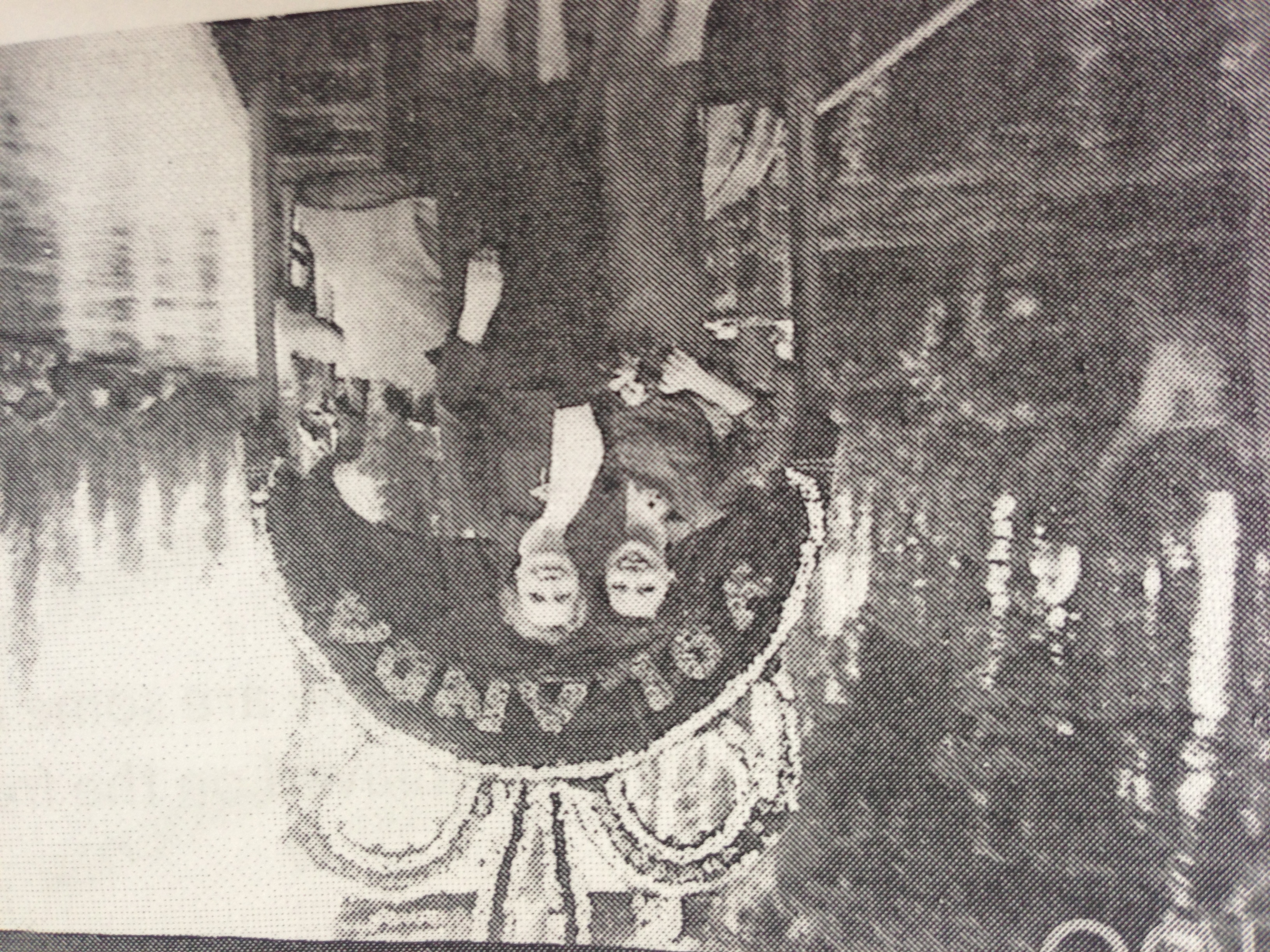
My mom (left), touring with her mom (right).
BY JULIE SEYLER
When I was a kid, my mother regaled me with her travel tales – how wearing a black shirt in Italy in 1950 almost landed her in jail; how she wore a custom-made taffeta slip into the Casino at Cannes (she didn’t have an appropriate dress with her), and subsequently met a man who took her on a motorcycle ride through Provence.
And how she went with her mother to Mexico because her father was busy working. I would pore through her photographs, and pepper her with questions about the places she’d been; the adventures she had.

I promised myself that one day I would travel.
When I went to college, I was lucky to spend six months studying in London. The school planned weekend trips, so I had a chance to visit Cambridge and Bath; Brighton and Oxford. And spring break meant a Eurail pass, and train rides through France, Germany and Italy. It’s buried in storage, but I still have the notebook I bought in Florence where I recorded all my experiences – the musings of a 20 year old on the night train from Naples back to Calais.
When I got my first real job, I saved my money for a three-week trip to Greece. I went with a girlfriend from grade school. We landed in Athens, and took the ferries to Paros, Naxos, Santorini and Mykonos. I stood on the floor of the Parthenon. There was nobody there.
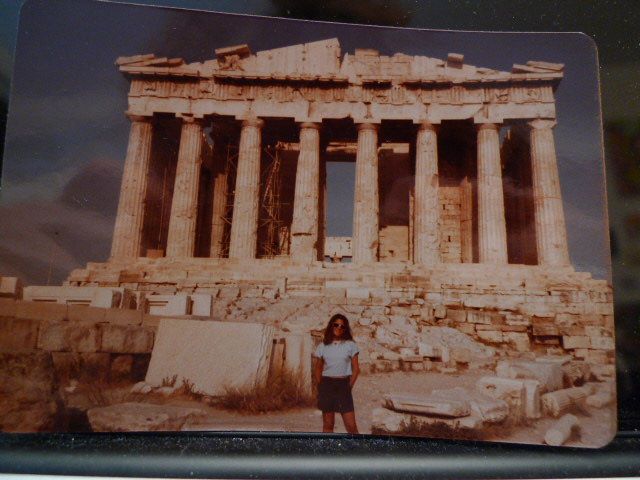
That’s me at the Parthenon in 1983.
When I returned in 2000, it was draped in barricade rope, and surrounded by tour buses from every country in the world. Or so it seemed. In 1983 the total cost for that three-week sojourn was $1500. And while everything was certainly cheaper, I was so young,that renting a room with a cot for $7 a night made complete sense.
Since that trip, I have picked a different place to visit every year – but one.
People have bucket lists of things, such as birds to see, or mountains to climb, and triathlons to compete in. But mine is about places I want to visit. Last year was a wash because of the hip (surgery, that is). Having to cancel a trip three weeks prior to departure because of bone-on-bone arthritis was truly a bummer. But reality trumped fantasy. My body would not behave through that pain. So I re-upped for 2013, and will be off to Kalimantan on the Indonesian side of Borneo to see the orangutans on September 25.
I do not know what it will be like. It sounds quite lovely, but I prefer going without any expectations. I want to walk off the plane and have those unknown smells, color and sights descend like a tidal wave.
14 Saturday Sep 2013

Photo by Julie Seyler.
The beauty of the photo is in the simplicity of the subject matter – a plate and a piece of pomegranate – and the complexity of the color. If we are so lucky, our lives are not fettered by the inane and simple, but enriched by the complexity of color in the people we know.
13 Friday Sep 2013
Posted in Confessional
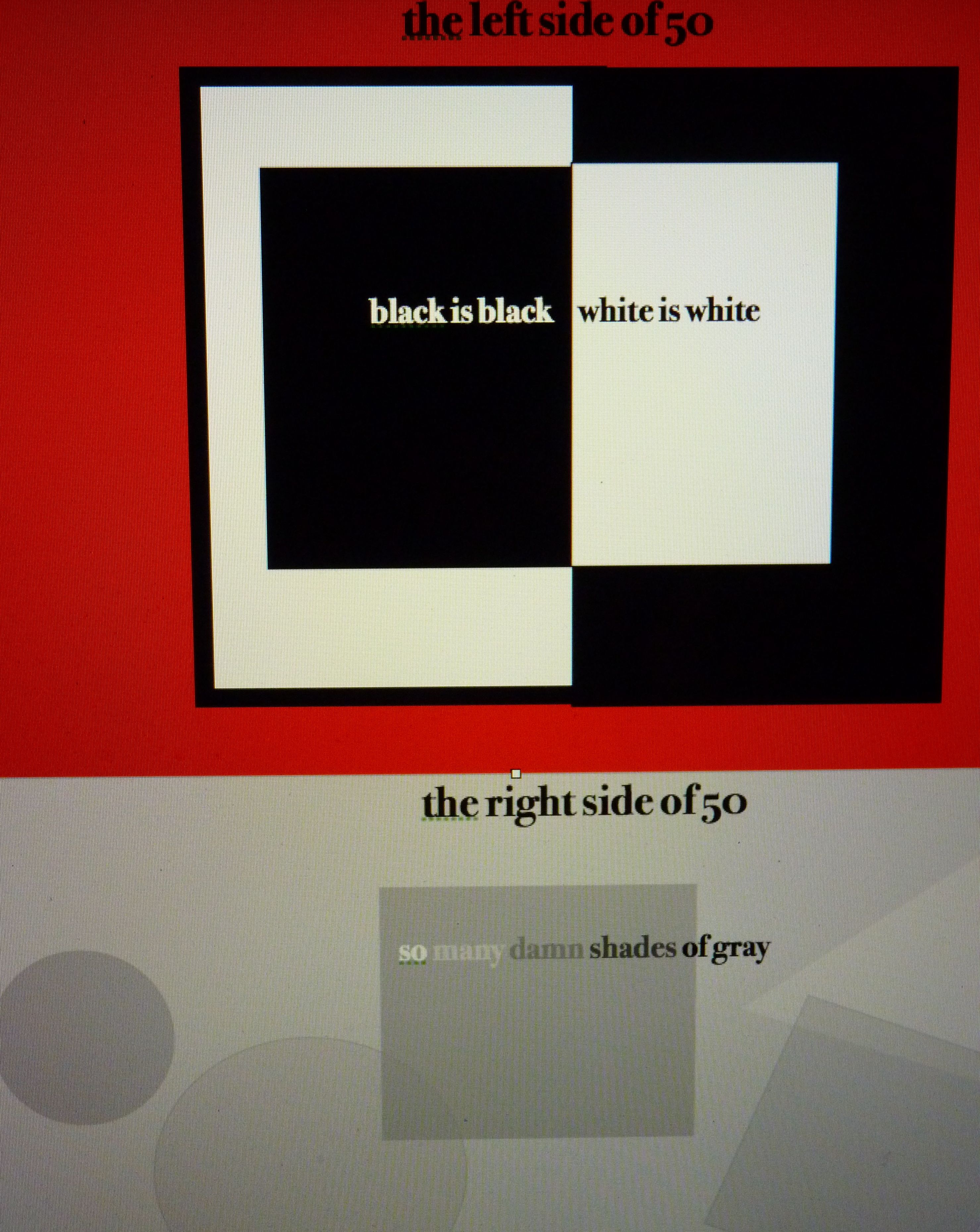
Since I crossed the river to reside on the right side of 50, I know never to say never. When I was “young,” there were so many things I would never do when I got “old.”
I was never ever going to be like my grandparents and old aunts and uncles that would spend endless hours dissecting their bodily ailments. These days, I find a sort of odd pleasure in regaling my friends with the nuances of big-toe arthritis and having them lobby back on knee issues.
I was never, ever, going to go to an early-bird dinner. These days. I definitely appreciate the quiet emptiness that envelops a restaurant before the mad rush that descends at the fashionable dining hour of 8:00 p.m. Not to mention the cash benefit of a discounted meal.
I was never, ever, going to be one of those couples that sat across from each other, silently focusing on the pleasure of food. My mate and I were going to be engaged in endless and fascinating animated conversation – dissecting the political and social dilemmas of the day. These days, there is only so much drama I can rehash at the end of the day. Silence can be so comfortable and comforting.
The advantage of youth is we know so much for sure, no one can tell us otherwise. The world is black, and it is white. But never gray. The brilliance of now is nuance. And the knowledge that saying “never,” never works.
12 Thursday Sep 2013
Posted in Men

“Left a good job in the city … la-di-da-dah.”
I wonder if Fogerty had to wait ten minutes for a bus, take a 45-minute ride – on a good day – and then walk uptown for about 15 minutes from the Port Authority Bus Terminal in Manhattan dodging hundreds of early-rising tourists looking for the line in the skyline in Times Square from W. 42nd Street to W. 48th Street and Avenue of the Americas?
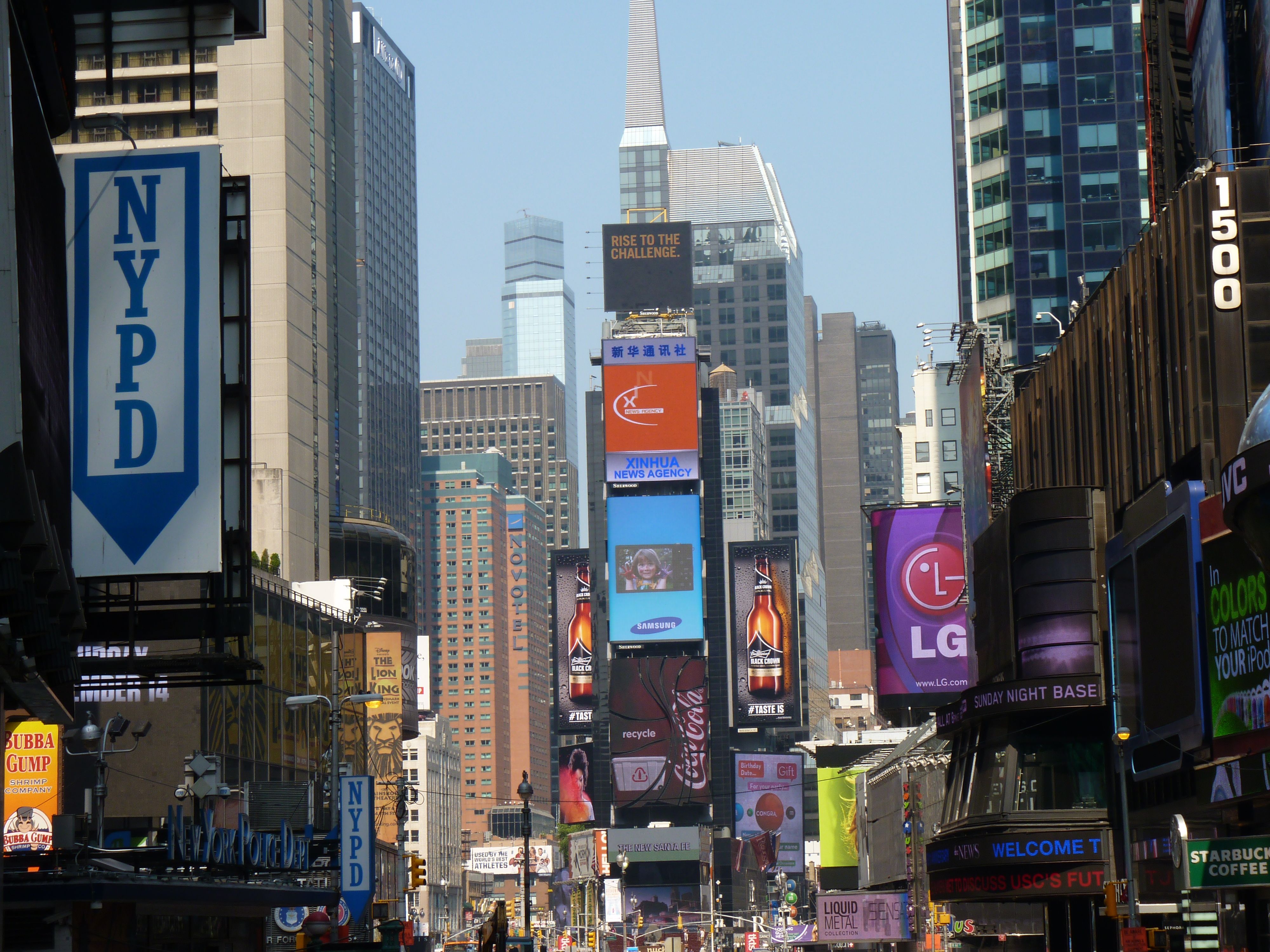
In that short trip, we leave the one-family homes in outer suburbia, pass the shuttered gas stations, the backside of one mall and the side view of another, cross a memorial bridge over the Passaic River, then tool along that river for a while until it’s time to ride parallel to the highway-under-forever-construction project to Ridge Road at the ridge of New Jersey’s great northern swamp. The swamp is a reminder of man’s tinkering with nature. It was once a vast forest until the settlers decided the trees there made fabulous furniture.
We roll along a half-cloverleaf past the former drive-in theater (now business center), and pass the new stadium that replaced the 40-year-old stadium, onto the highway, the past-due arena, and a blue-striped, boxy monstrosity that someday may become a mega-mall if it doesn’t sink into the muck and mire of earth and New Jersey politics. Think of it as a piece of art to awaken sleepy commuters slogging towards the wizard in that city back-lit by a glimmering sun. For home-bound commuters, it’s a symbol of leaving behind all that is ugly, and yet still stands, while everyone fills their pockets and the construction never gets done.
For a while, in the morning heading into the city, our buses have their own lanes. We’re actually driving in the left lane against oncoming traffic – yes, on the other side of the divided highway taking us all the way to the whirlwind helix leading into the tunnel named for our 16th president. Unless you’re riding shotgun, or have a habit of staring out the driver’s side window, the tight traffic pattern goes virtually unnoticed. But it serves to move us quickly (a relative term), to our destination to two of the ugliest, yet functional, buildings known as the Port Authority Bus Terminal.
Inside, the buses queue as far as the eye can see, stopping long enough to let out a few passengers, then pulling up, letting off a few more, repeat, rinse and spit. And so you see the eager beavers rush to be the first off the bus at the earliest stops in the queue. They can then scoot down the stairwells and arrive at the west side of the terminal. The longer you stay on the bus, the farther east you travel. In the “far east,” you’ll find the escalators that take you down a level, thus avoiding the crush of the stairwells.
Moving staircase or static steps, down a level, and you end up on the mezzanine level where you must decide how to leave the building. If you debark the bus early you may walk the city-block width of the terminal at the mezzanine level, or the first floor level. Or you may simply exit the nearby west doors to your destination. Each path has its own rewards and retailers.
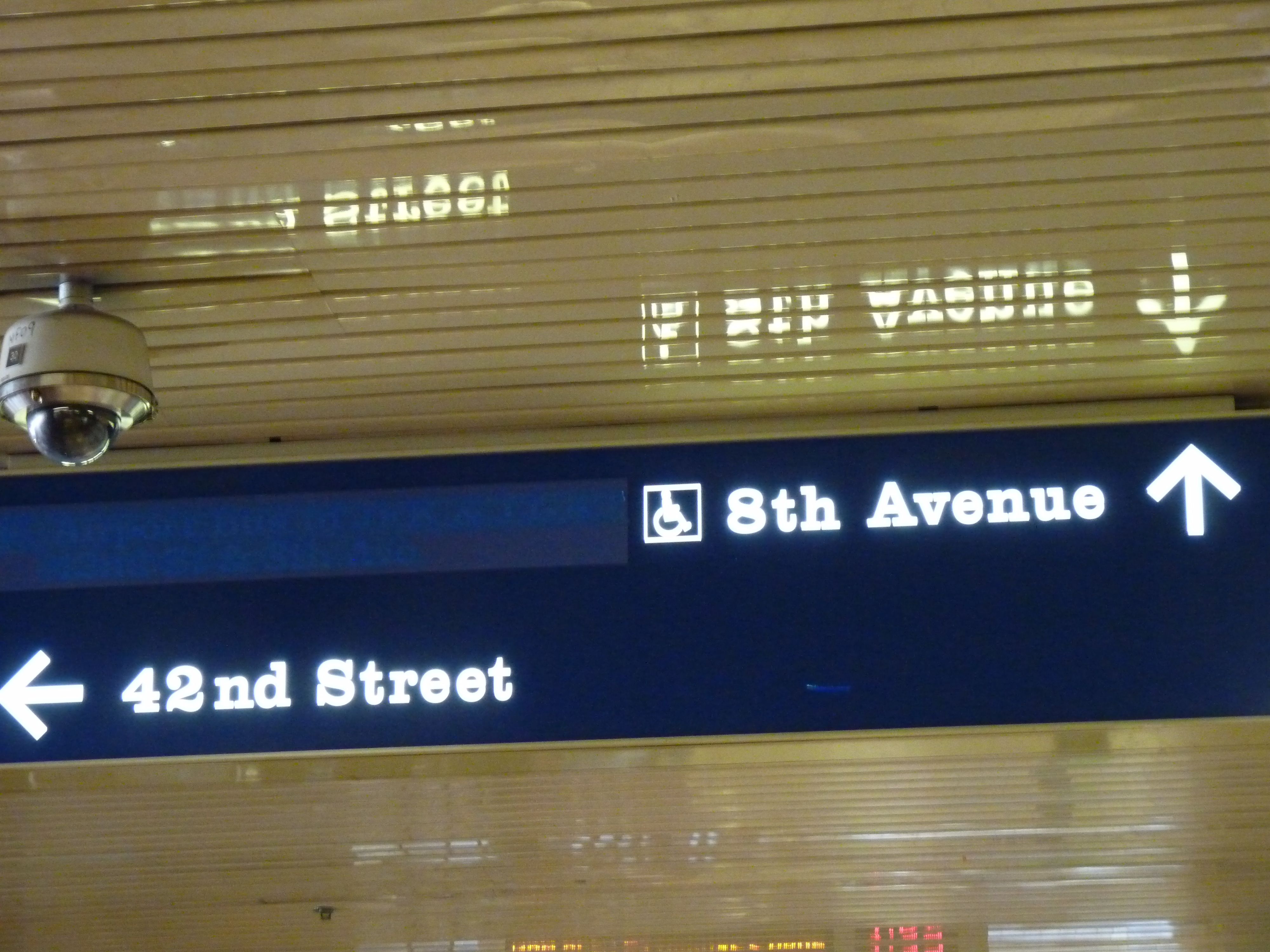
There are always too many people milling around the station. They have time to sit around, read a newspaper, have coffee or breakfast, or wait in line to buy a magazine or a winning lottery ticket out of this rat race. Well, that is what it’s all about. I mean we all want to get out of this rat race. We know the rats are winning. Remember that ugly blue-striped building?
We go to work every day so we can some day stay home, and not go to work. There are plenty of good jobs in the city; plenty for us to leave when we get tired of the crowds, the endless walks, the broken sidewalks, tripping potholes, sudden-stopping tourists, Bible-spouting commuters.
If we look long enough, we’ll see Murray the groundhog frolicking in the safe zone under the catenary wires. Murray is fat, dumb, and happy. He doesn’t have to commute to work in the city. Neither these days does Proud Mary – nor I. I write from home.
Happy Trails.

11 Wednesday Sep 2013
Posted in Confessional

Photos courtesy of The New York Times, September 12, 2001.
I live 15 minutes from Newark Airport; 15 miles from Manhattan. I was speeding downhill in my car about two hours after the towers collapsed, to not only get to my sons at school to bring them home, but because I had a fight-or-flight, duck!, fear piercing me from my throat on down. I believed that at any moment, planes were going to start falling out of the sky on top of me – no matter where I went. It was then, and still is today, the most out of control I’ve ever felt. And the closest I’ve ever felt to death – not only my death, and the death of everyone I loved, but the death of our civilization; our world.
Every September 11 since then, I’m reminded of the ignorant complacency that comes with passing time. I mourn the loss of clarity that I felt that day, and in the weeks and months after. Clarity that only comes with a first encounter with something that has never happened before, and bears nothing else in comparison.
*******
Since 1997, I have walked east to west to go to my gym in the morning. Looking south from 6th Avenue and 20th Street, I had a perfect and direct view of the Twin Towers. I would debate with myself whether I liked them from an architectural standpoint. I would remember the controversy surrounding their erection. I could never decide. All I knew, for sure, was that they were big, and I had eaten a lovely wine-filled meal at Windows on the World.
On September 13, 2001, I walked east to west, and looked south from 6th and 20th.The sky was black – a plume of smoke and ashes. And the Twin Towers were gone. The emptiness in the sight-line can still catch me. Their nonexistence is an unending reminder of their existence. The Ground Zero Memorial and Freedom Tower fill the space but, for me, do not heal the wound of September 11, 2001.
 The Write Side of 59