Tags

Of head and hearts. Mixed media drawing. Julie Seyler.
Time for a glass of wine.

20 Friday Jun 2014
Posted in Art
Tags
Of head and hearts. Mixed media drawing. Julie Seyler.
Time for a glass of wine.
16 Monday Jun 2014
Posted in Art

Who needs to advertise when your store sign is a 10-foot scissor?
14 Saturday Jun 2014
10 Tuesday Jun 2014
Tags
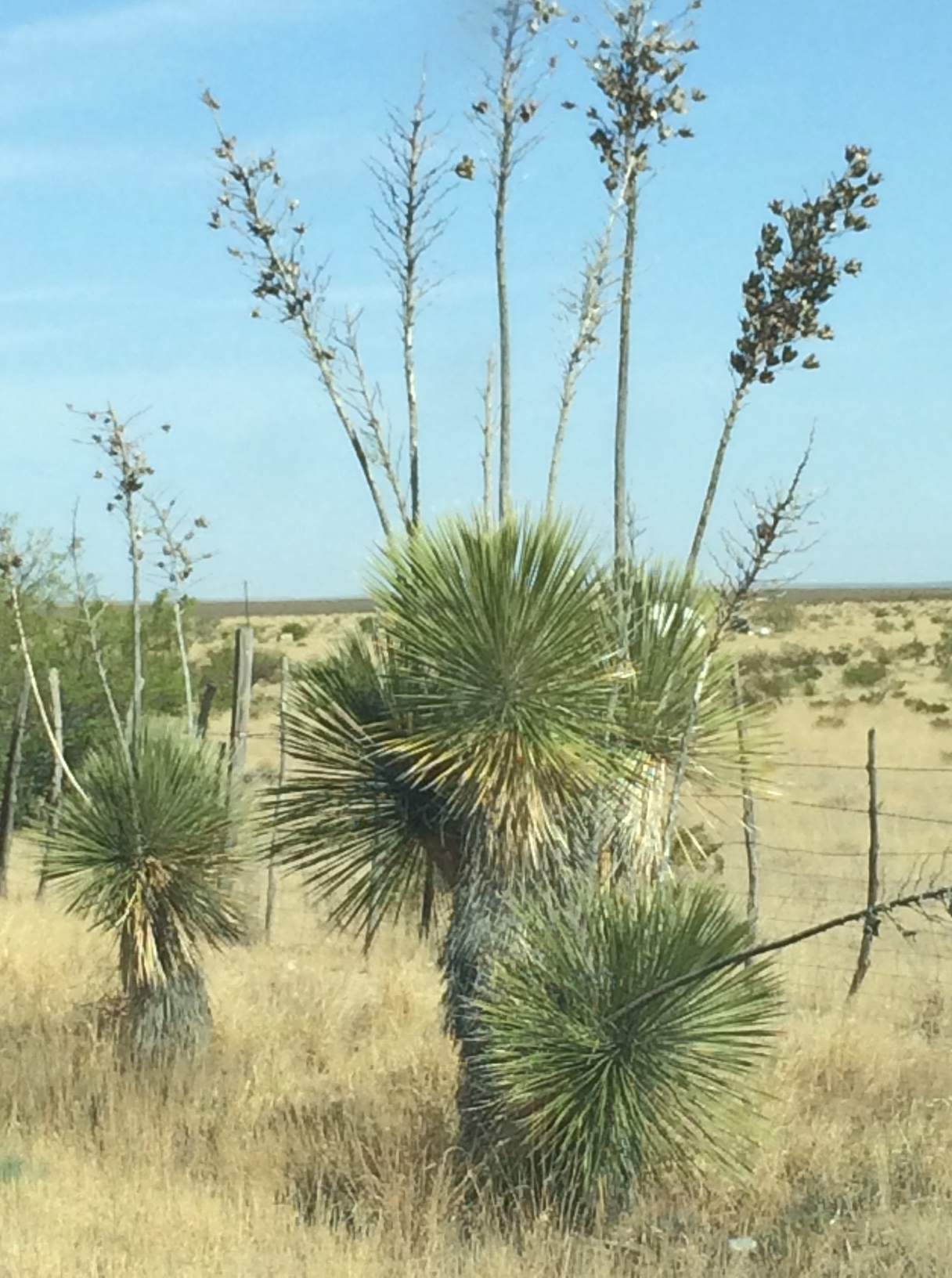
Agave Plant. Photo by Frank Terranella
BY FRANK TERRANELLA
Here is the plant that gives us tequila. It grows wild along the highways of southern New Mexico. I wonder if this is what fuels the Road Runner, New Mexico’s state bird.
09 Monday Jun 2014
Tags
In 1967, “The Graduate,” “Bonnie and Clyde,” “In the Heat of the Night,” and “Guess Who’s Coming to Dinner” (along with “Doctor Doolittle”) were all nominated for best picture, with “In the Heat of the Night” winning. A potpourri of films that reflected iconic changes happening in the sociological landscape.
“The Graduate” distilled adolescent angst into a single word (“plastics”), and middle-class/middle-aged ennui into a single sentence: “Mrs. Robinson, are you trying to seduce me?”
“Bonnie and Clyde” depicted the gory violent killing of the anti-hero criminal with operatic grandeur and in so doing, opened up the cinematic floodgates for onscreen decapitations. “In the Heat of the Night” and “Guess Who’s Coming to Dinner” presented racism – one with visceral intensity, the other through romance, but both with the purpose of opening up small-minded prejudices. I did see “Guess Who’s Coming to Dinner” in 1967, but years passed before I saw the other movies because, back then, unlike now, movies really didn’t mean that much to me. And I was not at all attuned to current events, except remembering there was a big brouhaha when the first person of color moved into West Allenhurst.
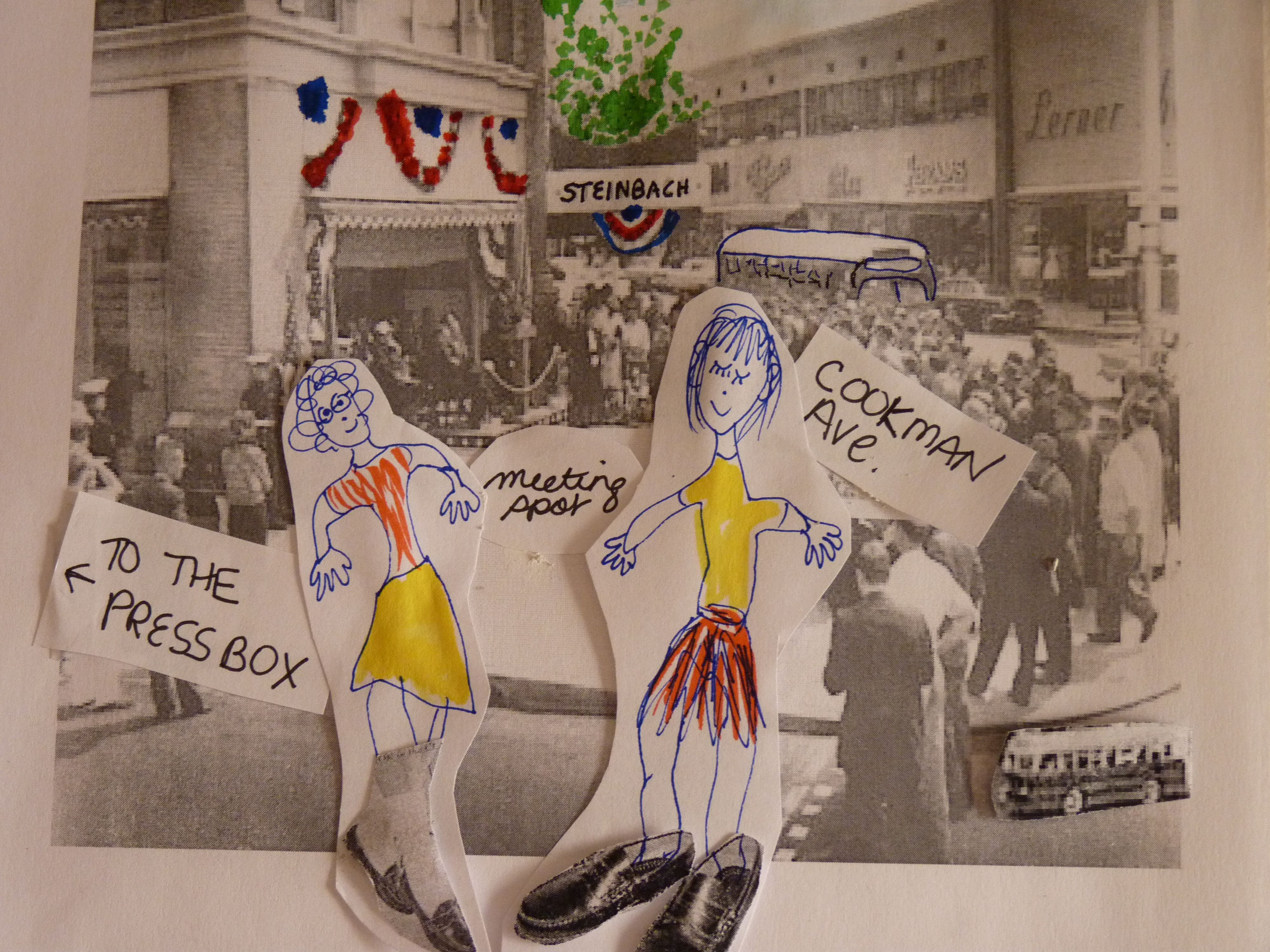
Rather, I was absorbed in my pre-high school world, overjoyed that I was a cheerleader, and on the cusp of entering the big league of “age”: my teens! In my memories, I see me and a girlfriend boarding Bus #31 on Monmouth Road on a Saturday afternoon to head into Asbury Park. We would meet up with a bunch of other friends at Steinbach’s, which at the time, was a premier department store that ruled Cookman Avenue.
Then we’d make our rounds to Canadian’s across the street, The Villager, and Country Fair, a sort of ultra-preppy shop, known for its Scottish-like kilts, and matching cable knit sweaters. Were we all wearing our Bass Weejun penny loafers? Afterwards, we would go to The Pressbox for lunch. We thought we were oh-so-sophisticated, if not actually old. Whatever we may have been, we were definitely innocent, and felt eminently safe and supreme in our niche. Although the dissension and anger between black and white America was in the news, it took another three years before the rage descended on Asbury Park.
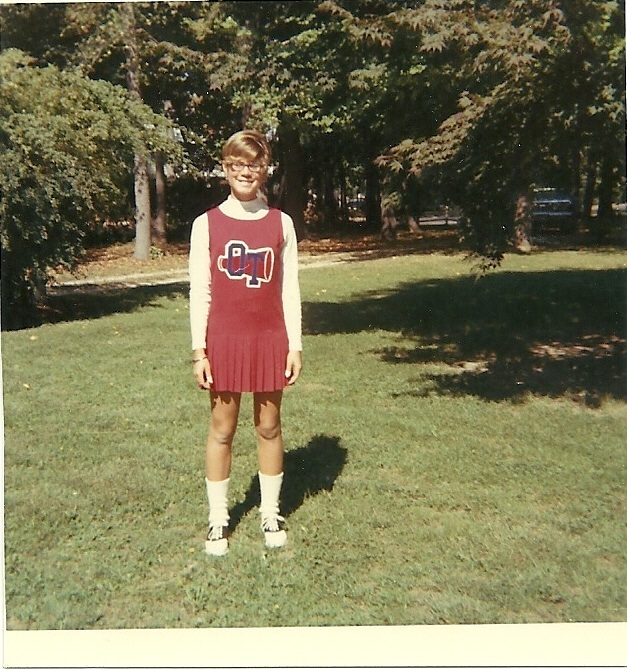
Me 1967.
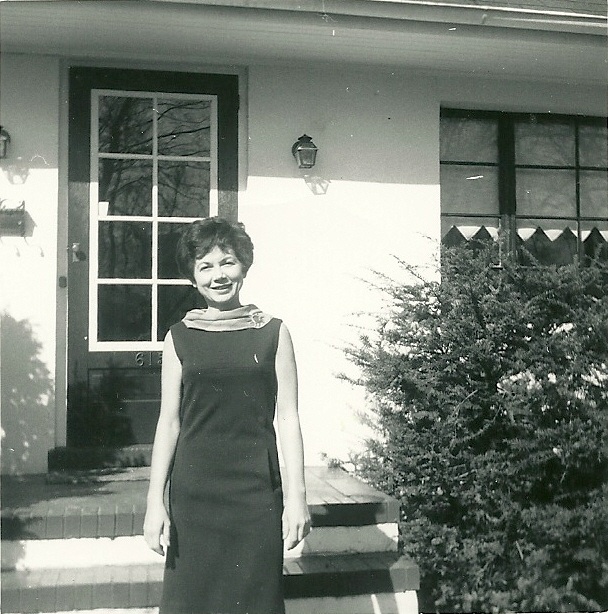
My mother 1967.
Amidst the reverie and pleasure of being a teenager, the age of 58 was unimaginable. Even my mother was only 39, and my grandmother, who was old, didn’t have a nameable age. It makes me wonder what it was like to be 58 in 1967. Did women fret over their wrinkles or did they benignly accept the change in skin texture with grace and a smile? (Collagen and Botox were non-existent.) While I definitely recall my old aunts and uncles discussing “health issues” (as I seem to do more and more these days), did they obsess over “growing old,” documenting every change in cheek and jowl? Was there a desperate quest to hold onto youth, or was their 58 our vision of 78?
Who knows. But I wonder what the world will be like for the 12 year olds of today in 2062, when they are 58. Will they look back fondly on the memories of their youth, and think how innocent it all was? Or maybe they will never have to look back because their entire life has been documented in real time online. And given that every generation gets “younger,” maybe their 58 will be the new 28.
07 Saturday Jun 2014
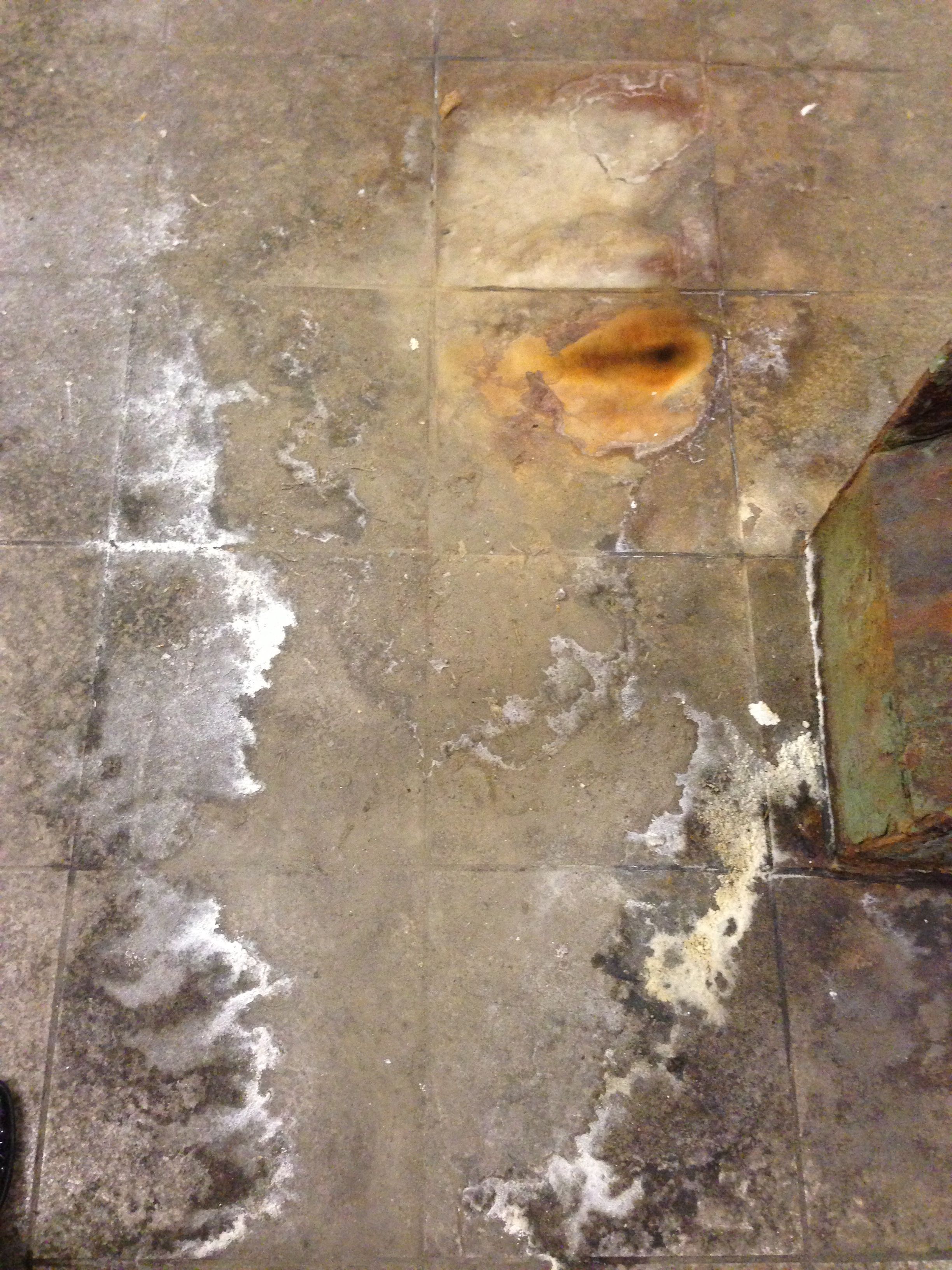
Subway floor. Manhattan.
06 Friday Jun 2014
So, shockingly, no one got all of the answers right. Oh well. For those curious souls who want to know here you go. And all the movies can be seen at Film Forum or of course rented on Netflix.
1. “I caught the blackjack right behind my ear. A black pool opened at my feet. I dived in.”
MURDER, MY SWEET. (1944). Edward Dmytryk
2. “Nobody’s all bad, deep down. She comes the closest.”
OUT OF THE PAST. (1946). Jacques Tourneur
3. “Give me a kiss or I’ll sock ya.”
THE POSTMAN ALWAYS RINGS TWICE. (1946). Tay Garnett
4. “If I’d only known where it would end, I’d never have let anything start.”
THE LADY FROM SHANGHAI. 1948. Orson Welles.
5. “Whichever way you turn, Fate sticks out a foot to trip you.”
DETOUR. 1948. Edgar G. Ulmer
6. “If you shoot, baby, you’ll smear us all over the road.”
DEAD RECKONING. 1947. John Cromwell.
7. “You’re not too smart, are you? I like that in a man.”
BODY HEAT. 1981. Lawrence Kasdan.
8. “I will not be ignored.”
FATAL ATTRACTION. 1987. Adrian Lyne.
03 Tuesday Jun 2014

Metropolitan Ave. and River Place. Brooklyn, N.Y.
BY JULIE SEYLER
A couple of weeks ago I took the L train to Bedford Avenue, the first stop in Williamsburg, Brooklyn. I became enchanted. It reminded me of a time past, before things became so homogeneous in Manhattan. It has the vibe of the East Village, 30 years ago, when I was someone who finished the night at 5:00 AM with scrambled eggs at Kiev. However I am definitely late to the Williamsburg game and whatever vibe I sensed is no doubt on its way out as Brooklyn morphs to the dance of money.
In any event, I had a mission. I was in search of the Domino Sugar Factory, once the processing source for DOMINO brand sugar, and now, an unused warehouse with one last purpose to fulfill before it undergoes semi-demolition. It is currently home to the artist Kara Walker’s show:

En route, I discovered the Metropolitan Pool, a lap lane pool built as a Public Bath in 1922 that is still in use today, and got a close up gander of the Williamsburg Bridge, which opened in 1903 with the distinction of being the longest suspension bridge in the world.

After 20 minutes of meandering, I found my way to the sugar factory. This 19th century tome to the production of sugar, immense and obsolescent, is a work of art in itself. From its chipped and peeling paint to its rusted pipes there is texture, color and form to take in, and while a part of it is doomed to redevelopment as condominiums with riverside views of Manhattan, the exterior of the central refinery is landmark protected.

This is not the landmarked part. I just loved the way the blue paint curled about.
As soon as you walk inside, you smell sugar, even though it has been 10 years since the building stopped operating as a refinery. Your eyes adjust to the dimness of the natural light streaming in through the windows of this 90,000 square foot space and you take in sculptures, about three to four feet high, made of resin, with a shiny translucent reddish cast. Look closely and you see the cherubic, angelic faces of children. What registers is dissonance because the sugary benign-ness of their expressions underscores the horror that once it was a fait accompli that children were put to work, all day, picking sugar cane under a blazing sun.
When you turn to the left, you see that the sugar baby children are overseen by a gigantess, a Mama Sphinx, made entirely of sugar, lying with her haunch in the air.
The immediate association is ancient Egypt, not only because the size and pose of the work evokes the Great Sphinx at Giza, but because her mien is as inscrutable as a Sphinx. However, she cannot be confined to the world that existed 4000 years ago when Egypt’s grandest monuments were erected on the backs of slaves. She is also an icon of pre-Civil War America, when a great deal of commerce and trade and growth in the American economy was accomplished because it was legal to own another man, woman or child. What I see in this sculpture is that the Mama Sphinx may have been a slave by circumstance, but she was never a servant. She is regal and rules with serenity and fearlessness.
Kara Walker has captured history and beauty, sweetness and bitterness, in a way that I have never seen before. It is an amazing show because it works on so many levels. There is the sheer technical artistry and then there is the simplicity of the lines and the fullness of color created by an absence of “color”, the symmetry and the way the space is filled. Even the title, “A Subtlety or the Marvelous Sugar Baby, an Homage to the unpaid and overworked Artisans who have refined our Sweet tastes from the cane fields to the Kitchens of the New World on the Occasion of the demolition of the Domino Sugar Refining Plant“, is packed with layering.
The show made me think and reflect and ponder, and even now I keep finding new and different connections. A work of art so powerful that it requires nothing from the viewer but to be astonished, moved, and educated is fabulous.
02 Monday Jun 2014
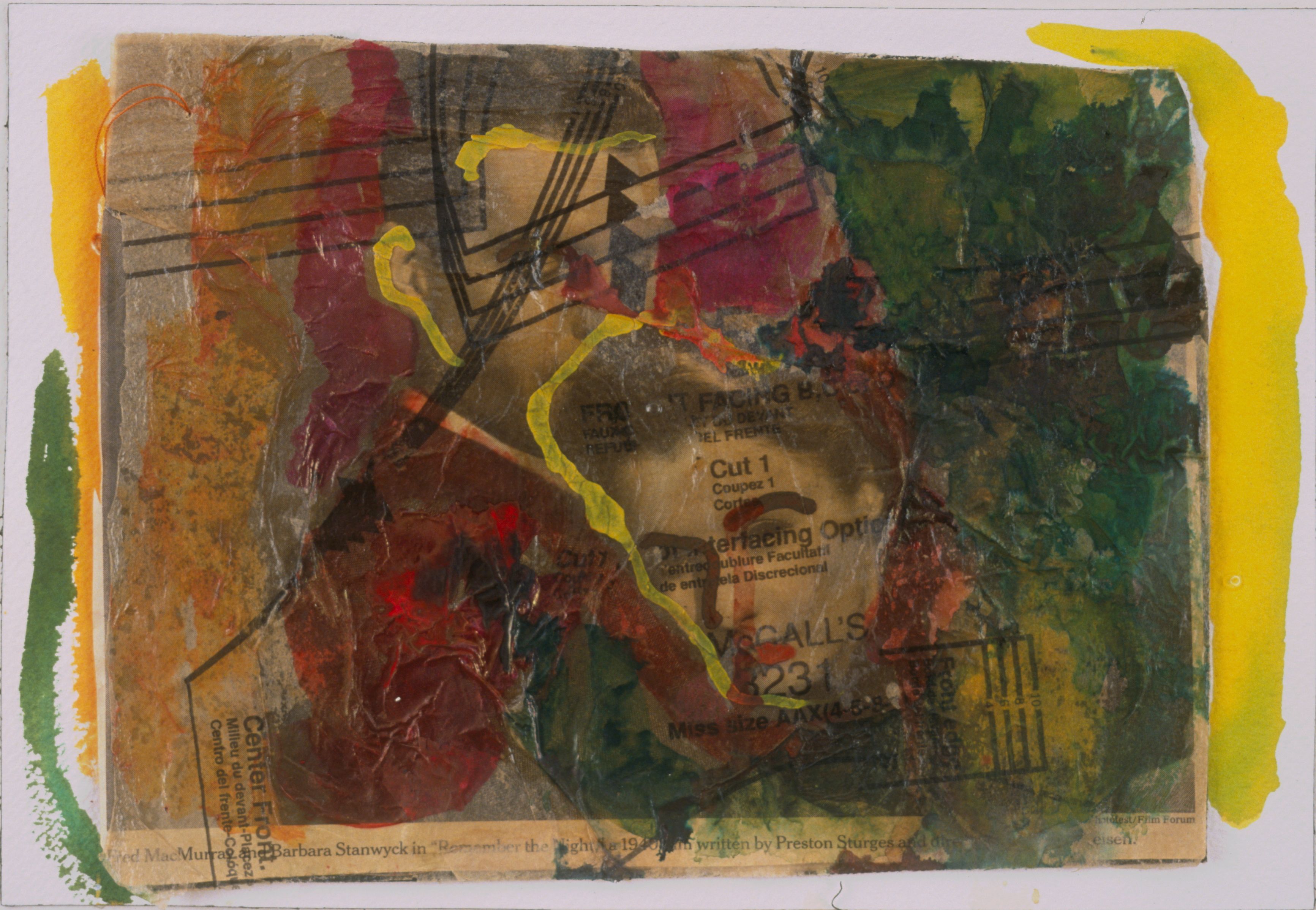
Fred and Barbara. Mixed media. Julie Seyler
Every year the Film Forum, located on West Houston Street between the Avenue of the Americas and Varick Street, runs a series focusing on the twisted crime dramas with great hijinks known as “film noir”. Double Indemnity, directed by Billy Wilder, from 1944, starring Barbara Stanwyck and Fred MacMurray, is the noiriest of all film noir films. It is a movie that never gets old.
This year’s series, scheduled to run from July 18-August 7, is called “Femme Noirs: Hollywood’s Dangerous Dames”. The Film Forum puts out a calendar that provides a synopsis of each film in the series, and it’s fun to peruse because the programmers highlight a few of the best lines from some of the films.
Since we at WS50 have tried our hand at the pithy one liner, we have utter appreciation for these quotes that capture a scene, a character, the mood of a gray shrouded night in a sentence.
So here’s a quiz. Match the quote with the movie and email your response to loandjule@gmail.com. Drinks at Rolf’s on us for anyone that gets them all right. (Answers will be posted on Friday).
The Quote
1. “I caught the blackjack right behind my ear. A black pool opened at my feet. I dived in.”
2. “Nobody’s all bad, deep down. She comes the closest.”
3. “Give me a kiss or I’ll sock ya.”
4. “If I’d only known where it would end, I’d never have let anything start.”
5. “Whichever way you turn, fate sticks out a foot to trip you.”
6. “If you shoot, baby, you’ll smear us all over the road.”
7. “You’re not too smart, are you? I like that in a man.”
8. “I will not be ignored.
The Movie
1. Fatal Attraction. Adrian Lyne (1987).
2. The Lady from Shanghai. Orson Welles (1948).
3. Dead Reckoning. John Cromwell (1947).
4. Murder, My Sweet. Edward Dmytryk (1944).
5. The Postman Always Rings Twice. Tay Garnett (1946).
6. Detour. Edgar G. Ulmer (1948).
7. Body Heat. Lawrence Kasdan (1981).
8. Out of the Past. Jacques Tourneur (1946).
31 Saturday May 2014
Posted in Art

Marilyn says, “Have a great weekend!”

 The Write Side of 59