
A camel waiting for tourists in Giza, Egypt. November, 2010. Photo by Julie Seyler.
It’s Saturday – take a load off.

11 Saturday May 2013
Posted in Art
A camel waiting for tourists in Giza, Egypt. November, 2010. Photo by Julie Seyler.
It’s Saturday – take a load off.
10 Friday May 2013
Posted in Art

Eyebrows. Photo by Julie Seyler.
BY JULIE SEYLER and LOIS DESOCIO
Have you ever noticed your eyebrows, and how they seem to change direction, texture, and shape with each passing year? Nothing more needs to be said about that one …
… except this: Measure those twisty, turny, maybe-in-need-of-a-little-weeding eyebrows against the unwelcome strand, or two, that can sprout up overnight in a place where it’s not supposed to be, and raise it up for eyebrows for at least remaining hairy, as they should be.
08 Wednesday May 2013
Posted in Confessional

Seething orchid. Photo by Julie Seyler
The other week, I was awakened in the middle of the night from a dream about a raging argument I was having with my uncle, who died in February. The argument was about his mother, who had died 30 years ago this coming August. It was so disturbing – I could not go back to sleep.
The man spent his life complaining of the hardships his widowed mother created for him and his family. Much of the time I was growing up, my uncle’s family was on the West Coast, and my grandmother had been my mother’s problem for decades.
I got along with this grandmother, so when my mother died, I gladly took over her care. Yet my uncle continued to complain about his mother, including paying for her grave, when he and his wife moved back east.
I consider myself a rational person. I thought I had worked through my anger at various family members over the years. But with my uncle’s passing, it seems I didn’t resolve anything.
Anger is a terrible thing. I’ve had a hard time controlling it since I was a child. It has gotten me into trouble many times over the years. When something doesn’t make sense to me, I question. When something seems downright stupid to me, I question and disparage. This would make me popular with peers, but not with figures of authority, including parents and supervisors. (Questioning is great for being a journalist, but makes one a lousy employee.)
So over the years, I’ve learned to channel my anger by taking myself to the woods where I can concentrate on other things – the lovely day, making sure I am still on the trail, not tripping over tree roots and rocks.
But mainly I concentrate on the birds I might find overhead and underfoot. When I am out in the field, the only thing that angers me is myself for not finding the bird I hear singing to identify it.
Now I wonder if I am have only avoided the issue.
As I get older, I admit to being glad I have no children to resent me for unintentional or intentional actions. However, I also don’t have children to take care of me as I age – as my parents, grandmother and uncle did. What happens when my husband and I can no longer take care of ourselves and our house?
Aging and the money scare the hell out of me. Makes me angry, too. I doubt I’ll have the kind of retirement my parents had, and my husband’s parents continue to enjoy in their 80s. They take their trips, they go to concerts with their friends, and family checks on them.
Is this why I woke from screaming at my dead uncle about his dead mother in the middle of the night, my fear and anger at something over which I have no control? Probably. I will have to keep working at it.
07 Tuesday May 2013
Posted in Food
Tags
Farmers' Market, Food, Julie Seyler, Leeks, Ramps, The Write Side of 50, Union Square Greenmarket

Asparagus has arrived. All photos by Julie Seyler.
I grew up in New Jersey, also known as The Garden State. Outsiders may love to tell jokes about the Turnpike, but insiders know that come August, we grow the sweetest corn and lushest tomatoes. But, other than that one month, and those two vegetables, I don’t remember eating locally-grown produce. In fact I never thought about vegetables. Iceberg lettuce and frozen peas, perhaps some fresh string beans once in a while, was the normal standard. Broccoli was eschewed.
Fast forward past Alice Waters and The Moosewood Cookbook, and the multitude of studies confirming that virtually everything green is healthy and low in fat. And never have vegetables been more celebrated, especially if they come straight from the farm.
 In Manhattan, where growing patches are rare, the city sponsors Farmers’ Markets. At Union Square, which sits between 14th and 17th Streets, the Saturday market brings a stampede of locals, who scoop up whatever happens to be in season.

Union Square Greenmarket, April 4, 2013.
Any farm or business that grows its own produce, or raises its own animals, or makes its own bread and cheese, is eligible to participate.

And since spring has arrived, so have tables laden with ramps, scallions, leeks and asparagus, onion chives and garlic chives, and pots and pots of every herb under the sun. There aren’t enough meals available to eat it all.

Even if you’re not buying, it’s fun looking at all the other stuff – the beds of petunias and the buckets of blossoms; the lamb sausage and ham hocks:



03 Friday May 2013
Posted in Art

I love black and white photography – the rich lushness of gelatin silver prints. One simply cannot capture the depth and compassion that illuminates so many images captured on film developed in a dark room using chemicals. My heart tends to lead me to the photojournalists of the ’40s and ’50s: Helen Levitt and her street photography of little boys playing in fire hydrants on a hot summer night before there was air conditioning; Robert Capa documenting men fighting in war, and the utter naked brazenness of Weegee and his blood-threaded images of homicide victims. Be it nobility or sensationalism, the photographs were more than pages in a magazine – they ultimately pushed forward an underused medium in art. They were powerful and iconic.
A few weeks ago, while wandering through The Museum of Modern Art, I discovered a photojournalist I had not heard of before. Bill Brandt, was British,and the show ranged from photos of coal miners in England to the bombed out streets of London during World War II to abstract nudes. For me, he nailed the picture from subject matter to composition, and “Shadow and Light”, as the show was called. I believe all images were gelatin silver prints.
Technology has evolved to such a degree that black-and-white film is nearly extinct.The modern digital camera is embedded with a setting that allows you to turn off color, and, aha, one can shoot in black and white. So there are times when I see shadows happening, and on goes, “COLOR OFF.” The art form may have been reduced to a button, and the quality may pale, but the fascination of the image holds. Here is my homage to a shadow and the sensual:

Preeminent Birth.

Curve.
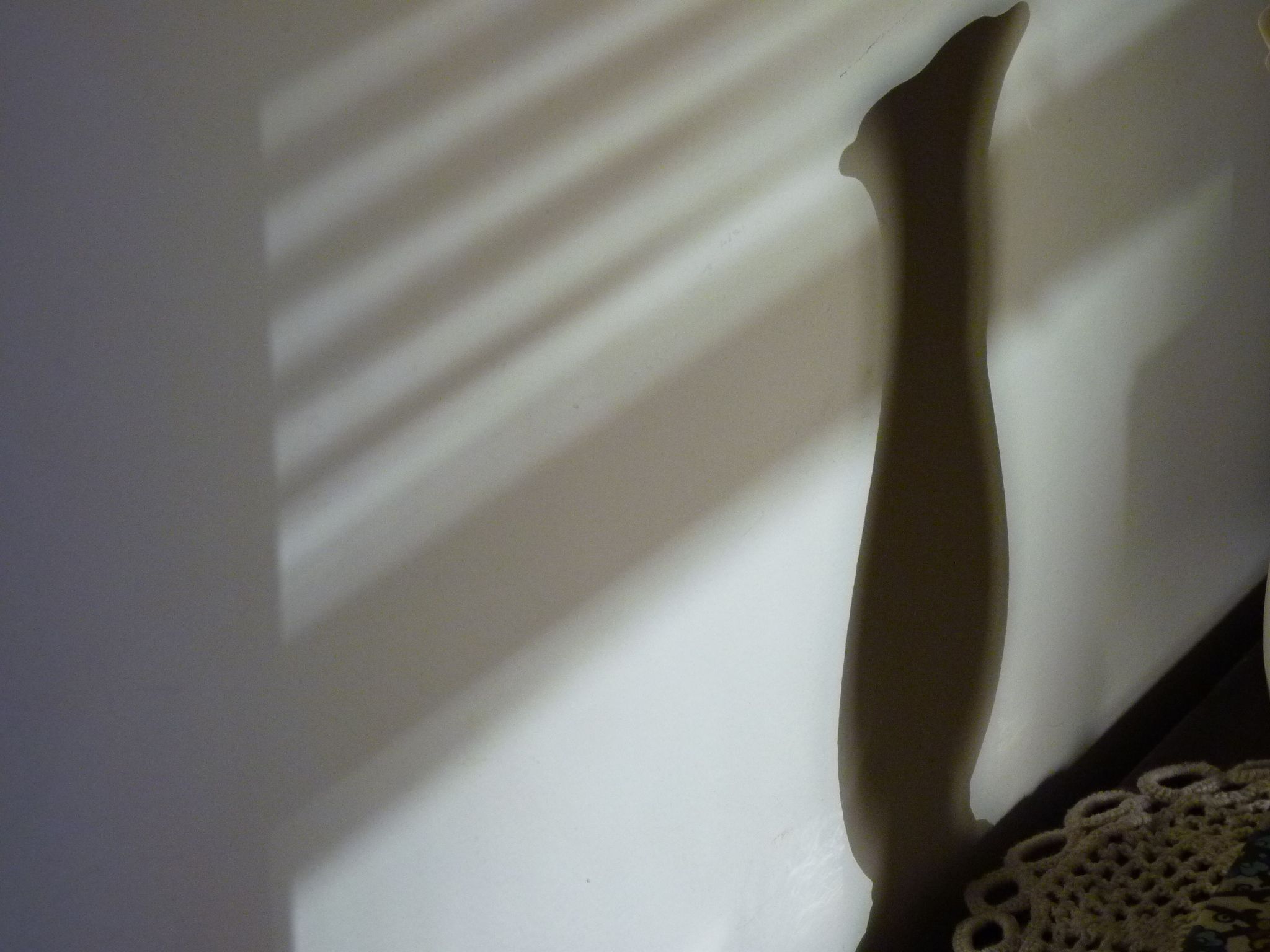
Leg-Up.

02 Thursday May 2013
Posted in Confessional, Men

Stairs to Music Heaven. By Julie Seyler.
On a previous post I mentioned that I thought that rock music was one of our generation’s greatest gifts to society. Now, the first thing I want to make clear is that Baby Boomers did not create rock music. The Baby Boom era did not begin until 1946. Bill Haley was born in 1925. Chuck Berry was born in 1926. Elvis Presley was born in 1935. So the first generation of rock musicians were not Baby Boomers. Technically, even the Beatles were not Baby Boomers. George Harrison, the youngest Beatle, was born in 1943. No, we Baby Boomers were not the creators of rock music – we were the generation that brought it from an obscure offshoot of country and jazz and made it mainstream. We supported it with our dollars, and adopted it as the music of our generation.
There is actually a lot of musical real estate under the rock umbrella. It ranges from blues rock like The Rolling Stones to country rock like the Allman Brothers to folk rock like Crosby Stills & Nash to hard rock like Led Zeppelin. Most Baby Boomers embraced one or more of these flavors of rock music. And those that didn’t probably embraced pop rock bands like Gary Lewis and the Playboys or the marvelous Motown stable of artists like The Supremes and The Temptations.
It’s no accident that the seminal Baby Boomer event was a music festival. That’s how important the music was. Rock music reached its zenith in cultural influence at Woodstock. While I wasn’t fortunate enough to attend, I own a copy of the wonderful documentary that was directed by Michael Wadleigh and recommend it to everyone. It’s one of those films you can run in the background and just revel in the music without getting wet. As marijuana slowly becomes legal across the country, the film may make a big comeback.
The thing that strikes me about watching the Woodstock film is just how broad a spectrum of music it featured. Richie Havens opened the concert, followed later in the night by Ravi Shankar, Melanie and Arlo Guthrie. The next day Santana, The Who and Jefferson Airplane rocked the crowd along with John Sebastian, Sly & the Family Stone and the Grateful Dead. Jimi Hendrix closed the weekend event. This was the music of a generation, and the generation showed up in force to hear it as the ‘60s came to a climax.
By the early ‘70s we were entering the heyday of the singer-songwriter. Bob Dylan had dominated this field in the 1960s, but as the new decade got under way, James Taylor, Jackson Brown and Carole King were climbing the charts.
Notwithstanding the popularity of folk rock groups like Seals & Croft and America at this time, as I arrived on campus for my freshman year, it was Layla that was blaring out of dorm rooms everywhere. Eric Clapton’s epic rock anthem was released in November 1970 on an album that Eric made with Duane Allman, Bobby Whitlock, Carl Radle and Jim Gordon under the fanciful name Derek and the Dominos. The album is such a classic it was inducted in the Grammy Hall of Fame in 2000.
Throughout the ‘70s, groups like Yes, Deep Purple and Pink Floyd kept the rock flag flying. Radio stations like WNEW-FM in New York, WBCN in Boston and WMMR in Philadelphia played entire album sides without commercials. And it was good. It was very good.
And now here we are in the 21st century, and not only is our music still alive, it’s more accessible than ever. As I write this, I’m listening to Smoke on the Water by Deep Purple. But I’m not listening to the radio, or a record, or even a CD. I’m listening to the online music service Spotify. We now can get ‘60s and ‘70s music on demand via the Internet from services like Pandora, Spotify, Rhapsody, and many more. And when I feel a need to hear “Stairway To Heaven,” I can just say to my Iphone “play it again, Siri” and Jimmy Page’s guitar solo begins. What with MP3 players and smartphones, we are never more than a few seconds away from “our” music. And “our” music is still the best that the world has ever heard.
01 Wednesday May 2013
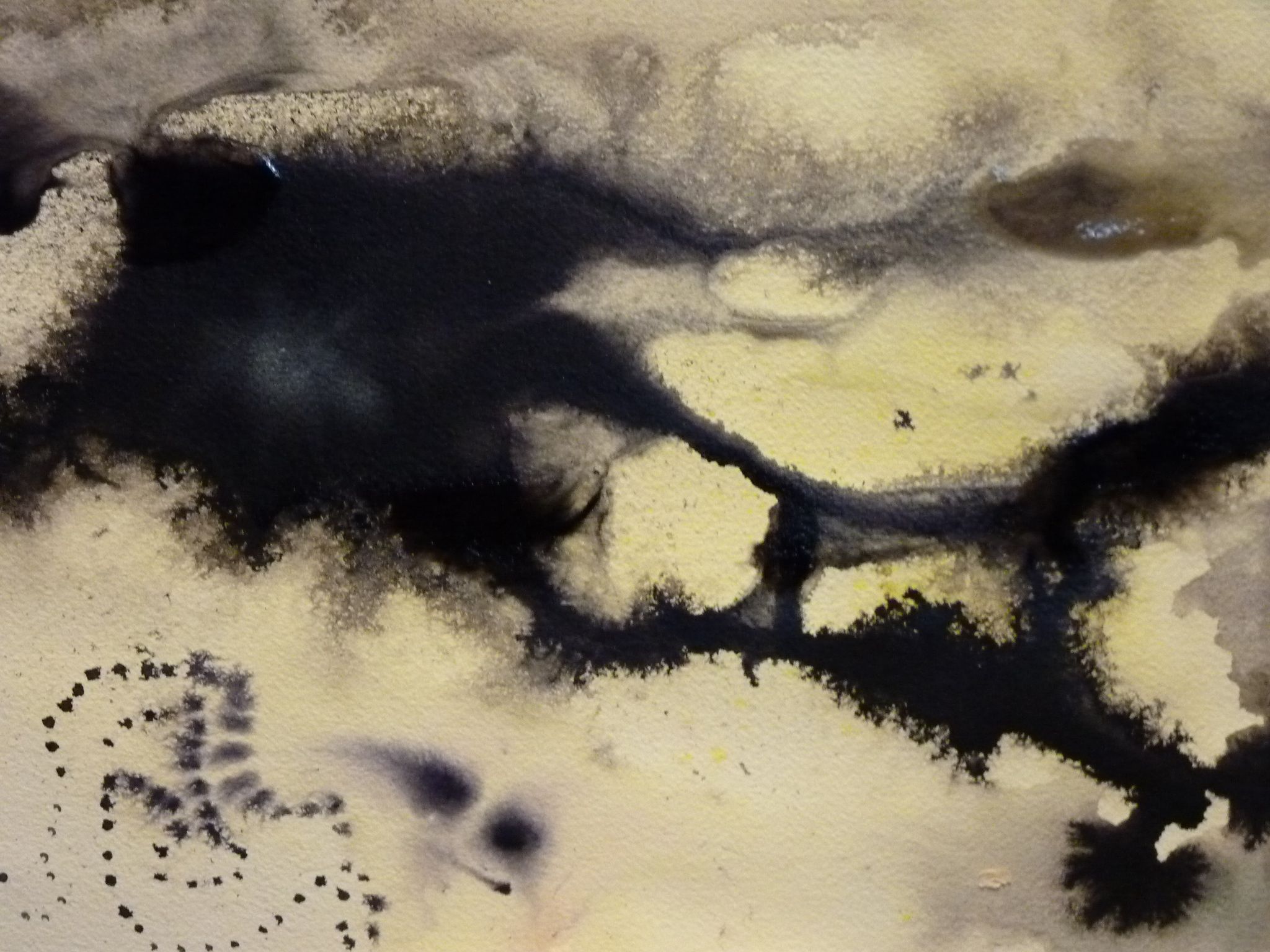
The spirit of the times. Watercolor ink drawing. Julie Seyler.
Zeitgeist is a fabulous word. Not only does it begin with the letter Z, but it rolls off the tongue, and has a definition worthy of punditry. In broad terms it means, “the spirit of the times.” An iced, dry martini with a single olive is a zeitgeist moment of the early 21st century. Let me revise that – that was more likely a zeitgeist moment of the mid-1950s. Chocolate martinis, dirty martinis swimming in olives, and pomegranitinis define now.
These meanderings make me hark back to what defined the zeitgeist of the ’70s, when we later-50-year-olds, approaching 60 year olds, and dare I say it, already approaching 70 year olds, were the generation shaping the zeitgeist. Today, that generation, “us,” is the soon-to-be-demographic definition of “senior citizen.”
We all react differently to being on the right side of 50. I have come to refer to this new/next stage as no longer being in Kansas a la Judy Garland in “The Wizard of Oz.” I straddle the fence, desperately clinging to youth, and slowly accepting the fact that I am no longer in any way “young.” And this leads me to ponder: What was the spirit of those times – the ’70s?
Everyone has their own memory bucket, but for me, I hear slogans: “Sex Drugs and Rock ‘n Roll;” “Make Peace, Not War;” “If he’s old enough to fight for his country, he’s old enough to vote.” There were movements: The Black Panther Movement, the Peace Movement, and the one I glommed on to – the Feminist Movement. I was a devotee of Gloria Steinem, but am ashamed to admit that I never read Betty Friedan’s book, “The Feminist Mystique.” For me, the Supreme Court’s decision in Roe v. Wade balancing the interests of the mother, the child, and the state in determining the legal right to have a safe termination of pregnancy was a cause for celebration. (Of course I am flabbergasted that anyone could even conceive of a desire to overturn that decision. It boggles the mind. But that’s another blog.) That’s my partial list of the world around me between 1968-1977.
It all seems so safe and innocent, although my mother reminded me that those years were also characerized by a great deal of violence. I’d forgotten the race riots and Kent State and the utter devastation of lives wrought by the Vietnam War.
27 Saturday Apr 2013
Posted in Art

Raindrops on white flower. Photo by Julie Seyler.
An April shower on a May flower …
26 Friday Apr 2013
Posted in Confessional

There are NEVER too many mascaras.
Does anyone remember reading Cosmopolitan (Cosmo) magazine in the 1970s? Helen Gurley Brown’s creative inspiration for the single woman – the risqué diversion from Glamour and the now defunct Mademoiselle? Cosmo always ran a quiz. Maybe all the teen mags did. Maybe they still do. In any event, the purpose of the quiz was to give you, the reader, an insight into your personality. Pop psychology in 10 questions as to whether you were an innate extrovert, who embraced the idea of a party with 100 strangers, or a natural introvert, who could think of nothing more fun than a dinner for two by candlelight. Somehow, the choices given were always made to be mutually exclusive. You were this way, or that way, but never a combo of both. I loved taking those quizzes, and counting how many times I answered (a) or (b) or (c), and getting my nutshell diagnoses in a 100 word paragraph. Better yet, was picking the (a) or (b) or (c) based on my prediction of what the magazine had determined was my primary personality trait.
I don’t remember any of the quizzes today, but one question from one quiz has stuck in my mind over the past 40 years. And rather than it being a reflection of how I have changed, it is a reflection of how I have stayed exactly the same – at least with respect to this particular thing.
The question asked what make-up would I take with me to a desert island. I could choose between mascara, lipstick, or foundation. Hands down, I chose mascara, and today I would still choose mascara (albeit I love my red lipstick also). Without mascara on, I always feel just a little bit naked, except at the beach – I draw the line at wearing makeup on the beach.
I am very methodical about how I apply mascara. I always have 6 to 8 wands of black mascara with a different type, size and style of brush. I keep a set at home; a set at the gym. And a travel set, because I hate the idea of leaving home without my mascara. People look at my line up and say, “Huh? Why do you have so many mascaras?”
Well, there is a technical method to my madness. The old ones help build the eyelash so it doesn’t clump. The medium old ones help lengthen the eyelash, and the newest mascara gives it shine. (As soon as I discard an old mascara, I buy a new one.)
I have shown my mascara application process to all my guy friends, and they are so appreciative. In fact, I think money can be made on this process. I intend to ask one of my colleagues if my mascara system can be protected as a business method patent.

7 mascaras and one red lipstick.
25 Thursday Apr 2013
Posted in Confessional, Men

The cicadas are coming. Drawing/photocollage by Julie Seyler.
It’s an entomological Paul Revere moment: the cicadas are coming. Every 17 years these giant, ugly bugs burrow out of their holes in the ground and crawl up every tree in sight en route to the upper branches to mate. On the way,
they make a cacophonous clacking racket as they molt, leaving empty husks of themselves clinging to crevices in the bark. Once the ground temperature reaches 64 degrees Fahrenheit or so, here they come.
The first time cicadas appeared in my lifetime I was seven years old, in second grade at Merritt Memorial School. I was in love with my teacher and a little girl named Charlotte with curly brown hair. I remember reading aloud in class and feeling frustrated when my friend Pete struggled with simple words.
When they emerged again in 1979 I was 24. I was working full-time as a garbage man because it paid roughly twice what I’d earned as a textbook editor, the only job for which I was qualified by my undergraduate degree in English. I had been married for less than a year and was just beginning to realize that it was a disastrous mistake.
I was 41 when the cicadas came again in 1996. I was divorced and fourteen years into my second (much happier) marriage. With three kids between 6 and 11, and an intense career as an attorney, I was too busy to notice the emergence of lumbering red-eyed bugs.
This year’s appearance of the cicadas finds me approaching 60. The kids are fully grown and pursuing their own lives. (Although my youngest son, for now, is doing so under our roof.) The prospect of retirement is a cold reality as opposed to a theoretical, far-off possibility. And for some reason this year’s appearance of the cicadas fills me with foreboding.
Their raucous chorus of mating calls, alien eyes and zombie demeanor, and eerie exoskeleton shadows clinging to tree trunks are bad enough. But what makes me uneasy, what really knaws at me now, is their periodicity.
I’m looking at the timeline: when they come again, I’ll be 75. What quantum changes will have happened in my life by then? What will I have gained and lost in those years while the cicadas lay deep in their burrows, sucking at the tree roots and slowly maturing, marking time until their time comes to dig out again?
And the next time they emerge – as insurance salespeople are so fond of saying, “God willing” – I’ll be 92. Will I be able to see and hear them at all? Will I care? In the words of T.S. Eliot, do I dare to eat a peach?
My chances of living to see a third cicada emergence beyond the one expected this spring are nil. Chances are I will have been deposited into my own hole in the ground long before they crawl out of theirs.
In ancient China cicadas were viewed as symbols of rebirth. Many cultures today see this periodic influx as a gastronomic opportunity. After all, these are billions of slow-moving vegetarians that don’t fly away and can’t bite humans. They’re bundles of readily available nourishment on the hoof (or the wing or weird sticky leg, whatever). Yes, for many people, cicadas are what’s for dinner. Periodically.
I’m not a cicada, so I can’t crawl into a hole and count on coming back in 17 years to climb a tree and get jiggy. But I am a bipedal, meat-eating, surface-dwelling top predator, so why not revel in my role? These fugly bugs may have a high gag factor but they’re incredibly low in cholesterol, and they’re packed with protein and nutrients.
I’ve already found a couple of good recipes. If you can’t join them, eat them.
Maybe I’ll live longer.
 The Write Side of 59