
Slatted boards and sunlight. Photo by Julie Seyler.
We have come through winter. Like a fresh coat of paint, we are, oh, so ready, for the renewal that spring brings.

06 Saturday Apr 2013
Posted in Art
Slatted boards and sunlight. Photo by Julie Seyler.
We have come through winter. Like a fresh coat of paint, we are, oh, so ready, for the renewal that spring brings.
04 Thursday Apr 2013
Posted in Art, Confessional
Tags
Asbury Park, Cineplex Entertainment, Gone With the Wind, Lowes Palace, Lyric Theater, Mayfair Theater, Movie theater, St. James Theater
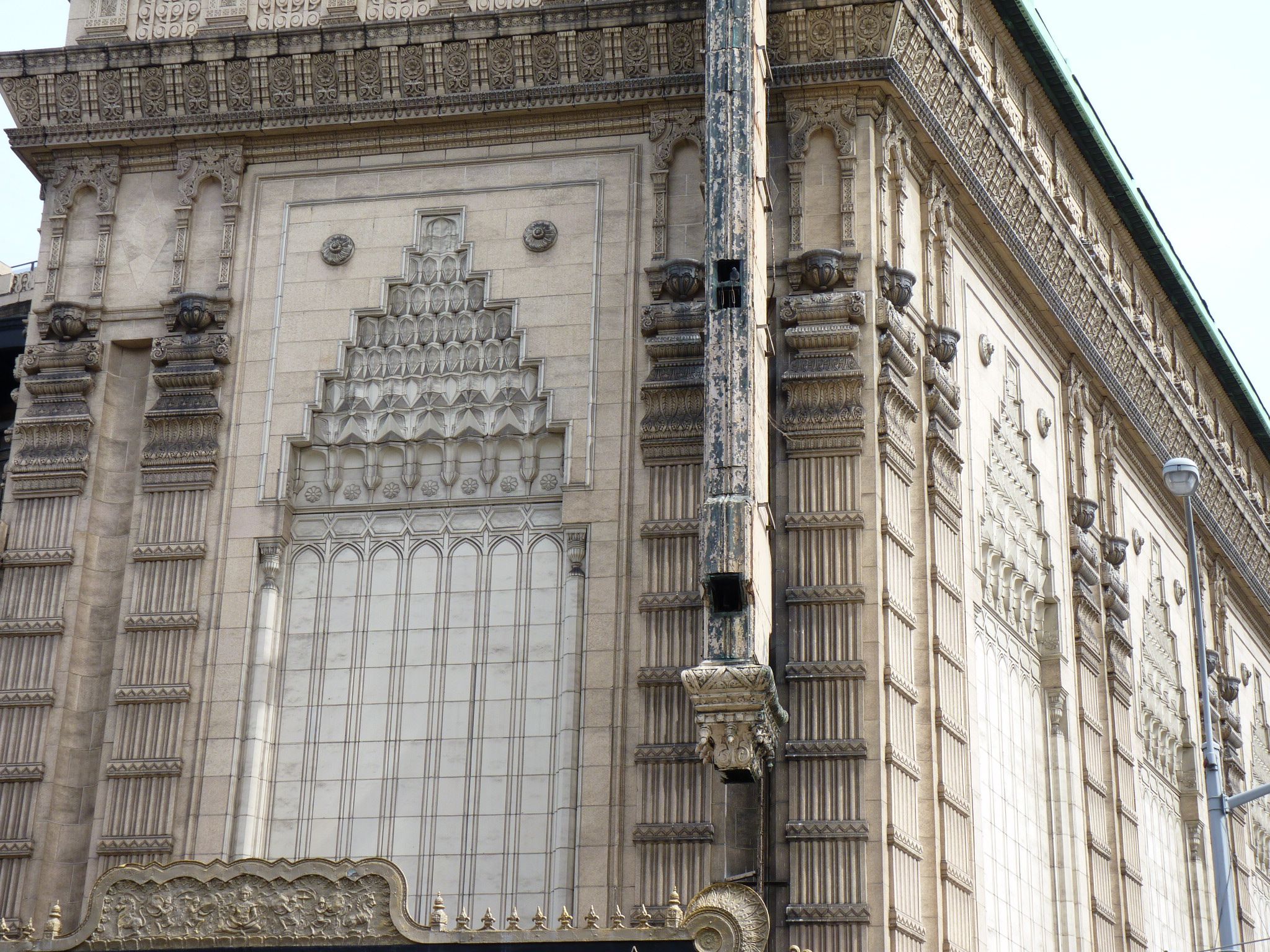
Movie theatre at 175th St. and Broadway in Manhattan. Photo by Julie Seyler.
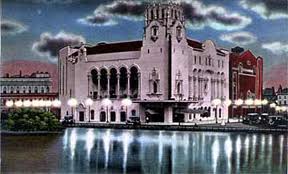
The Mayfair Theater in Asbury Park in its prime. Photo courtesy of noweverthen.com
When I started going to the movies as a “grown-up,” i.e. without parent chaperones, my friends and I went to Saturday matinees at the St. James, Mayfair or Lyric Theatre in Asbury Park. Big old carnival-like palladiums that were demolished – now it seems pointlessly. Probably the riots that sparked in Asbury Park in the summer of 1970 initiated the slow demise of each of the grand old palaces. One of our parents would drop us off and we would walk through the lobby into a cavernous auditorium, where a heavy, red-velvet curtain protected the mile-wide screen. The curtain would part, and the movie, sans any commercials, would begin. The first time I saw “Gone with the Wind” (falling crazy for Clark Gable), was at one of those baroque confections, so different from the modern seven-screen cineplex.
So, it was with great glee when, a couple of weeks ago, I found myself on the corner of Broadway and 175th Street staring up at a magnificent, albeit broken-looking, movie palace. I could only guess it was built in the late ’20s, early ’30s. It was a city-block wide; the original box office in place. And the entire facade of the building was decorated with intricately carved fretwork. What looked to be a Hindu god graced the marquee high above the street. It is now the United Church, but I closed my eyes and imagined what glory it must have commanded in its day, especially since its architectural splendors still dazzle.

Fretwork.
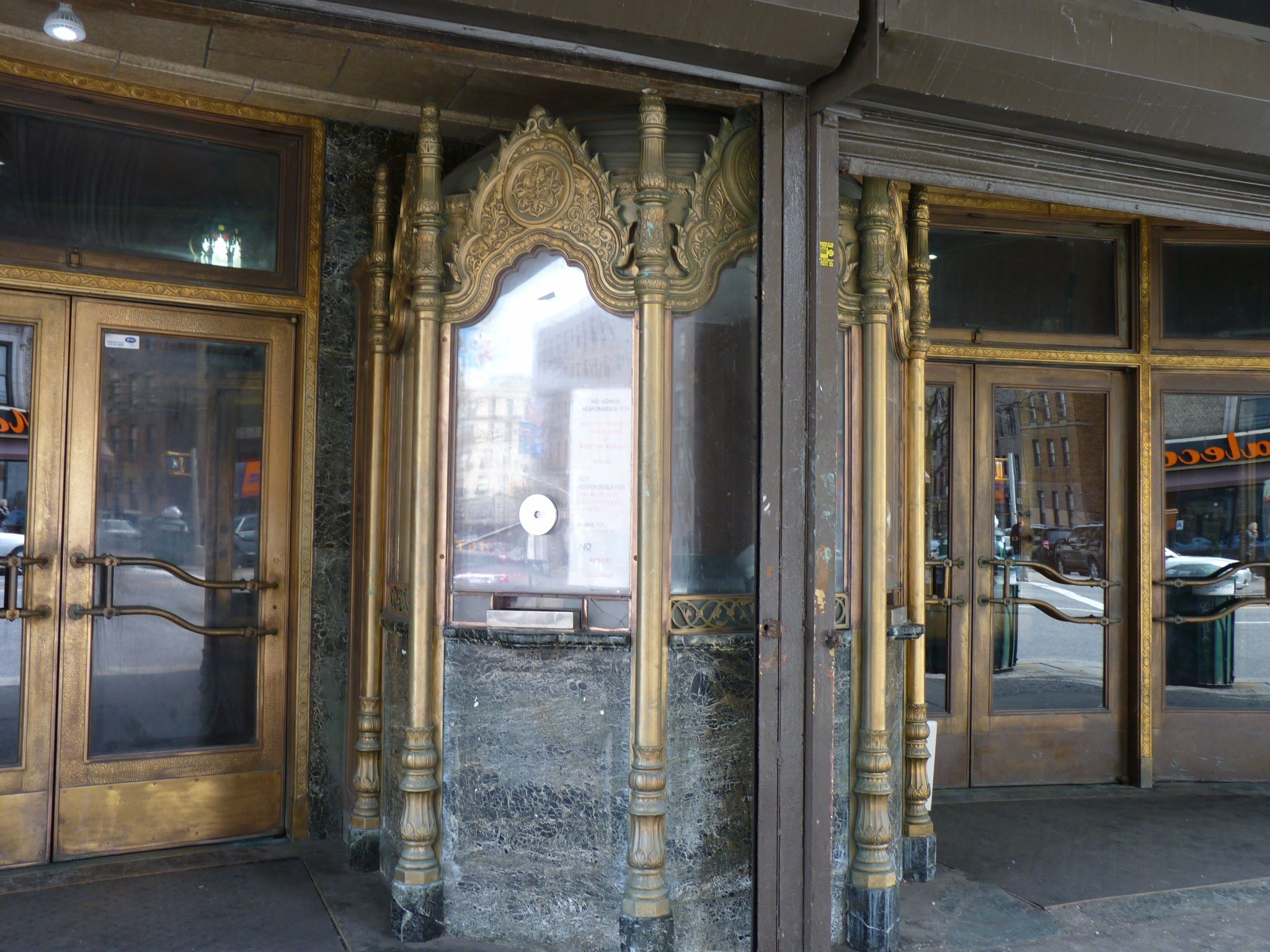
Ticket booth at the old Loew’s on 175th Street and Broadway.
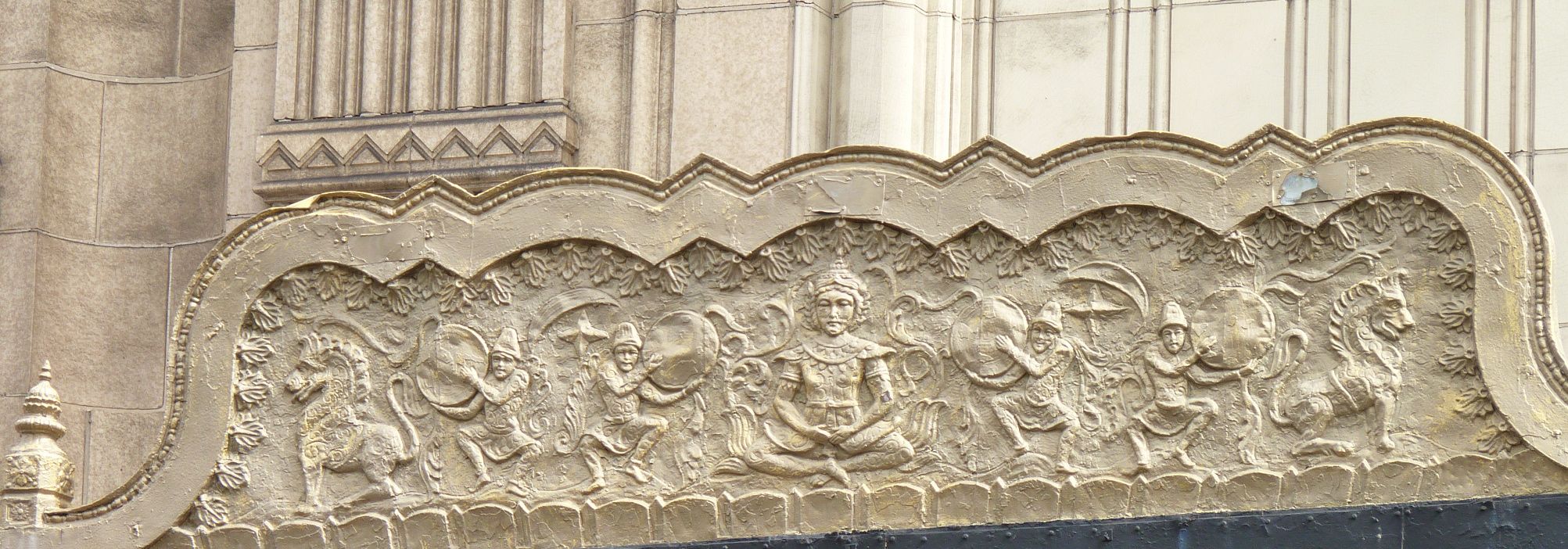
The marquee.
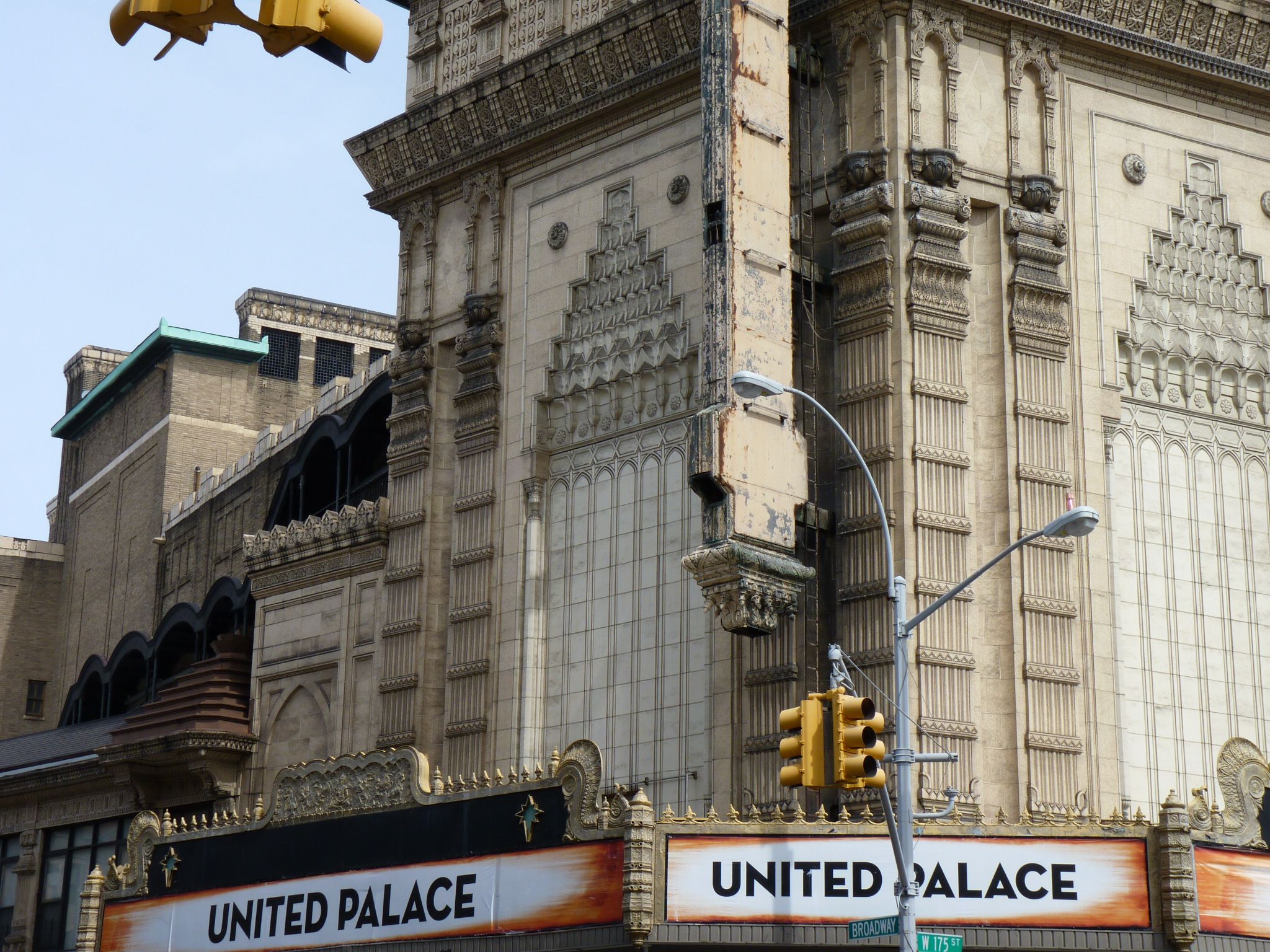
The marquee today.
In the back of the theatre, facing Wadsworth Avenue, a balcony had been built on the second floor. I couldn’t figure out if the stars used that space to come out and bow to their fans, or if it was just a place to cool off on a hot summer night because the theatre was built way before air conditioning.
When I got home I called my mother, because she grew up in that neighborhood. I thought she might know what the mystery building was before it became a church. “Of course. It’s the Old Loew’s Palace where I saw ‘Gone with the Wind’ when it first came out in 1939. I was 11.”
02 Tuesday Apr 2013
Posted in Confessional

I work …
On July 16, 2012, my position had been eliminated. Not just mine, but 125 other employees who, just like me, loved their speaking jobs in the local high schools. Yep, the company was “ending” this side of its operations after 35 years. It was a bolt out of the blue. Or maybe a zing. It was coming for some time, but I loved my job, so tried not to dwell. Then it dropped – the weight. Clunk. Right there in front of me.
My heart was in my throat for most of the conference call. Little flashes of catastrophe were clouding my vision. Do I get severance? What about health insurance? What about vacation pay? References? My livelihood? And … my sanity. I was 55. Who would hire me?
So, herein lies my eight-month journey:
The Good
Fortunately, I am an eternal optimist. My first thoughts: my husband and I will be fine. The severance package was decent, plus all vacation pay should carry us through at this income level for about four months. I saved a tidy sum through the company’s 401k plan. That will be rolled over into our investment fund. Oh, and unemployment! I must sign up for that immediately, I was told. I’d have the rest of the summer free, basically, and can help with my daughter’s upcoming wedding. (An iota of glee there.) And, oh yay! I could hang out at our cabin as much as I please for the summer.
Hey, is this such bad karma, I thought? And lest I forget – I have a Washington State teaching certificate. I’ll renew it, and substitute teach until I find permanent employment. (Do I really want permanent employment again?) Unemployment prorates my wages while I substitute teach because it’s not permanent work with benefits. I could get used to this. I had time for lunch with friends, my workouts did not suffer, and I had time to visit my aging parents. Life was good.
The Possible Bad
It’s been eight months since the layoff, and we haven’t had to touch the severance fund. The economy in Seattle, where I live, is robust. We have some of the nation’s best companies headquartered right here. Amazon just contacted me for an interview for an awesome position developing business relationships. But, who will hire someone who is five or so years away from retirement? And I haven’t had a ton of interviews. But this subbing gig is working out. And I must not let the age thing get me down. It’s time to demonstrate energetic interview enthusiasm. (Yay! I love your company, and I want to be part of the team!)
The Ugly
I’ve since sent out 300 resumes, and I’ve had only three interviews so far. I’m a straight-A student – what’s happened here? I’m technologically with-it: LinkedIn, Facebook, and electronic submissions of resumes and cover letters. I’ve been out of permanent work for so long now, that I just qualified for the Emergency Unemployment Compensation through the Federal Government. I hope it doesn’t get so ugly that this runs out. If so, I can continue to substitute, as I don’t really want a permanent teaching gig. And, the optimist in me keeps reassuring me that I can do this until I really want to retire. (So, take that, ugly side.) I do have options.
Well, in retrospect, since the “Good” paragraph is the most lengthy, I guess this layoff thing isn’t so bad. Or ugly.
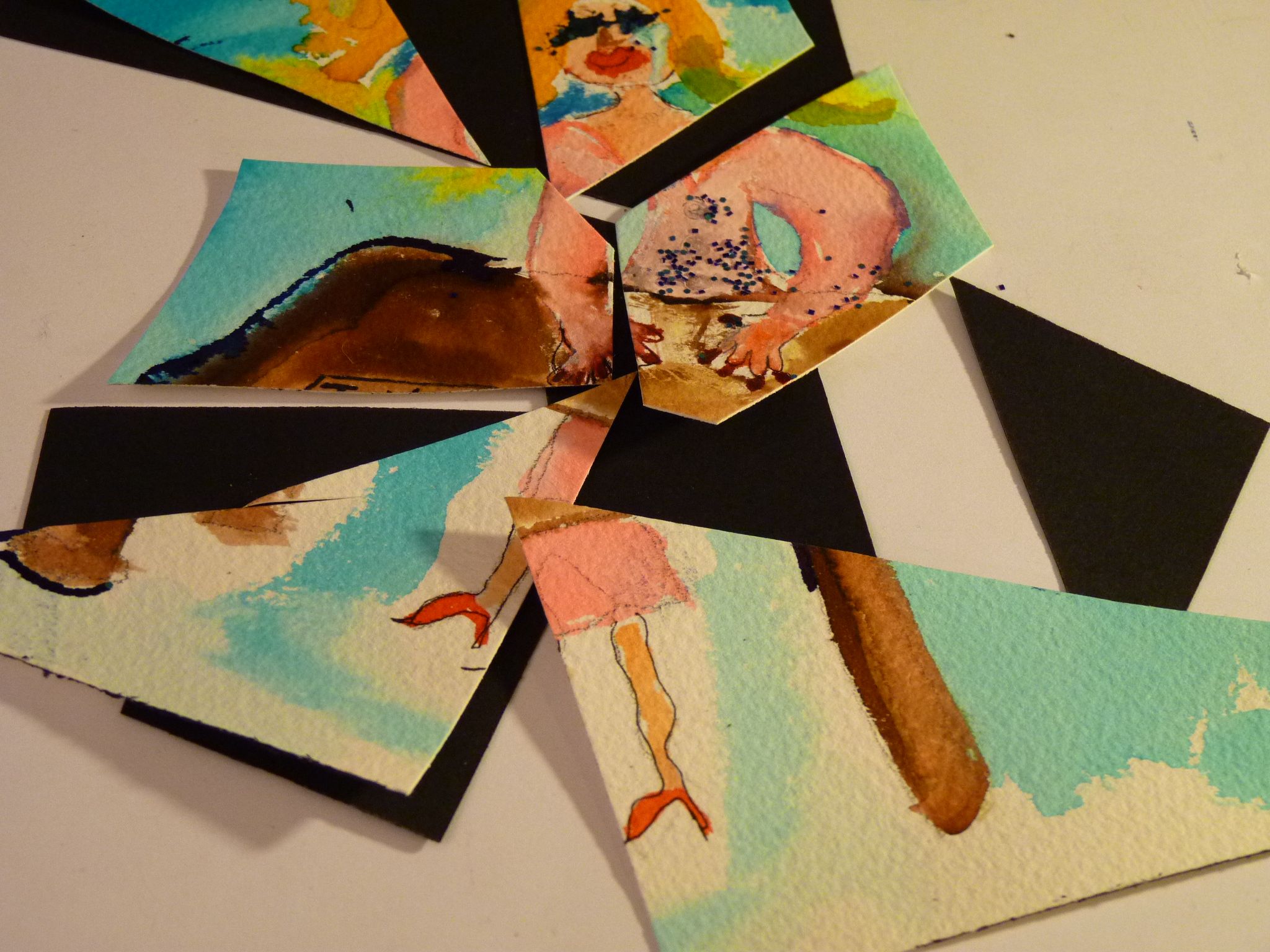
… outta work. Cut up watercolor by Julie Seyler.
01 Monday Apr 2013
Posted in Art
Tags
Art, David Yurman, Dura-Europos, Julie Seyler, The Write Side of 50, Yale University, Yale University Art Gallery
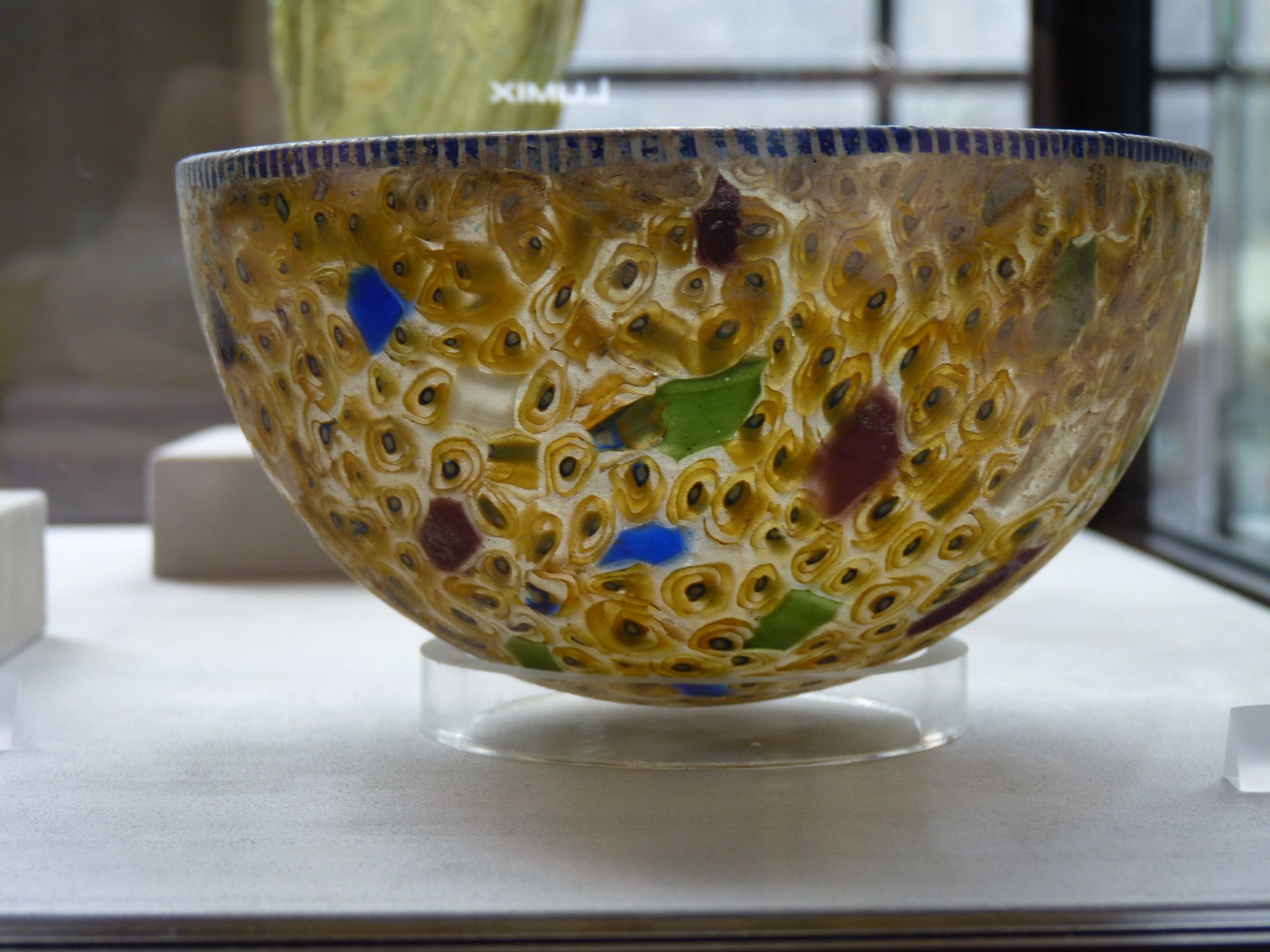
Glass mosaic bowl, 1st century B.C. to 2nd century A.D.
I am passionate about ancient objects. Vases, bowls, tables, and combs, when crafted by an artisan who might be 4000 years old today, blow my mind. So I scour the ancient art galleries of museums, and love to visit once-buried cities. Seeing old artifacts confirms the continuity of fashion; the practicality of drinking glasses; the fun of jewelry.
One bitter day in March, a friend and I drove up to the Yale Art Gallery. From the city, it’s about 2 hours on I-95. I had heard that the recent renovation was spectacular, but had ignored reading about it, so I went with a blind eye. The minute we drove onto Chapel Street, and past the stately gothic buildings that comprise Yale University, I was enamored. The campus is not beautiful in the sense of rolling hills, but in the majesty of the architecture. It celebrates education with arches and steeples and marble and wrought iron gates. If ever I wanted to go back to being a student, this stroll around Yale made me long for youth in a way that was not familiar.
So when I entered the art gallery, I was already enchanted and became more so as we ambled through. The little I saw reflected the tip of an amazing collection – a mini- Metropolitan Museum of Art, but so much more accessible. The info cards give the necessary details with simplicity, and it was crowded, but not jammed.
Within the Roman galleries was an exhibit devoted to the city of Dura-Europos, founded in 300 B.C. on the western bank of the Euphrates River, in what is now present-day Syria. The Romans dominated from about 165 A.D. until another invading army, the Sassanians, took over. The site was discovered by a team of Yale archaeologists in the 1920s, and the gallery is a showcase for their finds. I spotted a leather flip flop that could have been made by Rainbow; a David Yurman bracelet and Matisse-like terracotta female figures.

Leather flip flop Dura-Europos 2nd-3rd century A.D.

“David Yurman” bracelet circa 200-256 A.D.

The zaktik torso. 1st century B.C.- 2nd century A.D.
My favorite was the word puzzle. Each of the words (ROTAS, OPERA, TENET, AREPO, and SATOR), written on this plaster plaque, can be read right to left, or left to right, or up and down, or down and up, and end up spelling the same word. A master acrostic palindrome. The meaning remains an enigma, but not the pleasure of a word game, which is timeless.

30 Saturday Mar 2013
Posted in Art

Ceiba tree. Tikal, Guatemala. Photo by Julie Seyler.
Tikal, Guatemala is a destination place for those who are intrigued and curious about the Mayans. But beyond the grand temples, stands nature. The Mayans believed that a great Ceiba tree stood at the center of the earth, and connected the terrestrial world to the spirit world above. Who doesn’t want a little connection to the spirit, wherever it is circulating?
28 Thursday Mar 2013
Posted in Art, Confessional

Double Shot: Julie shooting the interior of a 1964 Chrysler.
I’ve already walked down memory lane with why I get a kick out of convertibles, and Bob has reminisced about his grand old ’64 Ford Galaxie. So, staying on message with the automobile, here goes my passion for old cars. For example, I love watching White Heat, not just because it’s a great movie with one of the best movie quotes of all times – “Made it Ma! Top of the world!” [No. 18 on the AFI list] – but because of the cars the gangsters and the cops drive.

The Jarrett gang getaway.
These are late ’40s whales, but I am mesmerized while watching Ma, desperate to dodge the cops, downshift and screech around the corner. The good guys, determined to stop the Jarrett gang, have access to all of the latest technology – like a radio transmitter the size of a satellite dish strapped to the roof of their car. I am so entranced by these images, I end up taking photos of the cars as I watch the movie.
My mini-obsession doesn’t stop there. I also collect photos of old cars. I mean, I’ll never be able to afford to buy one, let alone maintain one, so I might as well have a facsimile collection. Newspaper photos may be archaic one day, which means my “collection” will have value on eBay. Ha Ha. Anyway, remember I wrote about that car auction of famous people’s cars in my convertible post and a purple 1919 Pierce-Arrow, owned by the silent film star, Fatty Arbuckle? Here’s Fatty Arbuckle’s Pierce Arrow. Even the dullness of newsprint can’t dull down the lines and contours of this grand baby:
And, of course, I like old car shows, because I can take photographs of the real thing.
There is just something sexy about the rounded long hoods of 1940 sedans. They may have weighed a ton, but the devil was in the detail, such as the ornaments that graced the hoods.

Nice contrast to the mega-headlight orbs.


I am always discovering endearing features in old cars, like the massive steering wheels, or the the exotic boldness of the color option. It seems that by the late ’50s and early ’60s, car manufacturers found pastel. Pink seats, tri-color striped seats, and mustard yellow were quite coveted.
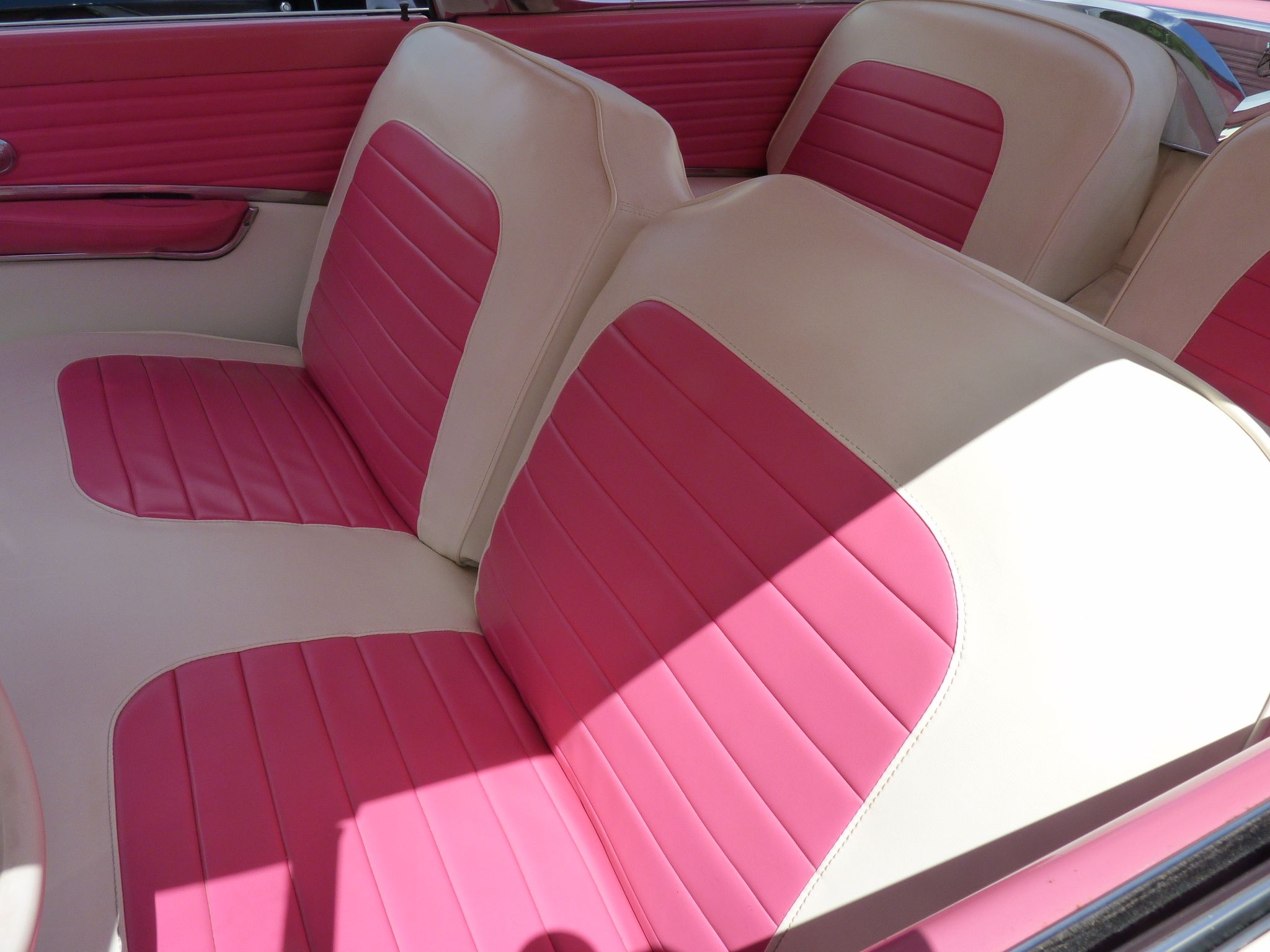

Gas guzzlers they may have been, but the essential beauty of the design cannot be compared to the streamlined homogeneity of the modern car. There is just something aesthetically appealing, and intrinsically intriguing, about cars that were born between 1940 and 1963. (Sort of like us right-side-of-50ers.)

25 Monday Mar 2013
Posted in Art, Confessional

“Directions. Information. Reversible.” Collage by Julie Seyler.
One thing I’ve noticed about my late 50s is: change is possible. Directions I slavishly followed because they had been cast in stone years ago are easily reversed if they are dragging me down. Rules I loyally adhered to are tossed when they become too burdensome. Trapped revolving, icky information that used to take days to sift through is discarded in three hours. I don’t have the time or the energy to waste dwelling on the wrong side of things. I adjust if necessary, and that is a benefit to moving further from the left side of 50.

“Adjust if necessary.” Collage by Julie Seyler.
Of course, there is irony in the whole process. Because as my inner psyche experiences this newfound freedom and liberation, my outer self is undergoing a cataclysm. It seems that the contours of my face and body are moving in a wildly different, quite unknown direction. I guess there are always trade-offs.
23 Saturday Mar 2013
Posted in Art

Above the clouds. Photo by Julie Seyler.
These days, flying in an airplane, unless you can go Business or First Class, can be a deadening experience. Jam-packed planes, airport security, boxed meals, and tight seats, are just a sampling of why flying can be a chore. So, the trick is to find a silver lining. There’s one outside the window: the landscape of clouds. Always mesmerizing.
21 Thursday Mar 2013

Mae has all of the angles. Mixed media by Julie Seyler.
Every year the Film Forum runs a festival celebrating movies made in 1933 or earlier. Movies like “Babyface,” with Barbara Stanwyck as the heroine, who sleeps her way to the top, and “Bombshell,” starring Jean Harlow as Lola, the actress who keeps family and film crew afloat, are made available on the big screen. Unmarried women had sex. These movies tend to be, what we used to think of as, “bawdy,” perhaps a little naughty. But then along came the Hays Code and its edicts to enshrine chastity and separate the matrimonial bed.
We chose to watch a double feature. First up was “I’m No Angel,” an iconic early flick starring Mae West and Cary Grant. Mae also wrote and directed it, which meant she broke the glass ceiling in Hollywood 80 years ago. The other feature was a Czech movie called, “Ecstasy.” It starred Eva Hedgwick before she came to the U.S. and became Hedy Lamarr.
“I’m No Angel” is built on Mae West’s over the top pungency in dress and persona. She was a zaftik dame with full thighs and hips, and her clothes accented every curve. Frank would have loved her. Her ensembles belong on the Red Carpet of the Academy Awards, and she never used a stylist. She was provocative, but always in complete control.
The plot is about a woman who cops to being “no angel,” but she does so with such lust and joy, that it makes the alternative awfully unappealing.

Mae West: having fun by Julie Seyler. Mixed media on paper.
The movie opens with Mae as Tira, the burlesque draw in a honky tonk road show. She is down and out in her luck, and consults the show’s astrologer to find out how to find the right man. After he reads her charts, she makes no move without consulting his predictions. To get some dough, and become rich and famous, Tira becomes a lion tamer, and sticks her head in the lion’s mouth. She befriends women who are nice and disses snobs. She convinces an engaged man to give her thousands of dollars worth of gifts with nothing but friendship in return. And when millionaire Cary Grant breaks their engagement, she sues him for breach of promise, and nothing else. She has no interest in his money; she wants love. So romance wins out as we fade to Cary and Mae kissing. The End.
The second feature, “Ecstasy,” was about a young woman who marries a prig. Her marriage is never consummated, so she divorces him, and in her sadness and despair, hooks up with the virile brawny construction worker. Her pearls fling off and flowers bloom as she experiences ecstasy. Sex appeal – always in fashion.

Hedy blooms. Collage by Julie Seyler.
18 Monday Mar 2013
Posted in Art

Julie takes a photo. Palace Hotel. Madrid, 2012.
I have always embraced a camera. Out of all my high school friends, I think I am the one with the most captured memories on film. It could be true for my college years, law school years, my Washington D.C years, and the last 24 years in Manhattan.
In the beginning, I used film because we only knew film. We built our camera knowledge on trademarks like Kodak, and the instant snapshot of the Polaroid. Remember Bob’s family had a Kodak Duaflex.
Then digital cameras began infiltrating. I railed against them. I swore my loyalty to film, and I managed to remain a hold-out until the near end, when it was impossible for an amateur to find film, let alone find anyone who could develop it, or would develop it at a reasonable price. Now I cop to the fact that I became a convert. Nothing beats the ease of digital and its mechanics that allows for thousands of images with a click.
And not only did technology change, I changed. Where I used to only take photos of friends, anywhere at anytime, I have moved towards nature and buildings; city streets and sunflowers. I am mad about light and color and composition and beauty and ugliness. Here are three of my favorite photos:
This was taken from the (now battered) deck at Allenhurst Beach Club, about two or three years ago. It was early in the day, and I knew it was going to be a gorgeous one. The sky told the story. Every time I revisit this photo, I see space, freedom, tranquility, and the anticipation of a perfect day at the beach.

In the middle of February, I was waiting for a downtown bus in front of McSwiggans, a bar on 2nd Avenue. I was staring into the front bay window, and was struck by the antic energy created by the competing beer advertisements. Out came the camera. I had to try to nail it.
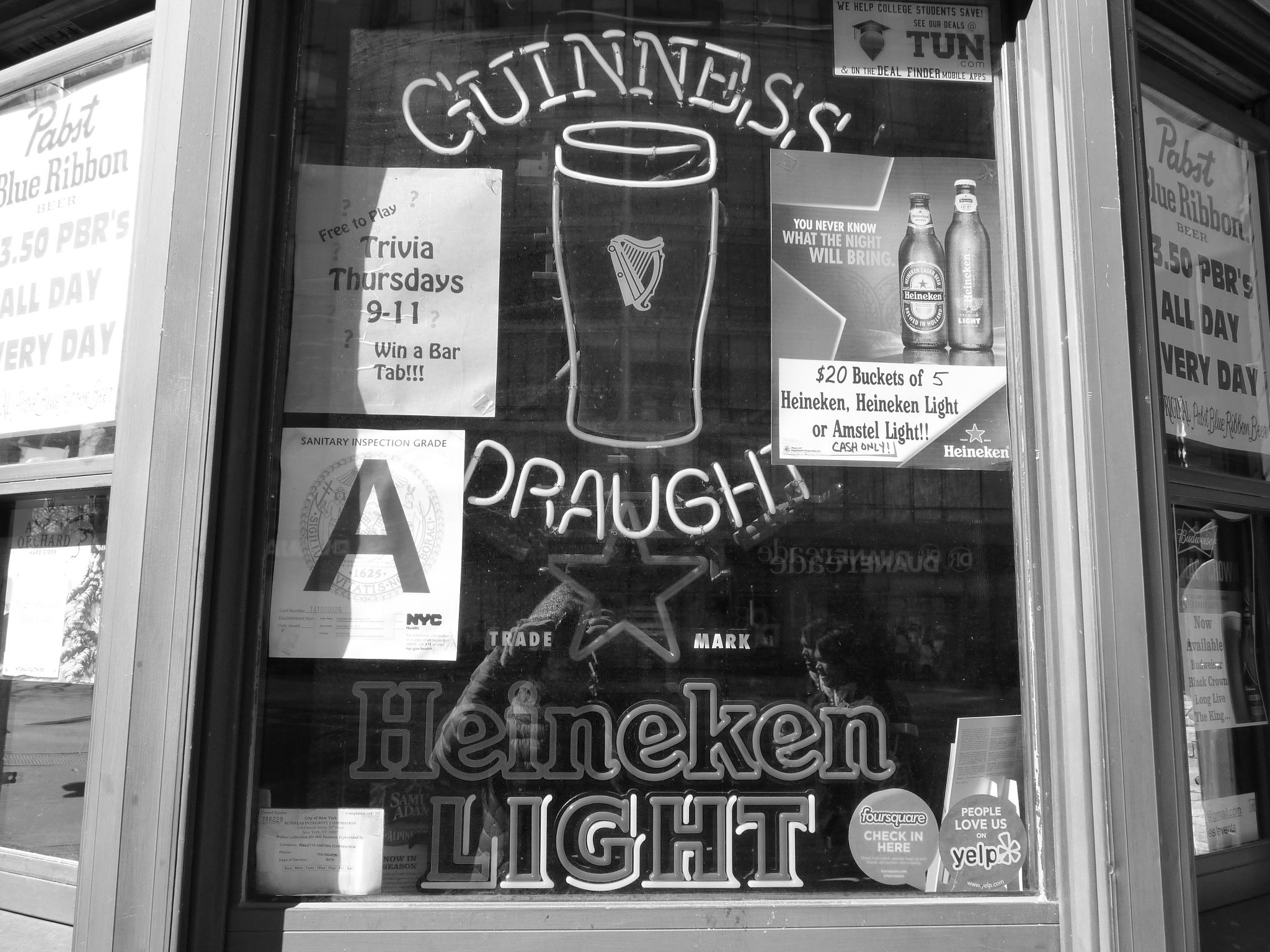
I do not know why, but I have always been fascinated by old cemeteries – those where the tombstones are dated anywhere between 1600 and 1900. There is sculpture in the alleys lined with mausoleums – mansions to hold the dead. This was taken at Pere Lachaise Cemetery in Paris where Jim Morrison is buried. It was around 10 or so on a Sunday morning. I never did find Jim Morrison.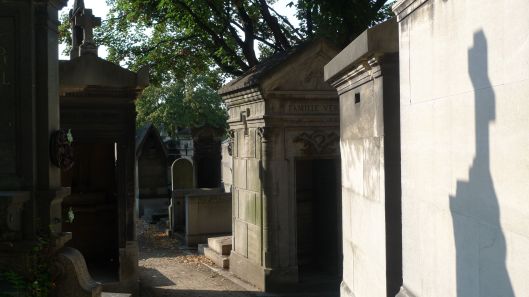
 The Write Side of 59