• About
  • Who’s Who
  • Contributors

The Write Side of 59

~ This is What Happens When You Begin to Age Out of Middle Age

The Write Side of 59

Category Archives: Opinion

I Hate Growing Old

31 Thursday Jul 2014

Posted by WS50 in Opinion

≈ 3 Comments

Tags

aging, getting old, Julie Seyler

i hate growing old 1
BY JULIE SEYLER

There are some days, not all days, but some of them where the revelation that I am growing old, bit by bit and inch by inch hits like a ton of bricks. It may be because despite how perfectly I have applied my mascara, my eyes still look withered or no matter how much time I spend grooming my hair its 58-year old texture just refuses to behave and looks ghastly or it might be because I had a mighty fine work-out only to discover when I get in the shower there is a dull ache in my arm. Instead of knowing it will go away, the thought creeps in, “Is this the start of something big? Is my cartillage leaking out?”

Nothing is the way it used to be and the idea that this spiral of slow decline is the new norm is just one big icky thing that does not make me happy. That’s when I call Lois, the eternal optimist whose favorite slogan is “It’s going to get better!”, but she is a peer and she too is in the process of figuring out this new story line. So we commiserate and crack up at the absurdity of how the body betrays its host and figure this means its time to plan a dance party.

Share this:

  • Share on X (Opens in new window) X
  • Share on Facebook (Opens in new window) Facebook
  • Share on Reddit (Opens in new window) Reddit
  • Email a link to a friend (Opens in new window) Email
Like Loading...

Ellis Island: A Lens to Immigration History

28 Monday Jul 2014

Posted by WS50 in Opinion, Travel

≈ Leave a comment

Tags

Ellis Island, Frank Terranella, Immigration, LIberty Island

Ellis1

By FRANK TERRANELLA

Like many New York-area residents, I have never been to many of the tourist meccas like Ellis Island. And since three of my four grandparents were immigrants, I decided on a beautiful Sunday morning recently to see the ground zero of 20th century immigration for myself.

The great thing about a visit to Ellis Island is that the only way to get there is by boat. Of course, that’s the way it’s always been. Between 1892 and 1954 immigrants arrived at Ellis in boats from all over the world. The boats today run a route that includes Liberty Island along with Ellis Island on every trip. So even if you just want to see Ellis Island, you get a free trip to Liberty Island thrown in.

Ellis Island was hit hard by Hurricane Sandy in 2012 and some exhibits are still not back. But what’s there is gold.ellis2 There are artifacts galore and you can tour the great hall where immigrants waited to be called up to be interviewed. You can see where they ate and where they slept. You can see an above-average orientation film that tells the full story of American immigration. And they don’t try to cover up America’s checkered acceptance of immigration. There are whole exhibits to “nativist” hostilities to every immigration group. For some, like the Asians, the dislike was codified into laws that forbade immigration altogether for decades.
But what surprised me most about visiting Ellis Island was the people who accompanied me on the boat. It seemed to me that the vast majority of my fellow visitors were immigrants themselves, or perhaps simply tourists from foreign countries. English speakers were definitely in the minority. And this dismayed me. It seems to me that it would do many native-born Americans good to see the lengths our ancestors went to to try to deal fairly and humanely with immigrants.

From my reading of history, and from the exhibits at Ellis Island, I know that the people who created and worked at the facility were not all big fans of immigration. Yet they followed the law, and I suspect they even bent the law sometimes, to give many needy people a shot at the American dream. The key, of course, was that the laws during the time Ellis Island was operating either allowed unrestricted numbers of immigrants (as long as they were healthy and could prove they had a way to support themselves) or set the ceiling on the number of immigrants high enough that people did not have to wait years or even decades to come into the country legally.

The tour guides at Ellis Island go to great pains to explain that not everyone who came to Ellis Island got to stay in the country. If you were found to have any disease or were otherwise “unqualified,” you would be sent back to your home country. In fact, a member of my family who was found to have tuberculosis was sent back home. He would return to the United States years later after being cured of the disease.

I think that anyone who visits Ellis Island comes away with two thoughts: (1) it was a tough, nerve-wracking way to come into the country but, (2) the process was designed to be fair and efficient and it was that most of the time. One of the rooms you can visit is the make-shift courtroom where immigrants who were being denied admission could have their cases reviewed by administrative judges. The hearings went on all day, every day. Many were able to convince hearing examiners that they were being denied entry unjustly. Contrast this to the detention facilities we have today for unqualified immigrants that provide no right of appeal.

Clearly the immigration situation today is much different than it was 100 years ago. But when you visit Ellis Island, in the shadow of the Statue of Liberty, you can’t help but be thankful that Americans then, while not being crazy about the hordes of immigrants filling up New York City, were compassionate enough and intelligent enough to let them in, in the hope they would contribute to the country.

Essentially, in those days, America made a bargain with the world. You can come here if you promise to work hard and help make America a better place. Even the most ardent immigration opponent would have to agree that the immigrants who came through Ellis Island between 1892 and 1954 kept their side of the bargain. Are we sure that the thousands of people we turn away today because of ridiculously low limits on the number of immigrants cannot similarly contribute?

Share this:

  • Share on X (Opens in new window) X
  • Share on Facebook (Opens in new window) Facebook
  • Share on Reddit (Opens in new window) Reddit
  • Email a link to a friend (Opens in new window) Email
Like Loading...

Sleeping and Profiting

16 Wednesday Jul 2014

Posted by WS50 in Opinion

≈ Leave a comment

Tags

Julie Seyler, Red Sox, sleeping at a baseball game, Yankees

cake 005BY JULIE SEYLER
There is weirdness in the world today. I have a list of things I have seen, heard, read or experienced that makes me wonder has the civilized universe always been this silly or is it more silly because of the Internet, You Tube, the absence of boundaries, a hankering for 15 minutes of fame, and a belief that any infraction to personal space means a million dollar reward.

It seems a devoted New York Yankees fan fell asleep while the Yankees were playing the Boston Red Sox.

ESPN picked up on the fan’s snooze.
ESPN filmed his nap and commented on the propriety of sleeping through a baseball game.
The video was uploaded to You Tube and a Major League Baseball website.
The sleeping fan was made fun of.
The sleeping fan was not happy about the publicity.
The sleeping fan has demanded 10 million dollars, yes 10 million, to be compensated for this public defamation and the mental anguish he suffered.

It’s difficult for me to understand why ESPN and its mass following gained so much pleasure of posting images of someone sleeping at a sports event. Maybe the guy was tired, but it is incomprehensible how this guy believes that he deserves money for sleeping. Perhaps the attorney representing him is the one that deserves some Internet generated attention.

Anyway, for the moment this is old news as George Clooney and the Daily Mail fiasco become the trending topic.

Share this:

  • Share on X (Opens in new window) X
  • Share on Facebook (Opens in new window) Facebook
  • Share on Reddit (Opens in new window) Reddit
  • Email a link to a friend (Opens in new window) Email
Like Loading...

Twitter is Not a Gathering Spot

01 Tuesday Jul 2014

Posted by WS50 in Opinion

≈ 1 Comment

Tags

Frank Terrannella, television, Twitter

Screen shot 2014-06-27 at 12.23.21 AM
BY FRANK TERRANELLA

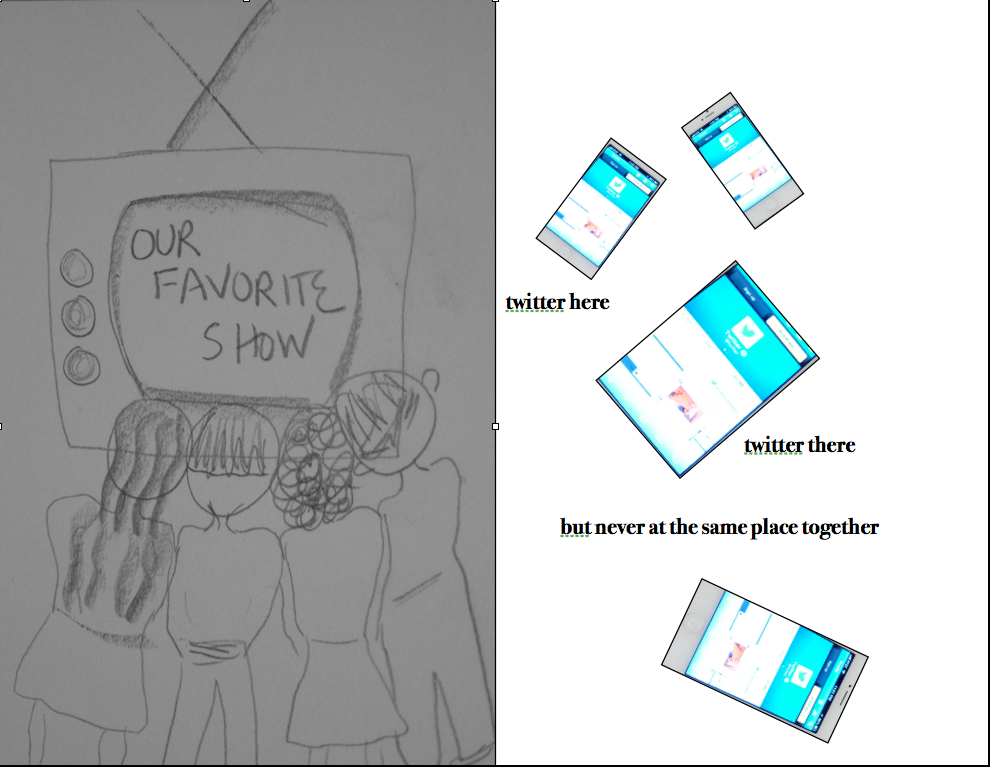
The newspapers are full of reports every day of people being indifferent to the plight of others. An example is the subway death about which my colleague Bob Smith wrote so eloquently on this blog a while ago. I have been thinking about our “urban solitude.” Why don’t we seem to care about one another? I think it’s because we lack opportunities to bond as a community. Television used to be able to help us have common experiences.

Everyone this side of 50 remembers where they were the day President Kennedy was shot. We watched the funeral as a community on television. In fact, my definition of a baby boomer is someone who remembers the day President Kennedy was shot but had not yet graduated from high school. It’s one of the defining community events of our generation. Another might be the night Neil Armstrong walked on the moon.

My children have 9/11 as their generation-defining event. My parents had Pearl Harbor. My grandparents had Lindbergh’s solo flight across the Atlantic and the 1929 stock market crash. The point is that there are events, often disasters, which cause us all to come together as one people and to experience an event together in community. This causes us to view others who share our grief or exhilaration as similar to us and to have empathy for them. Since the 1960s, we have had our common experiences by gathering around the television, but that’s changing.

Twitter and other online locales are now becoming the places where we gather when something big is happening. Unlike television, these websites have the benefit of being interactive. But for me there’s something too impersonal about online gathering places. There’s no person like a Walter Cronkite to act as group facilitator for our collective feelings.

Everyone remembers the emotion that Cronkite expressed when reporting on both the Kennedy assassination and the moon landing just because he was expressing what we were all feeling. He made it OK to shed a tear. He validated our experience. It’s difficult to replicate that on the Internet because of its anarchic nature. On the Internet, no one’s in charge. So the most puerile comments get equal time with the most astute.

I bring this up because I am sure that the days of a shared television experience and the ensuing water cooler discussion are just about over. While in our youth a showing of the Wizard of Oz could draw a 50% share of the audience, today nothing short of the Super Bowl has that kind of mass appeal. We are becoming a more splintered society. The top-rated television shows now all draw less than 20 million viewers. Even football routinely draws less than 25 million viewers. That’s out of more than 300 million possible viewers. So clearly we are not gathering around the television the way we used to.

The Internet is surely a major reason. The water cooler conversations have fallen off, replaced by Facebook and Twitter. And that’s a shame because these communities are not ITRW (Internet speak for “in the real world”). A community on the Internet is a faux community because you will never meet these people. And it’s only when you meet people and interact with them face-to-face that you begin to care about them.

Anyone who was in New York in the days after 9/11 knows the difference that a sense of community makes. The city came together and people looked out for one another. People actually spoke to strangers on the subway! Within a month, that sense of community tapered off. And so now we have people dying in our subways because no one cares enough to get involved.

Perhaps the answer is less community in the online world and more in the real world. Friend someone who lives in your neighborhood, rather than on Facebook. Deliver a Tweet in person. Interact with flesh and blood people and not just their avatars. Soon we may actually learn to care for one another. And the next time someone needs help in a public place, they may actually get it.

Share this:

  • Share on X (Opens in new window) X
  • Share on Facebook (Opens in new window) Facebook
  • Share on Reddit (Opens in new window) Reddit
  • Email a link to a friend (Opens in new window) Email
Like Loading...

The Arc of Women Will Always Include Misbehaving Men

30 Monday Jun 2014

Posted by WS50 in Opinion

≈ 1 Comment

Tags

American Apparel, An American Dame, Anita Jaffe, Dov Charney, Philip C. Lewis

Me, my sister Liz and my brother-in-law Phil (1943).

Me, my sister Liz and my brother-in-law Phil (1943).

BY ANITA JAFFE

Fifty years ago, my brother-in-law, Philip C. Lewis (pictured above), wrote and published a “playlet” called the “The American Dame”. It’s not a play with a plot, but a play with a singular theme that is read by different characters. His playlet traced an arc of how women have struggled for independence and recognition, respect and equal treatment over the course of history.

He even goes back to the Bible, referencing that within the story of Adam and Eve, Eve is set up because she is cast as the sinner; the temptress that causes Adam to fall from grace. He moves forward to the fight women waged to get the right to vote, and how the Equal Rights Amendment, first introduced in 1923, remained un-enacted in 1964 (and I might add is still un-enacted in 2014).

For some reason, my brother-in-law’s musings on the short shrift accorded women struck home when I read an article in The New York Times about how Dov Charney, the founder of American Apparel, was finally dismissed for treating his women employees like chattel. This 45-year-old man conducted an interview of a prospective employee wearing a towel. Would he have donned such attire if the prospective interviewee was a man? I highly doubt it. Would any woman CEO anywhere don a towel for an interview, male or female? No way!

Later, the DovMan forced his employee to perform various sexual acts, and there is no way anyone can say such behavior was consensual when the pressure to do as you are told is coming from the boss. That the DovMan is fighting to get his job back is laughable. Talk about a disconnect from reality.

But he is not the sole culprit. The article in the Times also referenced Dennis J. Wilson, the founder of the fitness clothing company Lululemon Athletica. He was attached to the following quote with respect to how his company’s yoga pants fit:

“Quite frankly, some women’s bodies just actually don’t work…”

It is fascinating to me, an octogenarian on my way to being a nonagenarian, that there are still corporate moguls running multi-million dollar companies who believe they have carte-blanche entitlement to treat women different than men, basically because they are not men. I am well aware that great gains have been made. Sheryl Sandberg of Facebook and Marissa Mayer of Yahoo are not oddities. Women have been and continue to break into the upper echelons in every field.

But the fact remains that the issue of women being seen for who they are, and not as objects for amusement has hardly been swept away. There remains a strain in society that still blames a woman when a man misbehaves. And that is not to dismiss the reality that there are also legions and legions of men who find the DovMen of the world abominable.

The Board at American Apparel did get around to ousting him The question of why it took so long is part of the issue and a different blog.

Share this:

  • Share on X (Opens in new window) X
  • Share on Facebook (Opens in new window) Facebook
  • Share on Reddit (Opens in new window) Reddit
  • Email a link to a friend (Opens in new window) Email
Like Loading...

Corporations Cop Out on Kids

25 Wednesday Jun 2014

Posted by WS50 in Opinion

≈ Leave a comment

Tags

Fair Labor Standards Act, Frank Terranella, free labor, Jobs, minimum wage, Unpaid Internships


June 25, 1938. FDR signs into law the Federal Labor Standards Act.

June 25, 1938. FDR signs into law the Federal Labor Standards Act.

BY FRANK TERRANELLA

Back in 1974 I was an unpaid intern at a newspaper. This was an academic internship arranged by my college and for which I received college credit. Although I certainly provided valuable services for the newspaper, the primary reason I was there was to learn about the newspaper industry and see if it was something I might want to do after college. I learned a lot and found I loved the work.

As it turned out, my internship led to my first post-college job because the managing editor of the newspaper where I applied for a job knew the managing editor at the paper where I had interned and the latter said some good things about me and I got the job.

Because of my positive experience with unpaid internships, I encouraged my children to do them as well. They both did several unpaid internships in college. But unlike me, their college internships did not lead to paid jobs. Instead, they led to more unpaid internships. And that’s when I found out that not only are the drugs different now from when I was in college, internships are too.

In the 21st century, American businesses have turned from being educational partners with universities to being exploiters of free student labor. Horror stories abound, particularly in the media industry, of young people forced to do menial tasks for free in the remote hope that having an internship on their resume will have some value to them. There’s no pretense of educational value other than learning how greedy and immoral American employers have become.

The last time corporate America was this greedy was during the Great Depression of the 1930s. Workers provided services for pennies an hour and were happy to do it. But many fair-minded people in Congress were upset by the unfair bargaining position of employers over employees and they reacted with the Fair Labor Standards Act (FLSA). This landmark New Deal legislation set a minimum wage and also a maximum work week of 40 hours, after which a premium overtime wage was required.Corporate America accepted this new burden because there was a level playing field and all businesses employing U.S. workers had the same burden. In addition, many employers saw it as simply the right thing to do.

Over the years, some businesses have become greedier and have tried repeatedly to work around the minimum wage laws. They have exploited every loophole (such as unpaid internships) and in recent years have even tried to have the FLSA repealed. My daughter worked for over a year for a large multinational corporation as essentially an employee without pay. It was called an internship, but there was absolutely no educational value and no connection with any educational institution. Clearly she should have been paid at least the minimum wage.

Being on the right side of 50 gives you the ability to see trends over long time periods and the trends for employees are not good. Ever since Ronald Reagan broke the air traffic controller’s union in 1981, the balance of power has been flowing to employers. The minimum wage has stagnated and the number of unpaid interns has skyrocketed. Meanwhile corporate profits are at record highs.

It will take decades to reverse this trend, but there’s something we need to do right away. We need to pay people in their 20s a fair wage for valuable work done for a business. We need to ostracize businesses that steal from young people by asking them to work for free. We need to have state and federal labor departments that vigorously enforce the state and federal minimum wage laws. We need to stop looking the other way and pretending these internships are bona fide. It’s the least we can do as parents and as moral Americans.

Share this:

  • Share on X (Opens in new window) X
  • Share on Facebook (Opens in new window) Facebook
  • Share on Reddit (Opens in new window) Reddit
  • Email a link to a friend (Opens in new window) Email
Like Loading...

The Little Brown Spots in Computer Upgrades

17 Tuesday Jun 2014

Posted by WS50 in Opinion

≈ 2 Comments

Tags

Apple, Sleeper, Woody Allen, Yosemite operating system

apple 2


BY JULIE SEYLER

I love Apple products. Their architecture and design is sexy, sleek and practical. But when I read about Yosemite and Continuity, the latest operating systems soon to be installed on my devices, certain aspects made me wince. Not that Apple’s speedy little shortcuts, which will assist in ever easier ways to multitask, aren’t savvy, but it’s the other side of the apple that sometimes feel just a little rotten.

In iOS 8, the mobile device keyboard has been expanded to improve what is called predictive-typing suggestions. When a user is typing, the keyboard tries to predict the next word the user will type to help save time. It can also predict responses to incoming messages — for example, if a spouse asked, “Do you want to go to dinner or a movie?” the messaging app will provide potential responses to pick from: Dinner, a movie, or “I don’t know.”

Now I can’t fault a device that cuts down on typing on a 3 millimeter keyboard, but I don’t want my computer to predict what I am thinking or what I am going to ask or what I am going to answer. I feel as if my brain is being co-opted by my phone. It’s invasive that this inanimate object can predict my behavior based on my past predictability. Pretty soon I won’t even have to wonder what I’m doing tonight.

Then there is HomeKit. Here, the computer takes care of directing your home appliances to turn on, turn off or turn down:

One tool will allow Apple’s voice assistant, Siri, to communicate with these devices — saying “Get ready for bed” could dim the lights, close the garage door and lower the thermostat.

Just think how much time will be saved when you never have to remember the ideal room temperature or are spared the annoyance of trotting back to the kitchen to turn off the light after you’ve snuggled into bed. The computer has it all taken care of, but the uptick is a little less hands on control over the day to day minutiae that on some obscure level likely keeps the memory juices flowing. The more the computer does for you, the less you need to think about it and there goes one more synapse down the rabbit hole. (Remember the days when we all knew our best friends’ phone numbers by heart?)

Apple also announced the introduction of HealthKit, an app that will track your every move to help make you more physically fit. Big brother in your computer notating the miles you clocked and the carbs you ate, whether your blood pressure is high and your glucose levels low. It is absurd to criticize this because it’s all about helping YOU have a healthier lifestyle while it simultaneously keeps score of your vital signs. This is a win-win should you ever end up in an emergency room where your complete medical record is only a phone away.

Nonetheless, I can’t shake the feeling that bit by bit and inch by inch, we are being conditioned to readily tolerate the 24/7 monitoring of our head, heart and home from the inside and out.

The ever expanding smartness of computers is not new news. But what’s really fascinating is how spot on Woody Allen was in his 1973 movie Sleeper. His vision of the future was filled with people who have embraced a world where robots cook for them and clean for them and almost think for them. Even intimacy is achieved with a device. Hopefully the Orgasmatron will always remain a figment of a screenwriter’s brilliant imagination.

Share this:

  • Share on X (Opens in new window) X
  • Share on Facebook (Opens in new window) Facebook
  • Share on Reddit (Opens in new window) Reddit
  • Email a link to a friend (Opens in new window) Email
Like Loading...

1967: Days of Innocence, Immortality and Cookman Avenue

09 Monday Jun 2014

Posted by WS50 in Art, Concepts, Movies, Opinion

≈ Leave a comment

Tags

1967, Asbury Park, Cookman Avenue, Steinbach's

1967 for 1967 BY JULIE SEYLER

In 1967, “The Graduate,” “Bonnie and Clyde,” “In the Heat of the Night,” and “Guess Who’s Coming to Dinner” (along with “Doctor Doolittle”) were all nominated for best picture, with “In the Heat of the Night” winning. A potpourri of films that reflected iconic changes happening in the sociological landscape.

“The Graduate” distilled adolescent angst into a single word (“plastics”), and middle-class/middle-aged ennui into a single sentence: “Mrs. Robinson, are you trying to seduce me?”

“Bonnie and Clyde” depicted the gory violent killing of the anti-hero criminal with operatic grandeur and in so doing, opened up the cinematic floodgates for onscreen decapitations. “In the Heat of the Night” and “Guess Who’s Coming to Dinner” presented racism – one with visceral intensity, the other through romance, but both with the purpose of opening up small-minded prejudices. I did see “Guess Who’s Coming to Dinner” in 1967, but years passed before I saw the other movies because, back then, unlike now, movies really didn’t mean that much to me. And I was not at all attuned to current events, except remembering there was a big brouhaha when the first person of color moved into West Allenhurst.

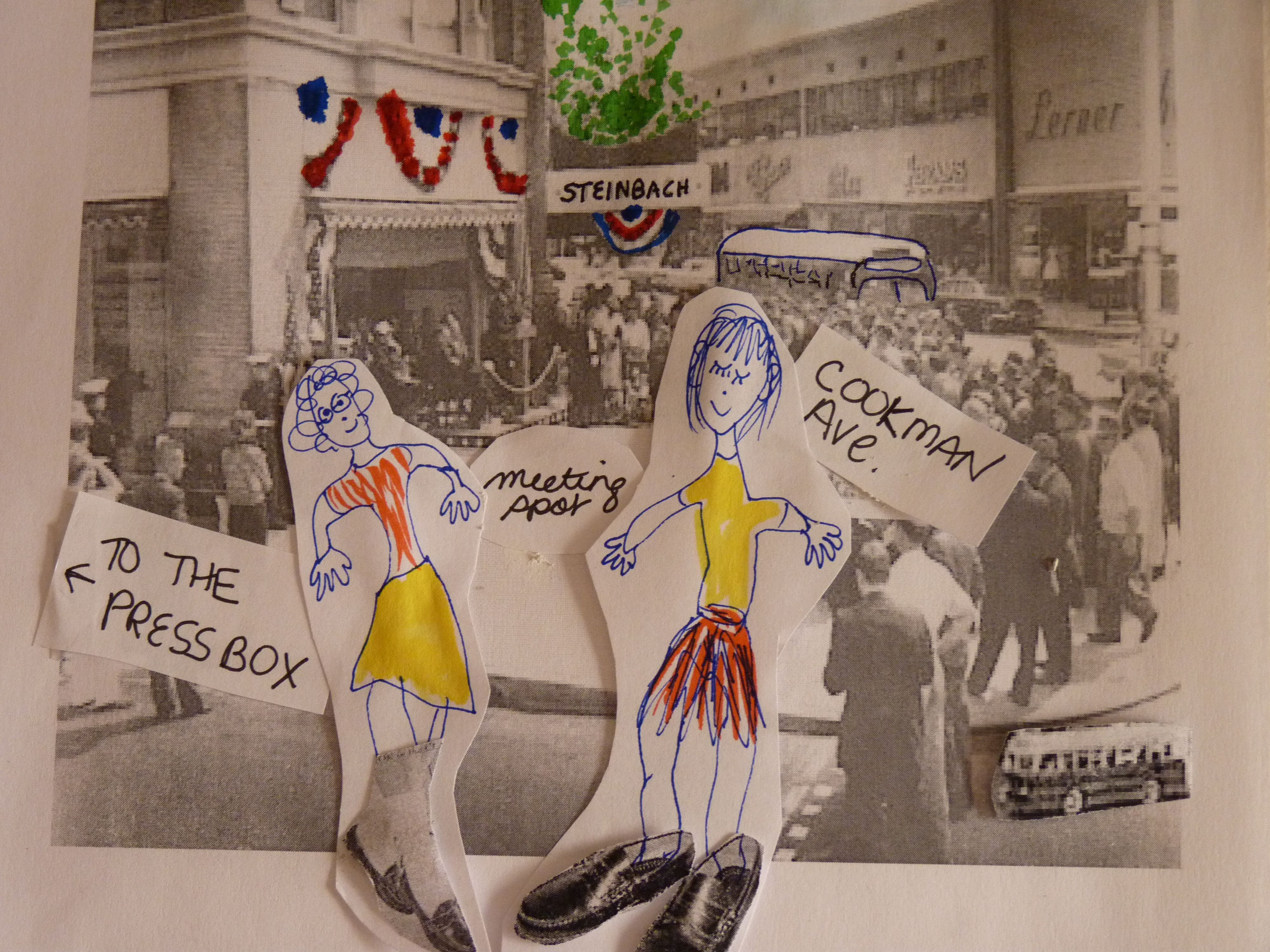
Rather, I was absorbed in my pre-high school world, overjoyed that I was a cheerleader, and on the cusp of entering the big league of “age”: my teens! In my memories, I see me and a girlfriend boarding Bus #31 on Monmouth Road on a Saturday afternoon to head into Asbury Park. We would meet up with a bunch of other friends at Steinbach’s, which at the time, was a premier department store that ruled Cookman Avenue.

Then we’d make our rounds to Canadian’s across the street, The Villager, and Country Fair, a sort of ultra-preppy shop, known for its Scottish-like kilts, and matching cable knit sweaters. Were we all wearing our Bass Weejun penny loafers? Afterwards, we would go to The Pressbox for lunch. We thought we were oh-so-sophisticated, if not actually old. Whatever we may have been, we were definitely innocent, and felt eminently safe and supreme in our niche. Although the dissension and anger between black and white America was in the news, it took another three years before the rage descended on Asbury Park.

Me 1967

Me 1967.

My mother 1967

My mother 1967.

Amidst the reverie and pleasure of being a teenager, the age of 58 was unimaginable. Even my mother was only 39, and my grandmother, who was old, didn’t have a nameable age. It makes me wonder what it was like to be 58 in 1967. Did women fret over their wrinkles or did they benignly accept the change in skin texture with grace and a smile? (Collagen and Botox were non-existent.) While I definitely recall my old aunts and uncles discussing “health issues” (as I seem to do more and more these days), did they obsess over “growing old,” documenting every change in cheek and jowl? Was there a desperate quest to hold onto youth, or was their 58 our vision of 78?

Who knows. But I wonder what the world will be like for the 12 year olds of today in 2062, when they are 58. Will they look back fondly on the memories of their youth, and think how innocent it all was? Or maybe they will never have to look back because their entire life has been documented in real time online. And given that every generation gets “younger,” maybe their 58 will be the new 28.

Share this:

  • Share on X (Opens in new window) X
  • Share on Facebook (Opens in new window) Facebook
  • Share on Reddit (Opens in new window) Reddit
  • Email a link to a friend (Opens in new window) Email
Like Loading...

Kara Walker’s Sugar Babies in Brooklyn

03 Tuesday Jun 2014

Posted by WS50 in Art, Opinion

≈ Leave a comment

Tags

Brooklyn, Domino Sugar Factory, Julie Seyler, Kara Walker, Williamsburg

Metropolitan Ave. and River Place. Brooklyn, N.Y.

Metropolitan Ave. and River Place. Brooklyn, N.Y.

BY JULIE SEYLER

A couple of weeks ago I took the L train to Bedford Avenue, the first stop in Williamsburg, Brooklyn. I became enchanted. It reminded me of a time past, before things became so homogeneous in Manhattan. It has the vibe of the East Village, 30  years ago, when I was someone who finished the night at 5:00 AM with scrambled eggs at Kiev. However I am definitely late to the Williamsburg game and whatever vibe I sensed is no doubt on its way out as Brooklyn morphs to the dance of money.

In any event, I had a mission. I was in search of the Domino Sugar Factory, once the processing source for DOMINO brand sugar, and now, an unused warehouse with one last purpose to fulfill before it undergoes semi-demolition. It is currently home to the artist Kara Walker’s show:
The Marvelous Sugar Baby

En route, I discovered the Metropolitan Pool, a lap lane pool built as a Public Bath in 1922 that is still in use today, and got a close up gander of the Williamsburg Bridge, which opened in 1903 with the distinction of being the longest suspension bridge in the world.

Williamsburg Bridge

After 20 minutes of meandering, I found my way to the sugar factory. This 19th century tome to the production of sugar, immense and obsolescent, is a work of art in itself. From its chipped and peeling paint to its rusted pipes there is texture, color and form to take in, and while a part of it is doomed to redevelopment as condominiums with riverside views of Manhattan, the exterior of the central refinery is landmark protected.

This is not the landmarked part. I just loved the way the blue paint curled about.

This is not the landmarked part. I just loved the way the blue paint curled about.

As soon as you walk inside, you smell sugar, even though it has been 10 years since the building stopped operating as a refinery. Your eyes adjust to the dimness of the natural light streaming in through the windows of this 90,000 square foot space and you take in sculptures, about three to four feet high, made of resin, with a shiny translucent reddish cast. Look closely and you see the cherubic, angelic faces of children. What registers is dissonance because the sugary benign-ness of their expressions underscores the horror that once it was a fait accompli that children were put to work, all day, picking sugar cane under a blazing sun.P1240394

When you turn to the left, you see that the sugar baby children are overseen by a gigantess, a Mama Sphinx, made entirely of sugar, lying with her haunch in the air.Sugarbaby 1

The immediate association is ancient Egypt, not only because the size and pose of the work evokes the Great Sphinx at Giza, but because her mien is as inscrutable as a Sphinx. However, she cannot be confined to the world that existed 4000 years ago when Egypt’s grandest monuments were erected on the backs of slaves. She is also an icon of pre-Civil War America, when a great deal of commerce and trade and growth in the American economy was accomplished because it was legal to own another man, woman or child. What I see in this sculpture is that the Mama Sphinx may have been a slave by circumstance, but she was never a servant. She is regal and rules with serenity and fearlessness.

Kara Walker has captured history and beauty, sweetness and bitterness, in a way that I have never seen before. It is an amazing show because it works on so many levels. There is the sheer technical artistry and then there is the simplicity of the lines and the fullness of color created by an absence of “color”, the symmetry and the way the space is filled. Even the title, “A Subtlety or the Marvelous Sugar Baby, an Homage to the unpaid and overworked Artisans who have refined our Sweet tastes from the cane fields to the Kitchens of the New World on the Occasion of the demolition of the Domino Sugar Refining Plant“, is packed with layering.

The show made me think and reflect and ponder, and even now I keep finding new and different connections. A work of art so powerful that it requires nothing from the viewer but to be astonished, moved, and educated is fabulous.

Share this:

  • Share on X (Opens in new window) X
  • Share on Facebook (Opens in new window) Facebook
  • Share on Reddit (Opens in new window) Reddit
  • Email a link to a friend (Opens in new window) Email
Like Loading...

Anticipated Lip Lock

30 Friday May 2014

Posted by WS50 in Art, Opinion

≈ Leave a comment

Drawing by Julie Seyler.

Drawing by Julie Seyler.

Whether one is on the left or right side of 50, it’s always fun to anticipate the kiss that’s about to happen.

Share this:

  • Share on X (Opens in new window) X
  • Share on Facebook (Opens in new window) Facebook
  • Share on Reddit (Opens in new window) Reddit
  • Email a link to a friend (Opens in new window) Email
Like Loading...
← Older posts
Newer posts →

Enter your email address to follow this blog and receive notifications of new posts by email.

Join 293 other subscribers

Twitter Updates

Tweets by WriteSideof50

Recent Posts

  • The Saturday Blog: Rooftops India
  • The Saturday Blog: The Heavy Duty Door
  • Marisa Merz at the Met Breuer
  • The Sunday Blog: Center Stage
  • The Saturday Blog: Courtyard, Pondicherry, India.

Archives

  • April 2017
  • March 2017
  • January 2017
  • December 2016
  • November 2016
  • October 2016
  • September 2016
  • August 2016
  • July 2016
  • June 2016
  • May 2016
  • April 2016
  • March 2016
  • February 2016
  • January 2016
  • December 2015
  • November 2015
  • October 2015
  • September 2015
  • August 2015
  • July 2015
  • June 2015
  • February 2015
  • January 2015
  • December 2014
  • November 2014
  • October 2014
  • September 2014
  • August 2014
  • July 2014
  • June 2014
  • May 2014
  • April 2014
  • March 2014
  • February 2014
  • January 2014
  • December 2013
  • November 2013
  • October 2013
  • September 2013
  • August 2013
  • July 2013
  • June 2013
  • May 2013
  • April 2013
  • March 2013
  • February 2013
  • January 2013
  • December 2012
  • November 2012

Categories

  • Art
  • Concepts
  • Confessional
  • Earrings; Sale
  • Entertainment
  • Film Noir
  • Food
  • Memoriam
  • Men
  • Movies
  • News
  • Opinion
  • Photography
  • politics
  • September 11
  • Travel
  • Words

Meta

  • Create account
  • Log in
  • Entries feed
  • Comments feed
  • WordPress.com

The Write Side of 50

The Write Side of 50

Enter your email address to follow this blog and receive notifications of new posts by email.

Join 293 other subscribers

Blog at WordPress.com.

  • Subscribe Subscribed
    • The Write Side of 59
    • Join 293 other subscribers
    • Already have a WordPress.com account? Log in now.
    • The Write Side of 59
    • Subscribe Subscribed
    • Sign up
    • Log in
    • Report this content
    • View site in Reader
    • Manage subscriptions
    • Collapse this bar
 

Loading Comments...
 

    %d