The Loss of a Friend, and a Fear of Falling

Tags

, ,

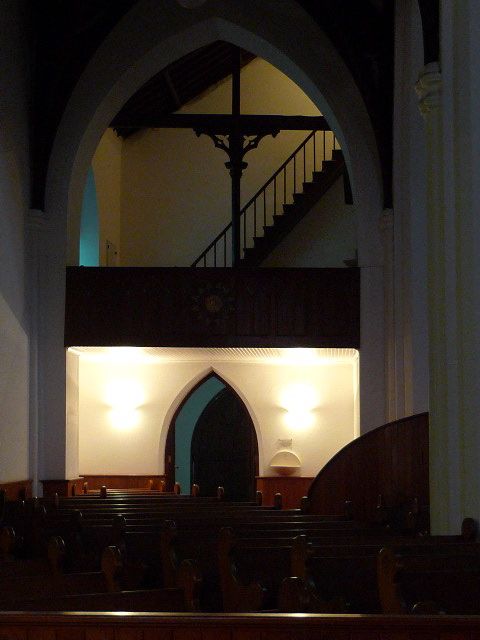
inside an old church in Stellenbosch

BY MARGO D. BELLER

Back in April, I wrote about my friend and former employer, who had just turned 95. I had called him on his birthday. During our talk I was reassured that he was not only doing as well as could be expected physically, but was as mentally sharp as ever – writing columns and reading The New York Times. His attitude was upbeat and, as usual, he was full of good humor. But he was philosophical, too.

“Anyone who says they’ve never gone through any bad things in his life hasn’t lived,” he told me at that time. I had hoped to have an old age as good as his.

Unfortunately, about a month after that conversation, my friend fell and broke his ankle. He lost his mobility, and went downhill fast. He’d been in and out of rehab several times. I learned he died in his sleep four months after our talk. I regret not calling again, but his son said, those times that my friend was awake, he wasn’t talking on the phone anyway.

We are warned about the danger of falls as we get older. I think of my great ­aunt, another vibrant, sharp person, and how she was never the same after she fell, and broke a leg bone. She, too, was shuttled in and out of the hospital, and that is where she died. I think of the falls I have taken, including one where I fell flat on my face. I’ve had swellings and a black eye, but no broken bones. Yet. I have not put in the types of safety devices my elderly father had in his bathroom, and I do exercises that, I hope, help me keep my balance.

Still, there’s always the next one.

Despite knowing, logically, that I am aging, emotionally, I feel much younger. The thought of the inevitable decay frightens me as I get closer to 60 – my
mother’s age when she died. Even if I live to 95, ­and my friend’s older brother is very much alive at 100, ­is that a good life if I am physically or, worse, mentally infirm?
Does quantity of years equal quality?

My friend had a good life to the end, surrounded by his family and friends. But there are no guarantees in this life. Situations change. Many of us Boomers run around like youngsters, refusing to believe we will die. One of my friends, a few years older, like me, has no children. Unlike me, she is single. She worries about having the money to retire, and pay any medical bills. She told me that when she gets to the point where she can’t take care of herself anymore, she’s going out on a “sunset cruise,” with a laced cocktail, and is not coming back.

I can appreciate her thinking, even as I recoil from the thought of hastening the Creator along. I do not think my 95­-year-­old friend feared the end. I wish he was still around so I could ask him.

Popped My Cork Over Restaurant’s “Cakeage” Fee

Tags

, , ,

Cakeage fees. Per slice.

Cakeage fees. Per slice.

BY JULIE SEYLER

A couple of weeks ago, I went out to dinner at a Turkish restaurant on the East Side of Manhattan. There were nine of us celebrating the birthday of a mother/grandmother/aunt who was turning 87. We were hungry and thirsty, so cocktails were ordered, a couple of bottles of wine were drunk, five or six appetizers studded the table, four different types of salad appeared, and everybody ordered an entree. We were stuffed to the brim before the main course was served, but we couldn’t resist devouring every morsel because the food was delicious.

We allowed about five minutes to pass so we could digest, and decided it was time to bring out the vanilla and chocolate Carvel ice cream cake that the birthday girl’s daughter had picked up. It’s her Mom’s favorite. The waiter came over, and promptly announced that the restaurant charged $2.50 per person to serve the cake. Like corkage charges for opening a bottle of wine, the restaurant industry has adopted the phenomenon of a “cakeage” fee. I was clueless, but what I gathered from the other dinner guests is that this has become a well-known and common practice. So common that it is accepted with a sigh.This was not my immediate reaction.

I was outraged. The restaurant doesn’t even serve birthday cake. If you don’t bring your own cake you have the option of sticking a candle in any of the following dessert choices:

Baklava-  very thin layers of dough with walnuts in between layers.

Kadayif -shredded wheat with pistachios soaked in syrup.

Kayisi -poached apricots stuffed with whole almonds and turkish heavy cream.

Keskul -almond pudding made with milk and cracked almonds.

Kunefe -shredded wheat with pistachios and cheese soaked in syrup.

Revani -semolina-based pistachio cake soaked in honey syrup.

Sutlac -baked rice pudding made with milk, rice, and sugar.

Now, really! If you want the look and feel of a simulated party with birthday cake do you want to put a candle in some pistachio-studded shredded wheat? I am sure every option is yummy, but they sound like breakfast foods- absolutely not fitting for a someone who was born in 1926!

I acknowledge that $2.50 is not an excessive amount to charge especially since online research reveals that some restaurants charge $10.00 per person for a “cakeage” fee. So the fact that an additional $22.50, plus the standard city tax of 8% would have increased the bill by $25.00 is hardly worth getting upset over.

But what is awful, at least in the opinion of my right-sided, 50-year-old soul, is the idea that after wining and dining in a convivial setting where you have willingly, and joyfully, overpaid for cocktails and wine, and are aware that an 18% tip will be automatically applied to the bill, the restaurant has the nerve to feel justified in charging a fee for slicing a birthday cake. It just feels like unnecessary gouging. But that’s that’s life in 2013. We pay to have our baggage put on and off the plane. We pay to get two more inches of legroom once seated in the plane, and we pay for food to be served to us halfway through the flight. These small amenities used to be standard, but the “Pay for It Plan” has been so successful that the hotel industry is jumping on the bandwagon.

A recent article in The New York Times reported that hotel management has devised a fee for checking out early. Excuse me? The joy and pleasure of my hard-earned vacation dollars are being ruled by whether I have to pay $20 because I decide to drive to the Rocky Mountains on Saturday instead of Sunday? You’ve got to be kidding me. It may only be $20 but it’s the relentless constant inch-by-inch movement in this direction, and the attitude that we will pay because we have no choice.

All I can think if is that song “Money Makes the World Go ‘Round,” sung so brilliantly by Joel Grey in “Cabaret.”

In any case, it is nice to remember that we once lived in a world where the philosophy of good business was in the offering of a lagniappe.

It’s the Pond, Not the Fish, That Got Away

Tags

, , ,

THE POND 2

Art by Julie Seyler.

BY BOB SMITH

In our early teens, my brother Jim and I would sneak onto the grounds of a nearby private Catholic girls’ school to fish in a stream-fed pond at the back of the property. One summer morning, a nun who had caught us trespassing there punished us by forcing us to throw back our catch: two plump trout begging to be pan-fried in butter for breakfast. They were already quite dead, and releasing them was a useless gesture, but the merciful sister would have none of it.

The incident soured us on that fishing hole, so we avoided it for the next couple of months. Instead we fished in the smaller pond upstream of the school, which was legally accessible because it bordered on a public street. Or we’d fish downstream of the school in a brook that ran through a wooded strip behind a row of suburban houses, none of which laid claim to owning that piece of land.

But we knew the trout could feed and grow almost without limit in the cool, deep waters of that big pond behind the girls’ school. We were determined to sneak in there again to catch them – nuns be damned.

It was late August by the time we got up the courage to go back. We slid out of bed at 5:15 a.m., and dressed in the dark, quietly pulling on jeans and tee shirts we’d laid out the night before. Then we gathered our gear and can of nightcrawlers from the garage, carefully rolling open the overhead door, and talking in hushed whispers so we wouldn’t awaken our parents in the bedroom above.

The sky was a black dome dotted with stars; no trace of moon. And although the air was scented with grass, it carried a melancholy undertone too – the distinct chill that creeps into late summer mornings as the season steals away. We walked in silence through the quiet streets to the entrance to the woods a mile away.

It was darker along the stream than it had been on the road, but by now the sky was starting to brighten enough so that, even in the twilight below the canopy of trees, we could pick out the familiar dirt path ahead. There was a concrete spillway just below the pond that sloped steeply upwards for about forty feet. As we labored up the path alongside the spillway, we noticed there was a broad wet path on the concrete, rippling with a steady trickle of water from above, as if the pond were overflowing.

But it hadn’t rained in a week.

We reached the top and peered out of the bushes, our heads level with the dirt road that circled the pond. The sun was pretty well up by now, and we could see there were no nuns about, and that the caretaker’s empty truck was parked by his house across the lake. All clear. We clambered up onto the road, carefully poking our fragile fishing poles out of the bushes ahead of us, like insects’ antennae testing the air. We scurried across the road onto the wooden dock and looked out over the pond. Normally we would see the rose reflection of the new dawn on the glassy water; bugs darting in the mist being snatched from the air by trout breaking the surface; ripples from the morning breeze – but there was nothing. The pond was gone.

Someone had drained it by opening the sluice gates at the top of the spillway. That explained the trickle on the concrete – they must have done it days ago. By now, the pond had almost entirely bled out.

Our pristine secret fishing hole had been reduced to a slimy expanse of black mud, and a few shallow puddles. The deepest remaining spots were in the middle, where the pond had been deepest when it was full, and where we assumed the largest fish had hidden. It looked as if most of them were still there, crowded into the last refuge of water, the sluggish movements of their clustered dorsal fins barely covered by the brackish soup. Some moved more slowly than others. Others had stopped moving and had begun to merge with the mud.

We never learned why they drained that pond, but if the goal was to deter trespassers, they achieved it with us. We left that day, sick at heart, and never returned.

I Love My Car Because It’s MY Car

Tags

, , , ,

car me

My cockpit.

BY LOIS DESOCIO

I must riff on Julie’s post from yesterday about her car, because I counter her disdain of driving with a kicky passion for it that rivals the romance a pilot must have with taking to the skies in his or her plane. For me, a wheel in hand, and a road ahead, unfailingly filters life’s daily pummels.

I adore my car. I do not have the hip convertible that Julie has (I have my hip, though), but I do have a posh, black … SUV. I’ve had it for three years now. It was my first new car in ten years, and as soon as I brought it home, it would instigate head-scratching among some friends: “Why did you buy another “mom car?” (It’s not a “mom car,” thank you, because it’s not a minivan.) And it does not holster sippy cups, and the seats are never sticky.

It’s neither garish, nor gigantic, but it’s roomy enough to lug my stuff, and generous enough in height to allow a view from above on the highways. And after years of driving the family car, in which I taught my sons to drive, and subsequently shared with them so often that it became more their locker room, and less my wheels, for the first time in decades, I have a car that is mine. Just mine.

It has become a salve to some of the wallops life has thrown my way lately. My car has become the one thing to which I am a coxswain. It is my trusty vessel. It takes me wherever I want to go. It stays where I put it. I can lock out anyone I choose. It’s cool in the summer;warm in the winter. The top doesn’t come off, but it has a hole in the roof that lets in the wind without messing my hair. I can make phone calls in it, ask it directions; listen to music and scream-sing along with abandon. It doesn’t lie, manipulate, talk back or ask for money. (It’s paid off.) And it’s fast. I can merge, slow down, cut off, and speed up as I choose. Or I can just sit in it in my garage and talk to myself. I don’t need it to commute to work, so the milage is low, and gas-guzzling is kept at bay. I plan to keep it forever.

So, in mid-life, when the road ahead can be bumpy, and there’s a need to put the brakes on it all for a bit, it’s my car that often steers me away for a while.

Do I Really Need My Hip Roadster?

Tags

, ,

Eight years later.

Eight years later.

BY JULIE SEYLER

By the time I turned 49, I had acquired a co-op apartment, and a cat, but no kids. So when I turned 50, I decided to buy myself a birthday present: a two-seater car with a convertible top. It was a really cute car, and I assumed that my body, unlike my face, would never change. (My legs would always possess the supple flexibility needed to get in and out of the car. Ha Ha!) After receiving a diagnosis of bone-on-bone arthritis last year, I was humbled. My brand new hip joint is mighty fine, but I am not sure I would have chosen the same automobile if I knew then what I know now – namely that at some point after one’s 5Oth year, the body becomes less obedient. In any event, the total hip replacement restored my mobility, and agility sufficiently enough that I’m back to jauntily tootling about in my pint-sized roadster.

I didn’t really need a car in Manhattan. I bought it to drive back and forth to Allenhurst, New Jersey between Memorial Day and Labor Day. After relying on the North Jersey Coast Line for 17 years, and arranging with my girlfriend to pick me up every Saturday morning, I was ready to take matters into my own hands. I wanted to enjoy the New Jersey Turnpike from behind the wheel of my car.

So the car only gets exercise for about three months of the year. Otherwise, I don’t drive. In fact I don’t really like driving, and I really detest driving in New York City. The atonal symphony of screeching horns, the zig-zagging cab drivers, the lumbering pushiness of tourist buses and MTA buses, the bike riders on testosterone, and maniacal pedestrians that dart out in the middle of the street – all vying for the same sliver of real estate – leaves me sitting clenched at the edge of my seat clutching that steering wheel for dear life. I am never so happy as when I pull into my garage and gleefully turn the valet key over to the parking attendant.

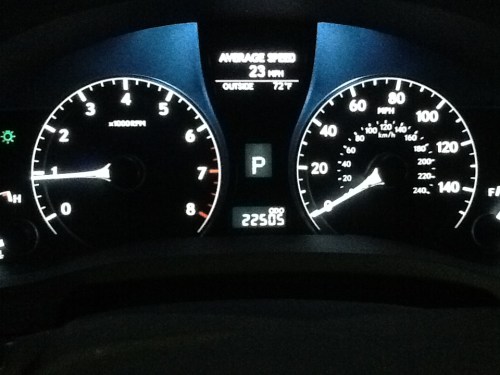
Given my driving routine, it makes complete sense that the odometer reads less than 28,000 miles eight years after the car was purchased. I cannot consider selling it because based on my per annum mileage accumulation, I will only have 112,000 miles on it by 2030. I can then register it as an antique. Of course I’ll be a bit antiquish by then, but who cares especially if 75 is the new 55.

The Constant “Call” of the Telephone

Tags

, , , ,

The journey of the phone from inside the house to on the body.

You can’t leave home without it.

By FRANK TERRANELLA

It’s vacation season, and I’m amazed at how reachable my vacationing clients are. The 21st century electronic leash is a long one. People can be reached no matter the time, the place or the importance of the call.

Those of us over 50 know that this is a very recent phenomenon.Back in the 1960s (when some of us still had party lines), if someone left their home, they were truly out of touch. This was OK with most of us. Of course, there were exceptions.

You may remember the scene from Woody Allen’s film, “Play It Again Sam,” in which Tony Roberts plays a frantic businessman who is on the phone constantly. As he’s leaving to go to dinner, he says into the phone, “I am leaving 555-1234 now, but I’ll be at 555-4321 in 20 minutes.”  Woody Allen’s character is put off by this constant need to be in touch and says, “Hold on, there’s a phone booth we’ll be passing along the way. Let me get the number for you just in case.”

Well in 2013, most people are like the Tony Roberts character. We have a need to be in touch at all times. Sure this need is stronger among our children, but the truth is that few people today of any age travel without a cell phone. I am not going to say that it’s wrong either. Certainly, some moderation is called for – such as not taking calls in public restrooms. But all in all, being reachable by friends and family is (as Martha Stewart might say), a good thing.

I think we over 50s can provide some wisdom on this issue to our children by describing to them a time when, not only were there no cell phones, there were no answering machines. Back then, if you missed a call, you really missed it. You had no idea that anyone had called you, much less what they were calling about. This often led to bad consequences if the caller had an urgent message.

I remember one night I was out late because of evening classes, and didn’t get home until after midnight. My boss had been calling me all night to tell me that we were starting work two hours early the next day. Since I wasn’t home, and I didn’t have an answering machine, I never got the message. It was embarrassing to walk into work the next day two hours late. Soon after that, I bought one of the first answering machines on the market.

Our children cannot imagine such a scenario. Their bosses can always reach them. Oh sure they can pretend that their battery died, but that’s about as believable as, “the dog ate my homework.” Our modern world demands that we be reachable.

I have always found this electronic leash to be obnoxious. I was one of the last people I know to buy a cell phone, and for many years I used it only to make calls, and immediately turned it off afterwards. I enjoyed going into the subway – a cell-phone-free zone. Now it seems a little dangerous to be in an area with no service. We have become so used to being able to reach out and touch our friends and family that it’s a bit uncomfortable when we can’t.

A few summers ago, my wife and I were staying at Glacier National Park in Montana. There was a beautiful hotel, but no cell phone service. The over 50s quickly adapted back to pre-1980 mode when vacations were telephone-free. But the younger people could be seen hiking to a remote hill where someone said you could get one bar of service. They couldn’t help themselves. They were just answering the call of the dial tone.

Hats Off to Me: I’m Leaving the Law for Retirement

Tags

, , , , ,

Bob chair hat

BY BOB SMITH

I began practicing law in 1984, when I was 29. I’m now 58. One week ago today I advised the management of the law firm where I’m a partner that I’m leaving the practice of law as of October 1. I chose that date because it coincides with the close of the firm’s fiscal year, which will make the settling up of my finances neat and clean. But there’s nothing neat and clean about leaving a career you’ve pursued for half your life.

Most people consider a full-time job something that requires you to be at work forty hours a week. But to a lawyer in private practice, “full-time” means all the time. And perhaps because it’s so all-consuming, the prospect of not doing it any more is daunting – how will I fill up my time, I wonder? While practicing law, my time was so full I couldn’t consider any other activities. Life, it seemed, revolved around my work. Everything I did was defined by the demands of the job – and they are many.

Here’s a non-exhaustive, but nonetheless exhausting, list of the things you have to do to succeed as a lawyer in private practice:

  • Think clearly, write well, and verbally advocate your client’s position.
  • Manage expectations, which means having pointed – often heated – discussions with your clients about proposed strategy, potential outcomes, and of course, expected costs.
  • Train, motivate, mentor and supervise younger associates, paralegals, and other support staff.
  • Bill your time, which means writing a detailed narrative of the legal work done for each client and how much time it took – down to the tenth of an hour – to perform each task. To meet your billable targets, you should account for eight or more billable hours every single working day. Like J. Alfred Prufrock, who “measured out [his] life with coffee spoons,” for half my life I’ve measured out mine in six-minute increments.
  • Constantly seek new clients or new legal work from existing clients, which requires you to do things that most people see as recreation: play in golf outings, attend charity dinners, and take clients or prospective clients out to restaurants, concerts, and sporting events. But the fun fades when those activities start to gobble up days and evenings you’d rather spend with your family and friends.
  • Keep abreast of current developments by attending continuing legal education seminars.
  • Speak at legal conferences or other public events.
  • Do pro bono legal work and donate your time and energies to worthy causes that help your community, both because it’s your duty as a citizen and an attorney, and as a way to “get your name out there,” and develop contacts who may refer work to you or the firm.

The list goes on. And the stakes are high: if you don’t do your job right, your clients can lose big money, lose their businesses completely, or be precluded from doing things they want to do. If you make a really terrible mistake, you may be found to have committed malpractice and the firm itself could pay a steep financial price for your misstep, not to mention the personal price you would pay to endure that kind of crisis. In short, you’re under incredible pressure, all the time: to perform, to serve, to produce results.

So why was I so terribly conflicted when I realized I could just get out? There’s comfort in the known, and terror in the unknown. It’s like Hamlet contemplating suicide, and acknowledging that we have no idea what awaits us after death – which ” … makes us rather bear those ills we have, than fly to others that we know not of.” I was afraid to leap from the relative comfort of a demanding, but well-defined career, into the unknown called “retirement.”

bob chair faceBut I’ve done it. I’ve just taken that first leap into the cold pool. And even after only one week, before I’ve fully withdrawn from my life at the firm, I can sense it was the right thing to do. A few months from now I have no doubt I’ll be saying come on in, the water’s just fine.

For now, however, I’m still shivering a bit.

Floating Along for Nine Months

Tags

, , , ,

Buoys on a boat

Buoys on a boat. Photo by Julie Seyler.

BY JULIE SEYLER

Here’s to friends, families and followers of The Write Side of 50, who, much like buoys on a boat, preserve and moor us. You have helped to keep us afloat for nine months now. Thanks.