The Brilliance Behind Roe v. Wade

Tags

, , , , , , , , , ,

"The Inside Story".  Oil on canvas.  Julie Seyler

“The Inside Story.” Oil on canvas. Julie Seyler

BY JULIE SEYLER

In 1973 the United States Supreme Court issued its decision in Roe v. Wade. Forty years later, while speaking at a symposium at Columbia Law School, Justice Ruth Bader Ginsburg opined that she was not sure that the time had been right for the country’s federal judiciary to legalize abortion. I was surprised that a liberal of the current court would question the rightness or timing of that decision.

The social discussion of the 1960s and 1970s was imbued with an understanding of the horror wrought on women, who, for social or economic reasons, could not afford to raise a child. Perhaps she was 18, and had just gotten admitted to college. Would it be fair to her to abort her opportunities because there was not sufficient information available about birth control? Or what if she was 40, and already had four children, and her husband made barely enough money to feed and clothe a family of six? What could they do if they became a family of seven? The law punished women by forcing them into dirty rooms in back alleys where men with wire hangers or venomous liquids would help terminate the cells that were starting to gel. There was guilt and shame and illness, and it was society’s morals, not society’s interest in public health, that governed what was legal. I remember debating the reasons for and against abortion with my friends, teachers and family.

Then in 1973, the decision came out. I recently reread the opinion of the court in its entirety. I stand in awe of this brilliant tripartite balancing of a woman’s right to privacy against the right of the state to regulate the health and safety of its citizens.

The case came before the Supreme Court because an unmarried, pregnant woman had sued the state of Texas on the ground that the law, which made it a crime to terminate a pregnancy unless the mother would die, was unconstitutional.

Just for a minor peek at how the Court addressed the topic, I quote from the opening paragraphs of Justice Blackmun’s opinion:

“We forthwith acknowledge our awareness of the sensitive and emotional nature of the abortion controversy, of the vigorous opposing views, even among physicians, and of the deep and seemingly absolute convictions that the subject inspires. One’s philosophy, one’s experiences, one’s exposure to the raw edges of human existence, one’s religious training, one’s attitudes toward life and family and their values, and the moral standards one establishes and seeks to observe, are all likely to influence and to color one’s thinking and conclusions about abortion.”

With this awareness in mind, the Court commenced its discussion on the constitutionality of the Texas statute. It provided an historical overview of abortion from ancient Greece (where “it was resorted to without scruple”), to the common law (which held that abortion was not an indictable offense prior to the “quickening” or first movement of the fetus), to the punitive statutes of the modern era that banned abortion “unless done to save or preserve the life of the mother.”

Thus the Court, in determining that a woman had an unfettered right to make her decision concerning pregnancy during the first three months after conception, did not arrive at its decision in a vacuum. It looked to history, science, medicine, philosophy, religion, and precedential case law to confirm that the Constitution guaranteed a right to privacy. However, it also acknowledged that this right of privacy was not unbridled. After that first trimester, the State could intervene and regulate the procedure to preserve and protect the health of the mother. Further at the point of “viability,” the compelling interest of potential life meant the State “may go so far as to proscribe abortion during that period, except when it is necessary to preserve the life or health of the mother.”

Why would anyone want to reverse this decision? It legitimized the right of women to have control over their body for a total of 90 days after the joining of a sperm, and an egg. Thereafter, the law of the land held that the state has a right to regulate, legislate and protect its persons. This decision, founded squarely on prior law, took into account the entire package: the person who carried the united egg and sperm, the emerging fetus, and state government.

As Justice Blackmun opined, this is, and will always be, a sensitive and emotional topic. The Court’s decision that balances an individual’s right to make the most private decision of her life against the state’s right to protect the health and welfare of its citizens embraced the Constitution, a law “made for people of fundamentally differing views…” Lochner v. New York, 198 U.S. 45, 76 (1905). 

The debate will continue. I hope future courts reaffirm and reaffirm and reaffirm the findings of the Supreme Court in 1973.
Aging Eyebrows: Worth Getting in a Twist Over?

Tags

, , , , ,

Eyebrows

Eyebrows. Photo by Julie Seyler.

BY JULIE SEYLER and LOIS DESOCIO

Have you ever noticed your eyebrows, and how they seem to change direction, texture, and shape with each passing year? Nothing more needs to be said about that one …

… except this: Measure those twisty, turny, maybe-in-need-of-a-little-weeding eyebrows against the unwelcome strand, or two, that can sprout up overnight in a place where it’s not supposed to be, and raise it up for eyebrows for at least remaining hairy, as they should be.

From “Red-Hot Tamales” to Hot (Purple) Potatoes

Tags

, , , , , , , , ,

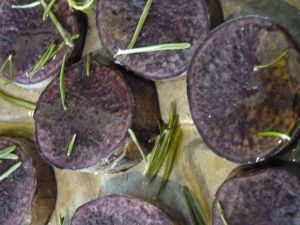
potatoes prepared for oven

BY LOIS DESOCIO

Used to be that a Saturday afternoon meant combing the stores (pre-mall), with girlfriends, for a cool “outfit” for Saturday night. Once home with the goods, hours were spent spicing up – bejeweling. There was the dive into the closet, and the tossing out of: the perfect pair of shoes. The dressing-up with earrings, bracelets (headbands!) – all part of the prep.

We would then head for the bar. Our mission: Find crowds of men. Get free drinks.

But now, since those “salad days,” are forever crunched and eternally stored in my hippocampus, I’ve learned that the middle-aged me can be just as besotted by the shopping for and the spicing up and the bejeweling of – potatoes. Especially the purple ones. Aside from fries and chips (usually eaten in the wee hours and shoved in three or more at a time), I’ve not paid much attention to what you can do to a potato.

According to the International Potato Center, there are over four thousand different kinds of potatoes, and potatoes are the third most important food crop in the world.

So Julie and I recently spent a whole Saturday afternoon playing with five different kinds of potatoes that she picked up at the farmers’ market in the city. They had cool names: Purple Majesty, Magic Molly, Red Thumb, and Yellow Fin.

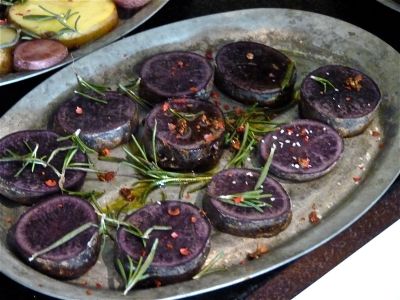
Hours were spent spicing up – bejeweling. There was the dive into my kitchen cabinets, and the tossing out of: the perfect roasting pan and cupcake tins. The dressing-up with olive oil, rosemary (garlic chives!) – all part of the prep.

We then put them in the oven. Our mission: Eat them. Have a martini.

So here are our potatoes – all hot, spiced, bejeweled, and accompanied by some prices, and our two-cents:

Purple Majesty – Flavorful. The taste bounces all over your mouth:
purple majesty 2

Fingerlings – Bland. Not finger-licking:

baked fingerlings

Magic Molly – Purple. But not majestic, like its cousin. (Plus they were $3/lb. Purple Majesty a bargain at $1.50/lb.):

Molly magic potatoes 1

Red Thumb – Delectable. Tastes like earth. 
Accompanied below by Yellow Fin – Potato(y). Would make a good chip:

Red thimb and yellow finn potatoes

Cool what you can do to a potato:
contemplating potatoes copy copy

Grappling With the Letting-Go of Anger

Tags

, , ,

Angry orchid.  Photo by Julie Seyler

Seething orchid. Photo by Julie Seyler

BY MARGO D. BELLER

The other week, I was awakened in the middle of the night from a dream about a raging argument I was having with my uncle, who died in February. The argument was about his mother, who had died 30 years ago this coming August. It was so disturbing – I could not go back to sleep.

The man spent his life complaining of the hardships his widowed mother created for him and his family. Much of the time I was growing up, my uncle’s family was on the West Coast, and my grandmother had been my mother’s problem for decades.

I got along with this grandmother, so when my mother died, I gladly took over her care. Yet my uncle continued to complain about his mother, including paying for her grave, when he and his wife moved back east.

I consider myself a rational person. I thought I had worked through my anger at various family members over the years. But with my uncle’s passing, it seems I didn’t resolve anything.

Anger is a terrible thing. I’ve had a hard time controlling it since I was a child. It has gotten me into trouble many times over the years. When something doesn’t make sense to me, I question. When something seems downright stupid to me, I question and disparage. This would make me popular with peers, but not with figures of authority, including parents and supervisors. (Questioning is great for being a journalist, but makes one a lousy employee.)

So over the years, I’ve learned to channel my anger by taking myself to the woods where I can concentrate on other things – the lovely day, making sure I am still on the trail, not tripping over tree roots and rocks.

But mainly I concentrate on the birds I might find overhead and underfoot. When I am out in the field, the only thing that angers me is myself for not finding the bird I hear singing to identify it.

Now I wonder if I am have only avoided the issue.

As I get older, I admit to being glad I have no children to resent me for unintentional or intentional actions. However, I also don’t have children to take care of me as I age – as my parents, grandmother and uncle did. What happens when my husband and I can no longer take care of ourselves and our house?

Aging and the money scare the hell out of me. Makes me angry, too. I doubt I’ll have the kind of retirement my parents had, and my husband’s parents continue to enjoy in their 80s. They take their trips, they go to concerts with their friends, and family checks on them.

Is this why I woke from screaming at my dead uncle about his dead mother in the middle of the night, my fear and anger at something over which I have no control? Probably. I will have to keep working at it.

Ramps, Leeks, Chives and Ham Hocks Take Manhattan in Spring

Tags

, , , , , ,

Asparagus has arrived.  All photos by Julie Seyler.

Asparagus has arrived. All photos by Julie Seyler.

BY JULIE SEYLER

I grew up in New Jersey, also known as The Garden State. Outsiders may love to tell jokes about the Turnpike, but insiders know that come August, we grow the sweetest corn and lushest tomatoes. But, other than that one month, and those two vegetables, I don’t remember eating locally-grown produce. In fact I never thought about vegetables. Iceberg lettuce and frozen peas, perhaps some fresh string beans once in a while, was the normal standard. Broccoli was eschewed.

Fast forward past Alice Waters and The Moosewood Cookbook, and the multitude of studies confirming that virtually everything green is healthy and low in fat. And never have vegetables been more celebrated, especially if they come straight from the farm.

shallotsIn Manhattan, where growing patches are rare, the city sponsors Farmers’ Markets. At Union Square, which sits between 14th and 17th Streets, the Saturday market brings a stampede of locals, who scoop up whatever happens to be in season.

Union Square Market. 5.4.13

Union Square Greenmarket, April 4, 2013.

Any farm or business that grows its own produce, or raises its own animals, or makes its own bread and cheese, is eligible to participate.

ORGANIC

And since spring has arrived, so have tables laden with ramps, scallions, leeks and asparagus, onion chives and garlic chives, and pots and pots of every herb under the sun.  There aren’t enough meals available to eat it all.

P1160128

Even if you’re not buying, it’s fun looking at all the other stuff – the beds of petunias and the buckets of blossoms; the lamb sausage and ham hocks:

flowers at the market

Yes we have ham hocks.

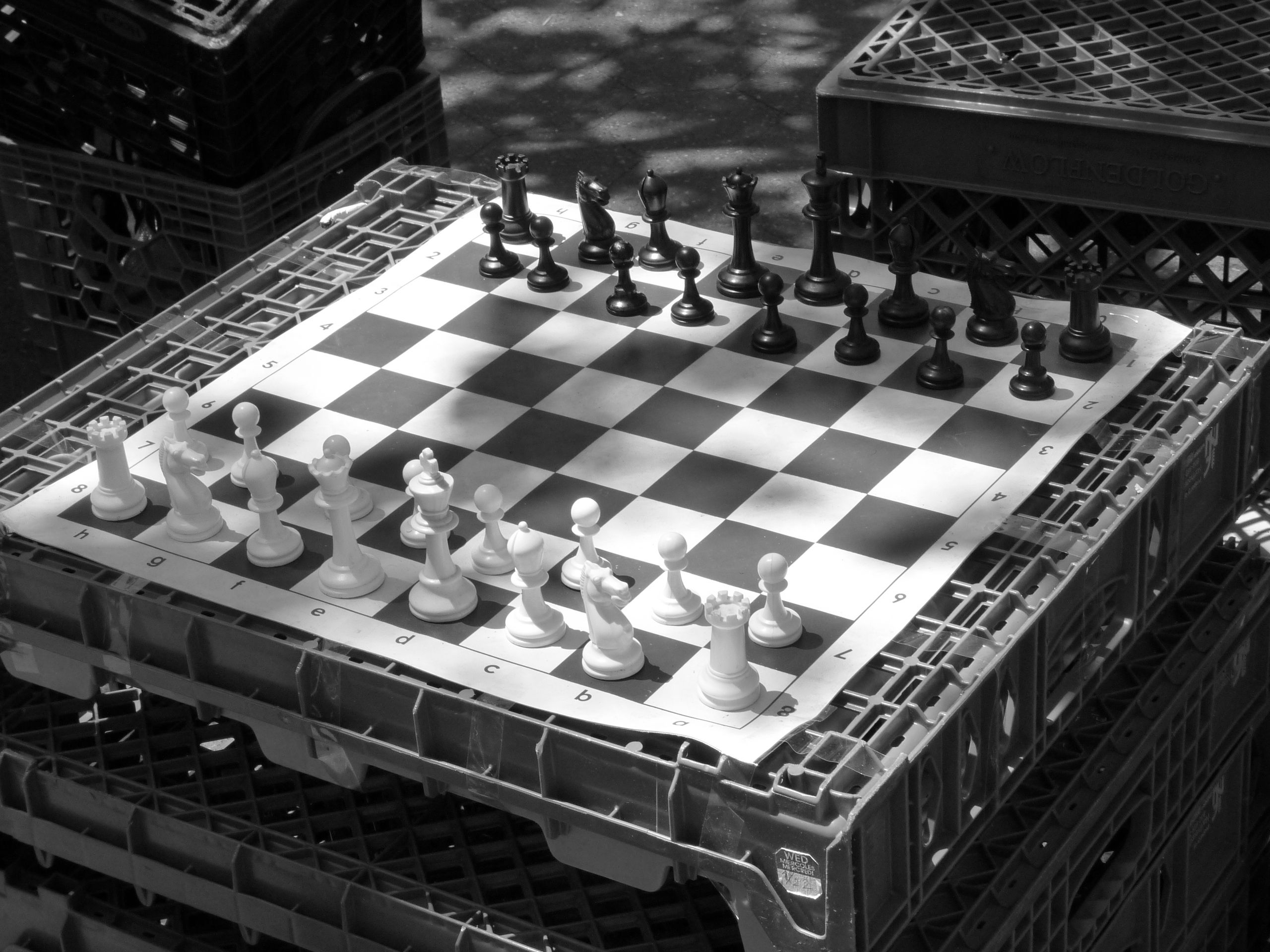
And if you’re in the mood for a game of chess after shopping, the board is ready:
chess

One Day at JFK Museum, and Feeling as Old as History

Tags

, , , , , , , ,

jfk

BY BOB SMITH

The centerpiece of the JFK Museum in Dallas is the sixth floor of the Texas Book Depository, where Lee Harvey Oswald is believed (by many) to have fired the shots that ended President John F. Kennedy’s life. You walk through a maze of enlarged photos and memorabilia from that era, guided by an audio program that is narrating and explaining JFK’s life, his election, his brief presidency and ultimate tragic assassination. Interspersed throughout the exhibit are actual television clips, including grainy tapes of JFK’s speeches, public appearances and broadcast news reports. For people my age, who lived through those traumatic days, it’s a remarkable trip back in time.

But equally startling to me when I visited the museum the other day, was my sense of having become one of “them” – the old folks, who young folks just can’t comprehend.

Maria and I were walking through the exhibit along with a crowd of high school kids on a day-trip with their teacher. They were an eclectic mix: Hispanic, Asian-American, black, punk, straight – whatever. They wore jeans, wool caps, spiky haircuts, and the occasional tattoo. They jostled one another and joked around, generally showing only mild interest except to peer closely at the freeze frames of home movies that appear to show a chunk of the President’s skull exploding from his head.

Many of the others brushed past, more curious to see the spot from which the shots were fired. The corner of the building with the stacked boxes and open window was walled off with Plexiglas, a permanent sterile recreation of what the museum materials insidiously label the “sniper’s nest.” There’s a certain morbid fascination in seeing the open window overlooking the street below, now conveniently bearing large white X marks where the first and final bullets struck.

But I was more transfixed, and ultimately moved, by the black and white television clips, all of which I had seen either live or shortly after the actual events:

Walter Cronkite announcing the time of death and having to stop, remove his glasses, and collect himself as his voice cracked with emotion.

JFK making a stern speech about the threat of nuclear missiles in Cuba, and pronouncing it “cuber.”

Lee Harvey Oswald looking bruised and confused, denying to a crowd of hostile reporters that he had anything to do with it.

A startlingly clear image of Jack Ruby lunging in to gut shoot Oswald in a crowd of cops and reporters; the gunshots crackling like fireworks as Oswald grimaces and crumples to the floor.

We had stopped at a small seating area, where they ran a short compilation of footage from the funeral, and suddenly, the raw emotion of that day came flooding back to me. My composure dissolved when I saw the image of John-John, maybe three years old, standing by the side of the road in a wool coat and cap like a stout little man, saluting as his father’s flag-draped casket rolls by. Huddled on a bench in a half-dark museum, watching newsreel footage of a funeral from fifty years ago, I had tears rolling down my face.

A couple of the teenagers from the school group wandered in for a moment and, finding nothing engaging in the images, quickly moved along.

I remember as a teenager seeing a World War II veteran in his late 50s standing at a memorial day parade in my hometown. He wore a cloth cap with medals pinned to it and a paper rose in his lapel. Standing stiffly erect, he raised and held a crisp salute as a military band marched past carrying a lowered flag in honor of those who had died in World War II. I was embarrassed to see his eyes brimming with tears.

Today’s 17 year olds must consider the assassination of JFK as interesting, but ancient history – how I at age 17 would have viewed Prohibition, the Roaring Twenties, and the end of World War I. Now, to these kids I’m the old-timer with the incomprehensible emotional attachment to an abstract historical event. And maybe decades from now, long after I’m gone, they’ll recall September 11 in the presence of a later generation, and find themselves perceived as being as ancient as I seem to them now.

To everything there is a season.

The Saturday Blog: Fish

Tags

, , , ,

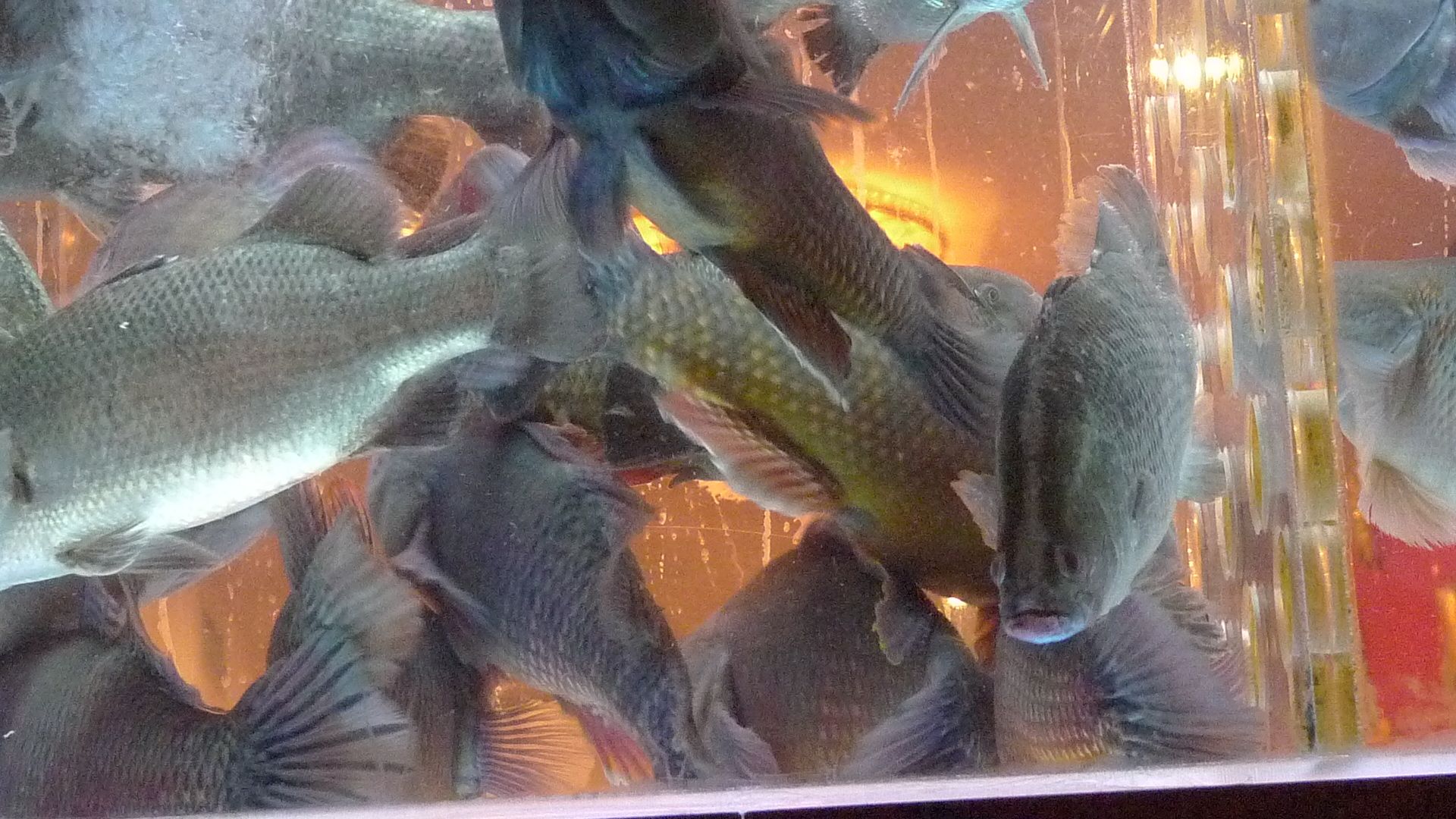
Fishtank in Chinatown

Fishtank in Chinatown

The fish-eye view of this cool Chinatown fish tank made us think of summer, when we will be swimming like them.

Another fishtank.

Me and My Shadows

Tags

, ,

me and my shadow

BY JULIE SEYLER

I love black and white photography – the rich lushness of gelatin silver prints. One simply cannot capture the depth and compassion that illuminates so many images captured on film developed in a dark room using chemicals. My heart tends to lead me to the photojournalists of the ’40s and ’50s: Helen Levitt and her street photography of little boys playing in fire hydrants on a hot summer night before there was air conditioning; Robert Capa documenting men fighting in war, and the utter naked brazenness of Weegee and his blood-threaded images of homicide victims. Be it nobility or sensationalism, the photographs were more than pages in a magazine – they ultimately pushed forward an underused medium in art. They were powerful and iconic.

A few weeks ago, while wandering through The Museum of Modern Art, I discovered a photojournalist I had not heard of before. Bill Brandt, was British,and the show ranged from photos of coal miners in England to the bombed out streets of London during World War II to abstract nudes. For me, he nailed the picture from subject matter to composition, and “Shadow and Light”, as the show was called. I believe all images were gelatin silver prints.

Technology has evolved to such a degree that black-and-white film is nearly extinct.The modern digital camera is embedded with a setting that allows you to turn off color, and, aha, one can shoot in black and white. So there are times when I see shadows happening, and on goes, “COLOR OFF.” The art form may have been reduced to a button, and the quality may pale, but the fascination of the image holds. Here is my homage to a shadow and the sensual:

Preeminent birth

Preeminent Birth.

curve

Curve.

leg up

Leg-Up.

time to walk away
Time to Walk Away.

My History of Rock ‘N’ Roll

Tags

, , ,

Stairs to Music Heaven.

Stairs to Music Heaven. By Julie Seyler.

BY FRANK TERRANELLA

On a previous post I mentioned that I thought that rock music was one of our generation’s greatest gifts to society. Now, the first thing I want to make clear is that Baby Boomers did not create rock music. The Baby Boom era did not begin until 1946. Bill Haley was born in 1925. Chuck Berry was born in 1926. Elvis Presley was born in 1935. So the first generation of rock musicians were not Baby Boomers. Technically, even the Beatles were not Baby Boomers. George Harrison, the youngest Beatle, was born in 1943. No, we Baby Boomers were not the creators of rock music – we were the generation that brought it from an obscure offshoot of country and jazz and made it mainstream. We supported it with our dollars, and adopted it as the music of our generation.

There is actually a lot of musical real estate under the rock umbrella. It ranges from blues rock like The Rolling Stones to country rock like the Allman Brothers to folk rock like Crosby Stills & Nash to hard rock like Led Zeppelin. Most Baby Boomers embraced one or more of these flavors of rock music. And those that didn’t probably embraced pop rock bands like Gary Lewis and the Playboys or the marvelous Motown stable of artists like The Supremes and The Temptations.

It’s no accident that the seminal Baby Boomer event was a music festival. That’s how important the music was. Rock music reached its zenith in cultural influence at Woodstock. While I wasn’t fortunate enough to attend, I own a copy of the wonderful documentary that was directed by Michael Wadleigh and recommend it to everyone. It’s one of those films you can run in the background and just revel in the music without getting wet. As marijuana slowly becomes legal across the country, the film may make a big comeback.

The thing that strikes me about watching the Woodstock film is just how broad a spectrum of music it featured. Richie Havens opened the concert, followed later in the night by Ravi Shankar, Melanie and Arlo Guthrie. The next day Santana, The Who and Jefferson Airplane rocked the crowd along with John Sebastian, Sly & the Family Stone and the Grateful Dead. Jimi Hendrix closed the weekend event. This was the music of a generation, and the generation showed up in force to hear it as the ‘60s came to a climax.

By the early ‘70s we were entering the heyday of the singer-songwriter. Bob Dylan had dominated this field in the 1960s, but as the new decade got under way, James Taylor, Jackson Brown and Carole King were climbing the charts.

Notwithstanding the popularity of folk rock groups like Seals & Croft and America at this time, as I arrived on campus for my freshman year, it was Layla that was blaring out of dorm rooms everywhere. Eric Clapton’s epic rock anthem was released in November 1970 on an album that Eric made with Duane Allman, Bobby Whitlock, Carl Radle and Jim Gordon under the fanciful name Derek and the Dominos. The album is such a classic it was inducted in the Grammy Hall of Fame in 2000.

Throughout the ‘70s, groups like Yes, Deep Purple and Pink Floyd kept the rock flag flying. Radio stations like WNEW-FM in New York, WBCN in Boston and WMMR in Philadelphia played entire album sides without commercials. And it was good. It was very good.

And now here we are in the 21st century, and not only is our music still alive, it’s more accessible than ever. As I write this, I’m listening to Smoke on the Water by Deep Purple. But I’m not listening to the radio, or a record, or even a CD. I’m listening to the online music service Spotify. We now can get ‘60s and ‘70s music on demand via the Internet from services like Pandora, Spotify, Rhapsody, and many more. And when I feel a need to hear “Stairway To Heaven,” I can just say to my Iphone “play it again, Siri” and Jimmy Page’s guitar solo begins. What with MP3 players and smartphones, we are never more than a few seconds away from “our” music. And “our” music is still the best that the world has ever heard.