A Sketchy View of the Aging Body

Tags

, , , ,

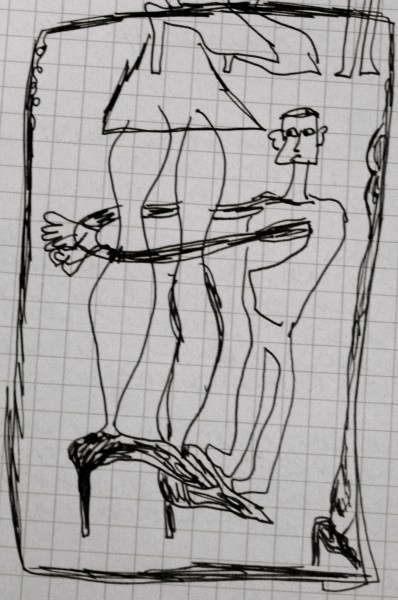
Drawing by Julie Seyler

BY JULIE SEYLER

So many mysteries seem to descend on the right side of 50 body. You know, that icky age spot that pops up on the left hand; the appearance of a clump, not a strand, of gray hairs, dead center on your head. And those bags of flesh hanging just below the armpits. Lovely! We think this drawing basically sums it up.

Sunday Service: “Mass” Dipping in the Flu Pond

Tags

, , , , ,

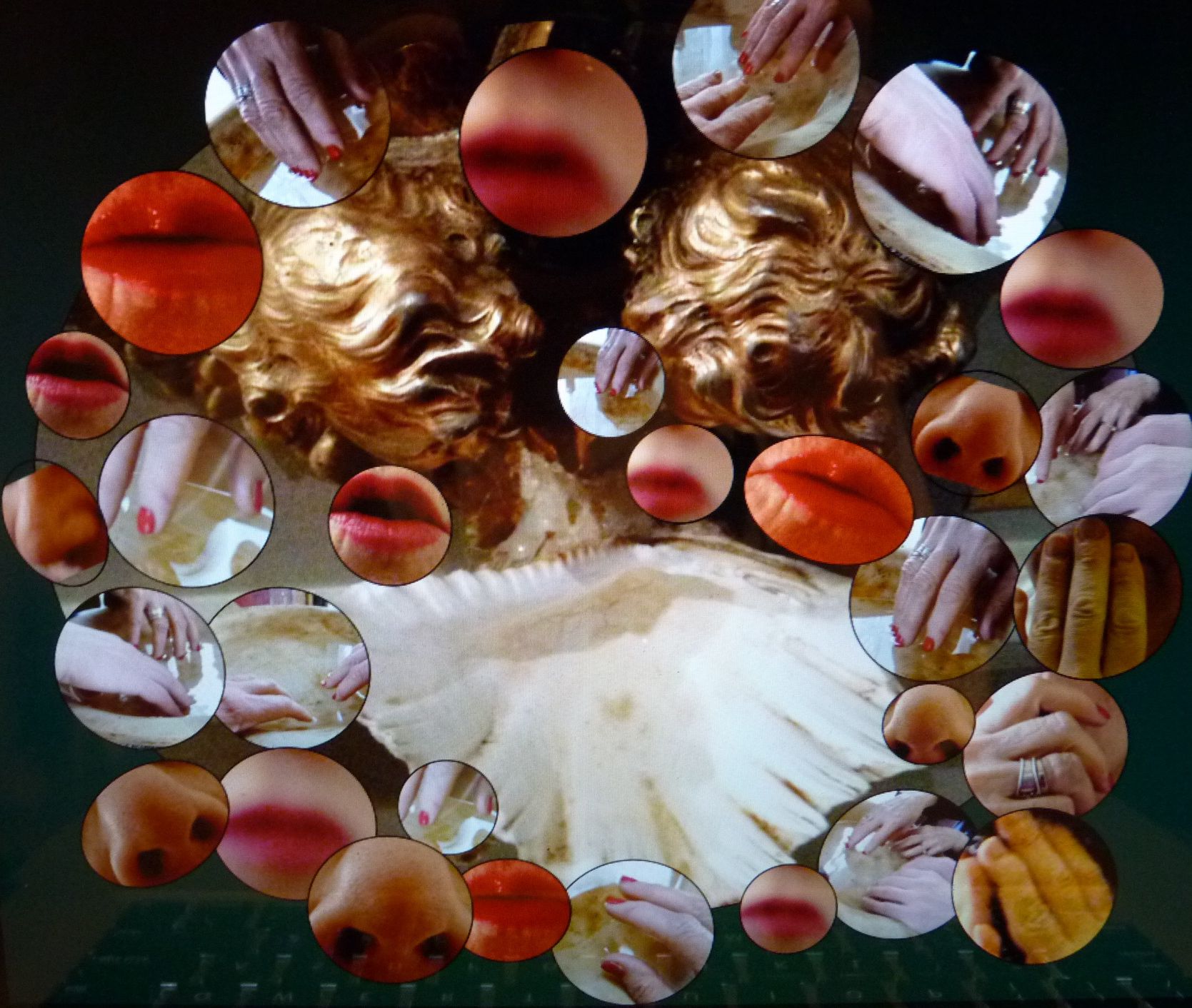
noses and mouths and hands oh my fly around the font at St Agnes Church

Noses and mouths and hands (oh my!) fly around the font at St Agnes Church. Photo collage by Julie Seyler.

BY BOB SMITH

With the flu at epidemic levels, and as I edge closer to the “over 65” at-risk age group, I’ve become a lot more careful. Of course, I’ve been getting the flu shot – and not the flu – for the last 10 years. But there’s always a chance. So I also obsessively wash my hands, like Lady Macbeth, twelve times a day, and avoid sick people – which includes skipping the infection festival at Sunday mass.

The facts: flu virus can survive on surfaces for anywhere from a few minutes up to 48 hours or more. It also tends to live longer on hard nonporous surfaces, and it thrives in wet environments.

Glued to the wall next to every door in our church is a stone finger bowl filled with holy water. As worshipers enter, they dip the potentially germ-smeared fingers of their right hands into the water and bless themselves by dabbing their foreheads and both shoulders. The font is hard, nonporous marble, and because of splashes or drips from sloppy blessers, the area around the bowl is always a wet environment. Essentially, the holy water fonts are flu ponds – grab a dose, anoint your face and body, and take a seat.

Another fun fact: It’s easy to catch the flu or a cold from rubbing your nose after handling an object an infected person sneezed on a few moments ago. But personal contact with an infected person — a handshake, for example — is the most common way these germs spread.

Guess what? Later in the service you’re expected to extend a sign of peace by shaking hands with the people surrounding you in your pew – who just a few minutes ago dipped the fingers of those hands into the flu ponds. Last week, as I dozed through the sermon, the woman directly behind me hacked and wheezed every couple of minutes – clearly an infected person. Out of the corner of my eye I saw her coughing into her right hand. When the “sign of peace” came, I simply ignored her. Let someone else give her peace by taking the flu off her germ-laden hands.

Then there’s the ritual of dispensing wafers that represent the body of Christ. Apart from the priest, the wafers are handed out by Eucharistic ministers – regular churchgoers who have been deputized to dispense communion. Given their dedication to service and the faith, I’m sure these good folks both dip in the flu pond upon entering church and enthusiastically glad-hand everybody in their pew during the sign of peace.

After all that infectious fun, they use that hand to pick up a wafer and place it in your palm. If you’re really old school, they’ll slap the wafer directly onto your outstretched tongue. Either way, I suspect that any flu virus hitchhiking on their hands will readily transfer over to you, and vice versa.

Finally, there’s the (hard, nonporous) silver goblet of wine offered to anyone that wants a sip after they eat the wafer. Fifteen people or more may take a swig before it’s your turn, so the server (another Eucharistic minister) passes a linen napkin across the damp rim of the goblet after each sip, presumably to wipe off germs. But after more than a dozen swipes, isn’t it just as likely to wipe germs onto the goblet as it is to wipe them off?

And do I trust the wine in the goblet to somehow disinfect the rim? Not really – the area below the rim isn’t coated with wine, it’s only been touched by the damp lips of devout sippers. As I look around the church, I ask myself: “Would I want to kiss all these people? No. Then why on earth would I drink from that cup?”

So I refuse to dip in the flu pond. During the sign of peace, I flash the peace sign from afar, and I entirely eschew communion and the goblet of germs. Better safe than holy.

When Petty Meets Pretty

Tags

, , , ,

"the fascination of beauty" Collage by Julie Seyler

“The fascination of beauty.” Collage by Julie Seyler

BY JULIE SEYLER

I live in Manhattan, and am surrounded by gorgeous women of all ages. But my eye gravitates towards those younger than me, who can still traverse the city streets in 7″ heels, completely oblivious to foot pain. Their wrinkle-free skin holds the dewy blush of infinite confidence. The world truly is their oyster, or at least that is what I choose to project onto them as they stride down the street, smartphone in hand, laughing jauntingly on their way to Thursday night happy hour.

I was her once. But alas, no more. At a time long prior to now, could I ever really imagine that one day I would be 57? Approaching 60? It was much too far away, and in my mind, it was not going to happen. I would stay stuck in whatever year I happened to be immersed in at the moment.

I am ashamed to admit it, but there are times when envy for “their” current youth smacks right up against wistfulness for “my” long lost youth. At those precarious moments, I take gleeful pleasure in singing to myself a la Audrey Hepburn in “My Fair Lady,” “Just you wait ‘enry ‘iggins, just you wait.”

That small, petty part of me just needs to secretly and quietly cackle:

“Ha, ha, ha. One day, you flawless flexible soul of youth, will be here – on the right side of 50. And you’ll also wonder where it all went, and how did it go so fast?”

Close to 60, but Nowhere Near Retirement

Tags

, , , , ,

what me retire

Photo by Julie Seyler.

BY FRANK TERRANELLA

In 1953, when I was born, my life expectancy was 66. That’s why, back in the 1950s, when my grandfathers quit working, most people were retired by age 65. The American Association of Retired Persons (AARP) admitted members at age 50. Today, my life expectancy is 83. Those 17 extra years are literally life-changing, and quite significant for retirement planning. This year I will turn 60. And rather than consider retirement as my grandfathers did at this age, I am looking forward to at least another decade of work. I can’t imagine retiring in my 60s. That’s the difference the extra 17 years of life expectancy have made.

Yet the world has not adapted to the longer life expectancies.The AARP still admits members at age 50. Senior citizen housing is available at age 55. Most senior citizen discounts still kick in between 60 and 65. Perhaps this is a subtle hint for us baby boomers to step aside and make way for the younger generation to move into our jobs. But I have a problem thinking of myself as a senior citizen at age 60 because there are still members of my parents’ generation alive and well in their 80s and 90s. Those are the real senior citizens – the Greatest Generation. People in their 60s and 70s are perhaps juniors. That makes 50-somethings just sophomores in the school of life.

So with almost another quarter century until my life expectancy age, I have no intention of slowing down. It’s full speed ahead into my pre-retirement. The only thing I hope to do is begin retirement saving in earnest. But that will be tempered by all the vacation traveling I hope to do in the next 10 years. My wife and I already have the next five years of trips mapped out. This is really my idea of a hedge against not making it to retirement. For someone like me who has had heart disease and cancer, it’s more important to live life than to save for retirement.

Actually, as long as I can take frequent vacations, I see no reason to ever retire. I’ve seen retirement, and it didn’t look like fun for my grandfathers. It was just a lot of television. I would much prefer to be useful every day and earn a paycheck. Maybe I’ll revisit the issue of retiring when I hit 80. But I doubt that it will be attractive even then. I think that our generation may actually retire the word “retirement.”

A Nod to My Rock Stars, Mobsters, Encyclopedias, and Mr. Peanut

Tags

, , , , , , , ,

job

BY LOIS DESOCIO

I believe the truisms (“share,” be “fair,” be “aware of wonder,” and “don’t hit people,” to name a few), as noted in Robert L. Fulghum’s book, “All I Really Need to Know I Learned in Kindergarten,” to be spot-on advice on how to grow into a decent, content, and essentially happy human being.

Add to these, the scholarship that comes with those early working years. Those first jobs. They not only may help you pinpoint what you want, or don’t want, to do when you grow up, but if you pay attention, they are also ripe with opportunities that can grant you what we all need to be decent at, content with, and essentially happy with our career choices.

For me, I knew in third grade that I wanted to be a writer. But I worked my way towards today through more jobs than I can count.

So here’s my short list of the basics on working as a writer, and how I got them:

Low wage: Those of us who grew up in Asbury Park in the 1960s and 1970s spent summers working on the Boardwalk. I did it for 10 years, starting at 14 years old as a counter girl at The Miramar Grill in Convention Hall. This was my induction into hard work at low pay. But it was also my premier tutelage in how to make my pennies count and get more for my money. After work, I would glom on to the 16 and 17 year old employees that would sneak through the secret tunnel alongside the restaurant and got us into neighboring Convention Hall during Led Zeppelin and Janis Joplin concerts for free.

Check your ego at the door: The next summer I moved across the hall and was Mr. Peanut at Planters Peanuts. I spent hours waving people in to the store with my unwieldy peanut head. Everyone who worked there started out this way, and if you were a cracker at being a peanut, you were eventually promoted to selling them inside the store.

Don’t cry when your editor yells at you: My three summers at the other end of the Boardwalk as a waitress at the Casino Coffee Shop is where I learned to be nice to people who weren’t nice to me. I would suck it up when the cook yelled that the food was getting cold, when the customers yelled that the food was cold, and when the boss yelled if I forgot to drip those three partially-used ketchup bottles into one at the end of the day.

Be honest: And it was also at the Casino Coffee Shop where I switched from concert-sneaker to concert-companion by treating the rock stars that performed at the Casino across the way, and regularly came in to eat, like rocks stars, so they would put me on their guest lists. (Leslie West, from Mountain, gave me a plastic, “World’s Best Waitress” trophy.)

Pay attention to details: After college, I moved down Ocean Avenue and worked as a waitress at Yvonne’s Rhapsody in Blue and Rendevous Lounge in Long Branch. Yvonne – owner, chanteuse, and drummer – would bang the drums set up in the corner of the dining room, and would throw her drumsticks into the crowd when she was done. Patrons that were upset with the near-miss-to-the-head would have been more unnerved had they known that the chef’s cigar ashes that would continuously bend towards, and then garnish the food, were accompanied by Yvonne’s fingers poking through every plate before it left the kitchen. I noticed that the clientel that hung out in the lounge under the restaurant had deeper pockets, and therefore tipped well. And there were no drums, no food, no Yvonne. I asked to work there, where I learned to chat up the mobsters that were regulars, like Anthony “Little Pussy” Russo, who took a liking to me, tipped up to 40 percent on his bills, and gave me an extra $20 bill if I would get him cigarettes from the machine.

Give people what they want, and deliver it reliably: I spent a summer as a bartender at a huge club – The Fountain Casino – where my constant attention in both mixing the drinks (a little extra booze), remembering what the regulars wanted (had it ready when they walked through the door), and smiling and winking at the inebriated, had them coming back for more, and made me more money in tips than I had made in any other job before that.

Work on deadline. Accept heaps of rejection. Be clear. And just say it already!: Short on length, but long on lessons learned – I sold encyclopedias door-to-door for one month in Hackensack. I had seconds to sell myself, and those books that nobody wanted. What began as a five-minute, carefully-chosen, beautiful, wordy spiel, turned into a one-minute, bordering-on-begging sales pitch, because people were slamming the door in my face.

Interviewing chops: I worked my way up to credit manager for a contractors supply company in my mid-20s. I spent the bulk of my day on the phone asking big wigs to pay us, please.

And sage instruction, no matter what:

Throw yourself out there, no matter your age, and do things that are really hard : I went back to school at 54 years old.

Learn how to move on when the best job in the world ends: My kids grew up.

The Saturday Blog: Head to Head

Tags

, , , , , , ,

Head to head

By Julie Seyler

It appears that all of us at The Write Side of 50 are neck and neck, and head to head, with ambivalence when it comes to tomorrow’s Super Bowl. Bob will be the life of the party, Anthony may be “fixing” a doorknob, Frank admits to being among the “men who hate the Super Bowl,” Julie has already turned the game into an art project (above), and Lois just loves a good game (and the accompanying party), and will jump on the bandwagon.

My Super Bowl Sunday “Channel”: Dad

Tags

, , , ,

Buccino_Tools4

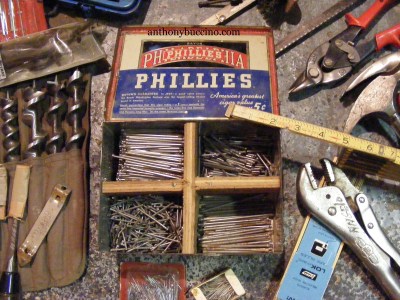
Dad’s Phillies have nothing to do with football. Photo by Anthony Buccino.

BY ANTHONY BUCCINO

During one Super Bowl, I spent the evening changing the door knobs on all the doors in our old house. “That,” my daughter has said for 25 years, “is why none of them close.”

Who needs football to prove manliness? Men build stuff, use saws, hammers, nails, screwdrivers and pound nails. Me, I don’t use those electrical gadgets you find in the box stores these days. I use the hand-tools Dad left behind 33 years ago. The ones with his initials burned into the handles. He was a carpenter, and had a lot more practice, but I can still hit my left thumb pretty good.

Neither of us was much into watching football on TV. He preferred to sleep through war movies. His love was pedigree homing pigeons. I don’t bet money on football. I won $10 on a football ticket in 1971, but Big John lost my ticket, and I’m still waiting for Roger Ross to pay me. (He’s hiding out in Hawaii.)

All those big super-charged football players are best used to run after each other and knock each other down. Spare the testosterone. Memory tells me that the high school rough kids’ exuberance was corralled into wrestling and football. Better they should run in the mud, muck, ice and bone-chilling rain, snow and cold.

These days, my wife will call me in to see a super commercial as she flips from the game to her shopping channels. Or challenge me to choose the cutest puppy in the dog bowl while our old Lab lies nearby comatose, snoring through gray jowls. That is about as close as I get to any kind of bowl.

Like many I’ll catch some commercial highlights in previews or post game. When I think of the money spent on ads for a football game, it’s unthinkable. Some places have a soup-er bowl where they collect cash and food for soup kitchens. How many hungry folks could eat for the cost of a one-minute commercial?

The Super Bowl is coming to my neighborhood in a few years, and all I think about is the traffic and how hard it would be to get to work if I’m working a real job by then. I would not bother to schnorr a free ticket to that game – it’s not my style. Instead, I’ll fix something around the house that has been awaiting repair. It’s probably on the Honey-Do chit list right now.

When it came to those door knobs, I knew how it needed to be done. I had the tools, the hardware and the shims. They just wouldn’t line up like they should have.

In the third quarter, the door jammed closed. I was locked in the spare bedroom. Contemplating climbing out the window onto the garage roof, dropping to the pavement and then trying to open the door from the hallway. Yeah, that’s when I wished Dad was by my side.

Invoking his forty years of woodwork, windows and framing, I channeled a sliver of his ingenuity and got that door open from inside. “Cancel the 9-1-1 call, Honey,” I called down the stairs, “I’m out!”

Maybe we’ll just leave these doors open, for circulation.

I Don’t Man-Up for the Super Bowl

Tags

, , , ,

Football from the outside in

Football from the outside in. By Julie Seyler.

BY BOB SMITH

I failed as a baseball pitcher because of a bad attitude. I didn’t have the athletic skills for basketball or soccer. And I lacked both the skills and raw physical aggression needed for football. As a result, I was never particularly interested in watching other people play those games.

I don’t regularly watch any sport, for that matter. But I make an exception for the Super Bowl, because it’s a championship game where the best teams are playing really hard, there are cool commercials, and an interesting halftime show. And best of all – greasy snacks. But otherwise, because I was never very good at sports myself, I’m pretty much a non-watcher of televised sports.

It started when I played Little League baseball as a boy. They made me pitch, because as a left-hander, it was natural for me to sling the ball across my body from left to right. The pitch started high, looking like a strike, but then it slid down low and inside against right-handed batters – really hard to hit.

But if the ball was hit back to me, whether in the air or on the ground, I couldn’t catch it worth a lick. And at the plate, I struck out almost every time. Worse yet, I was a perfectionist – I thought that unless I struck out every batter, I was a failure. So as soon as anyone got a hit I got angry and threw harder, losing all control. I issued walk after walk, loading the bases.

Wise guys supporting the other team would start to chant: “Pitcher’s crackin’ uh-up! Pitcher’s crackin’ uh-up!,” and I’d get madder, throwing even more erratically, proving them right. The coach would yank me, and I’d sit in the dugout pissed off for the rest of the game.

Continue reading

I’m a Man That Looks Up to Women. (I’m 5-Foot-9)

Tags

, , ,

tall woman

Sketches by Julie Seyler.

BY FRANK TERRANELLA

I was at a cocktail party not long ago, where several 20-something women came over and stood next to me. Now, at 5 feet 9 inches, I have never considered myself tall. I am average height for a male Baby Boomer. But all three of the young women were 5 feet 9 – and above. I know that because I asked them. Two of them were wearing high heels, which made it even worse. In years past, I rarely encountered a woman who was taller than me. What is going on here? When did women start growing so tall?

Just from personal observation, I think that on average, women in their 50s tend to be about four inches smaller than men. But it seems that young women today are growing much taller than their mothers. Although scientists say the average height height of women today is only one inch taller than it was 50 years ago, I seem to see very tall women everywhere I go.  Maybe more women are wearing higher heels than 30 or 40 years ago, but I doubt it. tall woman 2

Women have been wearing that ridiculously uncomfortable footwear for decades. No, I think there actually are more women taller than me today than there used to be. Add to that the fact that people lose height as they age, and I expect to feel like I’m walking among giants soon. And men tend to fear giant women. Do you remember the 1950’s film where a woman has an encounter with an alien and grows to enormous size? It was called, “Attack of the 50 Foot Woman” despite the fact that the woman had no malicious intent at all.  Roger Corman made a similar movie just this year starring Sean Young called, “Attack of the 50 Foot Cheerleader.”

The point is that this idea that a tall woman is a menace is long-running and pervasive. I think that most men dislike looking up at women. The one famous exception was the 5-foot-2 Dudley Moore, who dated 5-foot-11, Susan Anton in the early 1980s. He used to joke that he loved the view, as his eyes were at the level of her cleavage. But that was a much-heralded exception to the rule. And it is notable that they each went on to marry other people.

No, I think that most people avoid having significant others who are much taller than they are. Anyway, I think it’s an inevitable trend in my life that I will be looking up at more and more women in the years to come as I grow smaller and they grow taller. Maybe I can learn to accept it and, like Dudley Moore, just enjoy the view.

It’s Ancient History: What’s New is Old

Tags

, , , ,

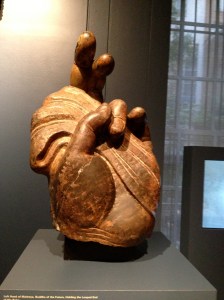
Left hand of Maitreya, Buddha of the Future ca 550 AD

Left hand of Maitreya, Buddha of the Future ca 550 AD

BY JULIE SEYLER

The Institute for the Study of the Ancient World (ISAW), is a resource center for scholars devoted to documenting and recording a time that existed thousands of years before Facebook. But they also put on exhibits for the curious, like me. If I tell people I am heading off to see a show called “Pagans, Jews, and Christians at Roman Dura-Europos”, of course eyeballs are rolled. But I am endlessly fascinated in the continuities from then to now: that we have always made art; that gold has always been prized; and that grapes have always been fermented into wine. 

Our tradition of adorning ourselves and getting drunk is so old it can never be new. So it is always a pleasure to see an old, old treasure like the pure gold fragment of a plaque embedded with pieces of turquoise that represents a snow leopard from Kazakhstan made about 2800 years ago. A cat of the ancient world that would blend in perfectly at Tiffany’s today.

Photo of a recreated cave from Xiangtangshan, China

Photo of a recreated cave from Xiangtangshan, China

One Saturday afternoon before hip surgery I needed an art pick-me-up, so I dropped by to see ISAW’s latest exhibit called, ” Echoes of the Past: The Buddhist Cave Temple of Xiangtangshan,” which just closed on January 6.  The focus of the show was these earth-carved caves located in northern China near the city of Xiangtangshan. The caves, decorated with beautiful lotus flowers, once housed 20-foot Buddhas, grand bodhisattvas and imaginary monsters sculpted from limestone by unknown artisans sometime between 550 AD, and 577 AD. The monumental Buddhas, with their half-opened eyes and plush lips scream, “benign contentment”.

Staring up at these tranquil giants made me think that the desire to seek a more noble world is timeless. It also made me think that in every culture, in every era man/woman has needed to create art. And sometimes that art has reflected the continuous search for spirituality.