
Who needs to advertise when your store sign is a 10-foot scissor?

16 Monday Jun 2014
Posted in Art
Who needs to advertise when your store sign is a 10-foot scissor?
14 Saturday Jun 2014
13 Friday Jun 2014
Posted in Confessional

Immobilized Thumb
When I retired in October, I resolved to do everything I hadn’t had time to do while working – including studying guitar so I’d become a better hack guitarist than I am now. I started lessons in mid-December and was practicing for an hour every day. It was great – my skills improved steadily.
But after a month I developed persistent pain at the base of my left thumb, and my doctor prescribed an analgesic cream. Three times a day for weeks, as directed, I applied the cream religiously (every time I put it on I muttered “this Goddamn stuff better work”), but to no avail – the pain remained. Next stop – the hand specialist.
He examined my x rays and promptly diagnosed arthritis, which means there’s no more cartilage in the joint between my thumb and my wrist. He said he could give me a cortisone shot to relieve the pain, and if necessary do surgery to replace the cartilage. I said I’d heard repeated cortisone shots could damage the joint.
“That’s why we’re going to start conservatively – wear a brace for six weeks and then we’ll see where we are,” he recited, scribbling indecipherable notes.
He told the nurse to get me a wrist brace and schedule a follow-up. Then he leaned in with his best dead-on empathetic look (do they teach that in medical school?), firmly shook my hand (the right, which isn’t hurting yet), and left. Examination over.
As the nurse showed me how to wrap the brace around my thumb and wrist, she explained that it should reduce the inflammation and pain by immobilizing the joint. I should wear it all day, every day, if possible.
“What happens when I take the brace off and start moving the joint around?” I asked. “If it’s arthritis and there’s no cartilage there, won’t it just start hurting all over again?”
“Let’s see where we are after the six weeks, okay?” she said, followed by the nurse version of the sincere sign-off: she handed me my file, told me to pay any copay at the desk, and scurried away.
Both she and the doctor had given me the same sketchy prognosis: “wait and see.” In other words, they didn’t know if the brace would help, but felt it was worth a try before they started jabbing me with painful needles of dubious long-term efficacy, or slicing into and reconstructing the joint itself. Let’s face it – the doctor’s office is called “Hand Surgery Associates,” so I’ve got some inkling of what the ultimate recommendation is likely to be. Reducing inflammation is probably the normal first step in the process.
I’ve been wearing the brace every day, with the same religious fervor I brought to the analgesic cream routine, and the pain’s been reduced – no surprise, because with the brace on you can’t rotate your thumb at all. But it isn’t gone, and I’m sure it’ll return in full force once I stop wearing the damn thing. And because of the pain, I haven’t played guitar for five months and counting.
Remember the nerdy bookworm played by Burgess Meredith in that old Twilight Zone episode? He was a ravenous reader, but his dead end job as a bank clerk and his overbearing wife had combined to prevent him from curling up with all the great books he wanted to read. Then the world ends in a mass cataclysm, and he finds himself the sole survivor in a ruined city.
He comes upon mountains of books in the rubble that was once the public library, and settles down to finally read to his heart’s content – for days; weeks; the rest of his life – he’s thrilled. But he falters as he bends down to pick up the first book and his Coke-bottle glasses fall off, shattering on the hard concrete. He can’t see his hand in front of him, much less read a book.
The episode ends with him sitting amid a sea of books, moaning miserably.
“That’s not fair. That’s not fair at all. There was time now. There was all the time I needed! That’s not fair!”
I know just how he feels.
12 Thursday Jun 2014
Posted in Concepts
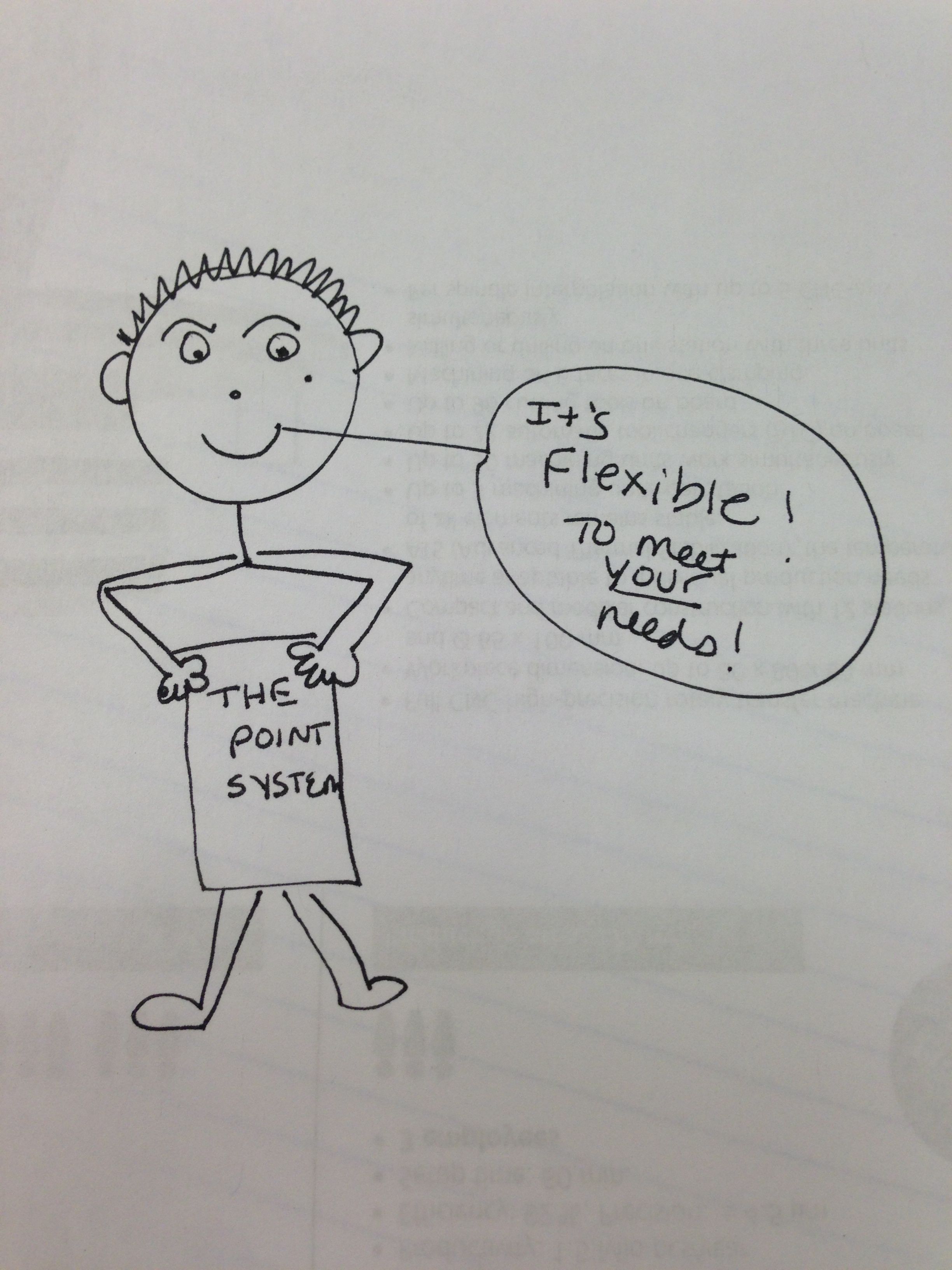
I begged my friend to write this blog since he is the architect behind this guide to healthy living known as The Point System, but he refused. Instead I am the messenger and part of the message I was commanded to deliver was to stress the simplicity, flexibility and originality of his plan. So here it is.
The goal is the usual: staying on track for a healthy lifestyle via daily exercise and eating right. Because he tends to be slothlike and indulge in P.M. potato chips and A.M. bagels, he came up with this idea that he would give himself a point every time he did something “beneficial” for his body with the initial goal being to rack up 3 points a day. So, he gives himself one point if he:
He said at the beginning it was difficult to get 3 points in a day, but now he needs to increase his daily challenge to 5 points a day and plans to eventually up the quota to 100 points a day. He has also added another point-based activity:
As anyone can see, The Point System is amazing. Not only is it as elastic as a rubber band, but you get to custom design it to fit your needs.
My only comment is that he should get a bonus point for reading the blog.
11 Wednesday Jun 2014
Posted in Food
Tags
Food, Food52, garlic, Lois DeSocio, mortar and pestle, radishes, The New York Times, The Write Side of 50
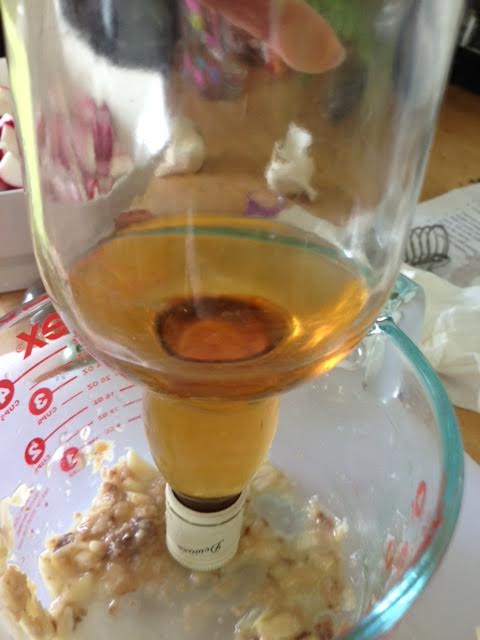
Pestle with a punch on the inside.
We are nothing, if not adaptable, by the time we reach the middle ages. We’ve adjusted our flow meter to “just go for it!” We navigate our midlife crises with aplomb and mettle that is unique to our generation. We’ve learned to turn our heads away from ageism, and we strive to live out this chapter with vigor.
But there are some things that should not be messed with. Some things that must remain intact as foundation for our adaptability. The leave-as-is, the indefatigable. Like our lucidity; our vivacity. Our awareness of the passing of time; our confidence.
And crushed garlic. Mortar-and-pestle-crushed garlic. Garlic that is pummeled and pulverized, along with oil and other herbs until it’s pasty; its aroma sulfurous. It has a swallow so pungent, it can push your inner cheeks to your teeth.
It was the flux between adaptability and the crushed garlic called for in this Radish Salad with Anchovy Sauce from the foodie Web site Food52 that recently forced Julie and I to grab a quarter-filled bottle of Dewar’s White Label by the neck.
Just a couple of days before The New York Times ran this piece on mortars and pestles, which included the quote, “I insist on it for certain things, like garlic …” from Marc Meyer, an executive chef and restaurant owner in Manhattan, Julie and I were cooking for a party we were throwing. We were working in a kitchen that was lightly stocked. We didn’t have the basics. Or a mortar and pestle for the radish salad.
“Insist.” Like Mr. Meyer, that’s pretty much what Julie inferred when I tried to talk her into adapting the garlic – just slice it!, dice it, smoosh with a mini ricer, let’s try the immersion blender, how about a fork? (I believe I also suggested donning sneakers and stomping on it ala Lucy and the grapes.)
After all attempts failed to do what apparently only a mortar and pestle can do, we hit the bottle. Our row of alcohol on the set-up counter bar included an old bottle of Dewar’s whiskey that has been hanging around in the pantry for decades – no one ever drinks the stuff, but it is always put out at parties. It’s shaped like a big pestle.
So our pile of garlic got hammered on that bottle of whiskey.
And hence the radish salad was sublime – a riot of garlic, salt, and radish pop-and-tickle – all a result of midlife aplomb, mettle, confidence (the indefatigable), and a bottle of whiskey.
10 Tuesday Jun 2014
Tags
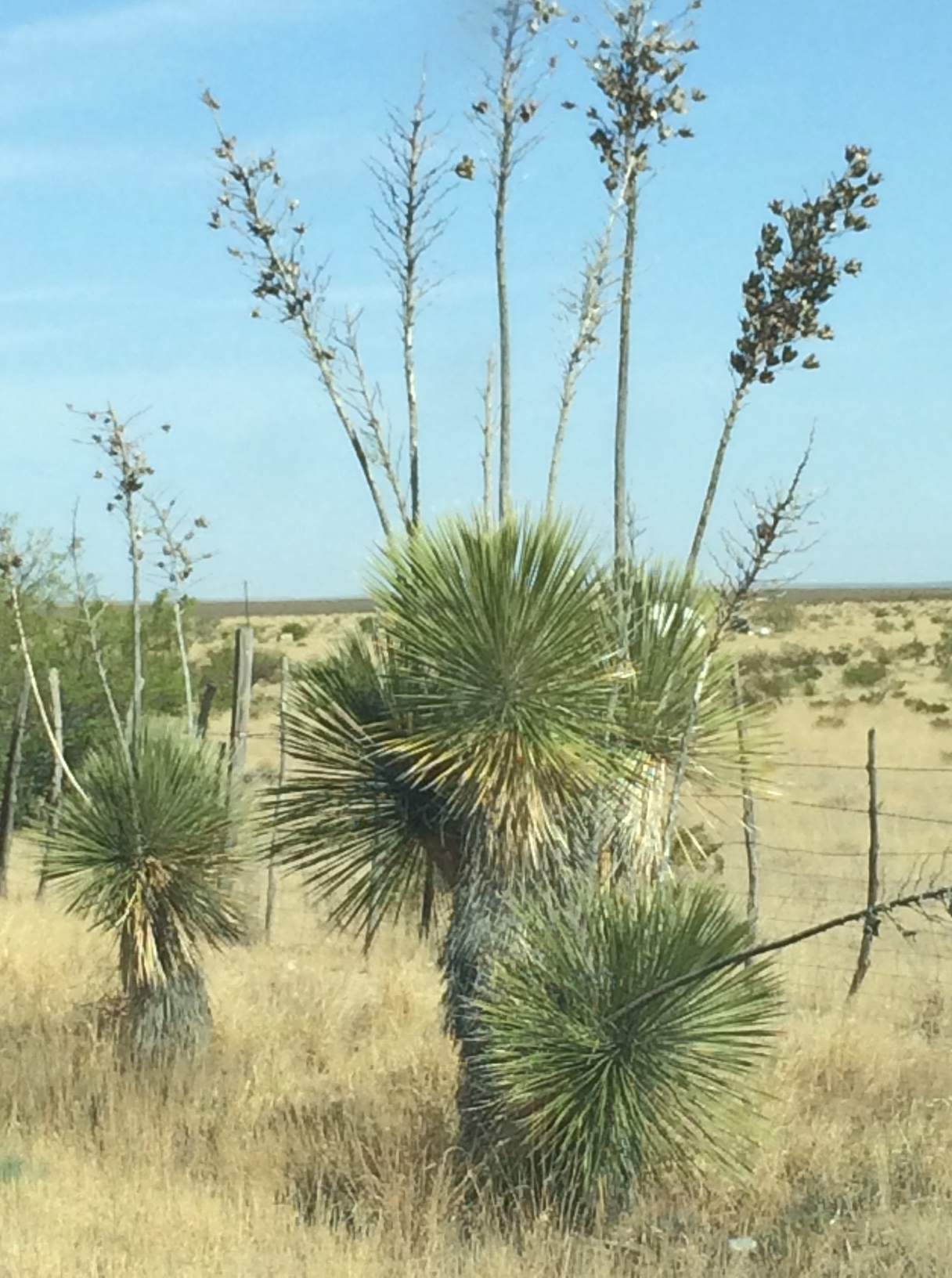
Agave Plant. Photo by Frank Terranella
BY FRANK TERRANELLA
Here is the plant that gives us tequila. It grows wild along the highways of southern New Mexico. I wonder if this is what fuels the Road Runner, New Mexico’s state bird.
09 Monday Jun 2014
Tags
In 1967, “The Graduate,” “Bonnie and Clyde,” “In the Heat of the Night,” and “Guess Who’s Coming to Dinner” (along with “Doctor Doolittle”) were all nominated for best picture, with “In the Heat of the Night” winning. A potpourri of films that reflected iconic changes happening in the sociological landscape.
“The Graduate” distilled adolescent angst into a single word (“plastics”), and middle-class/middle-aged ennui into a single sentence: “Mrs. Robinson, are you trying to seduce me?”
“Bonnie and Clyde” depicted the gory violent killing of the anti-hero criminal with operatic grandeur and in so doing, opened up the cinematic floodgates for onscreen decapitations. “In the Heat of the Night” and “Guess Who’s Coming to Dinner” presented racism – one with visceral intensity, the other through romance, but both with the purpose of opening up small-minded prejudices. I did see “Guess Who’s Coming to Dinner” in 1967, but years passed before I saw the other movies because, back then, unlike now, movies really didn’t mean that much to me. And I was not at all attuned to current events, except remembering there was a big brouhaha when the first person of color moved into West Allenhurst.
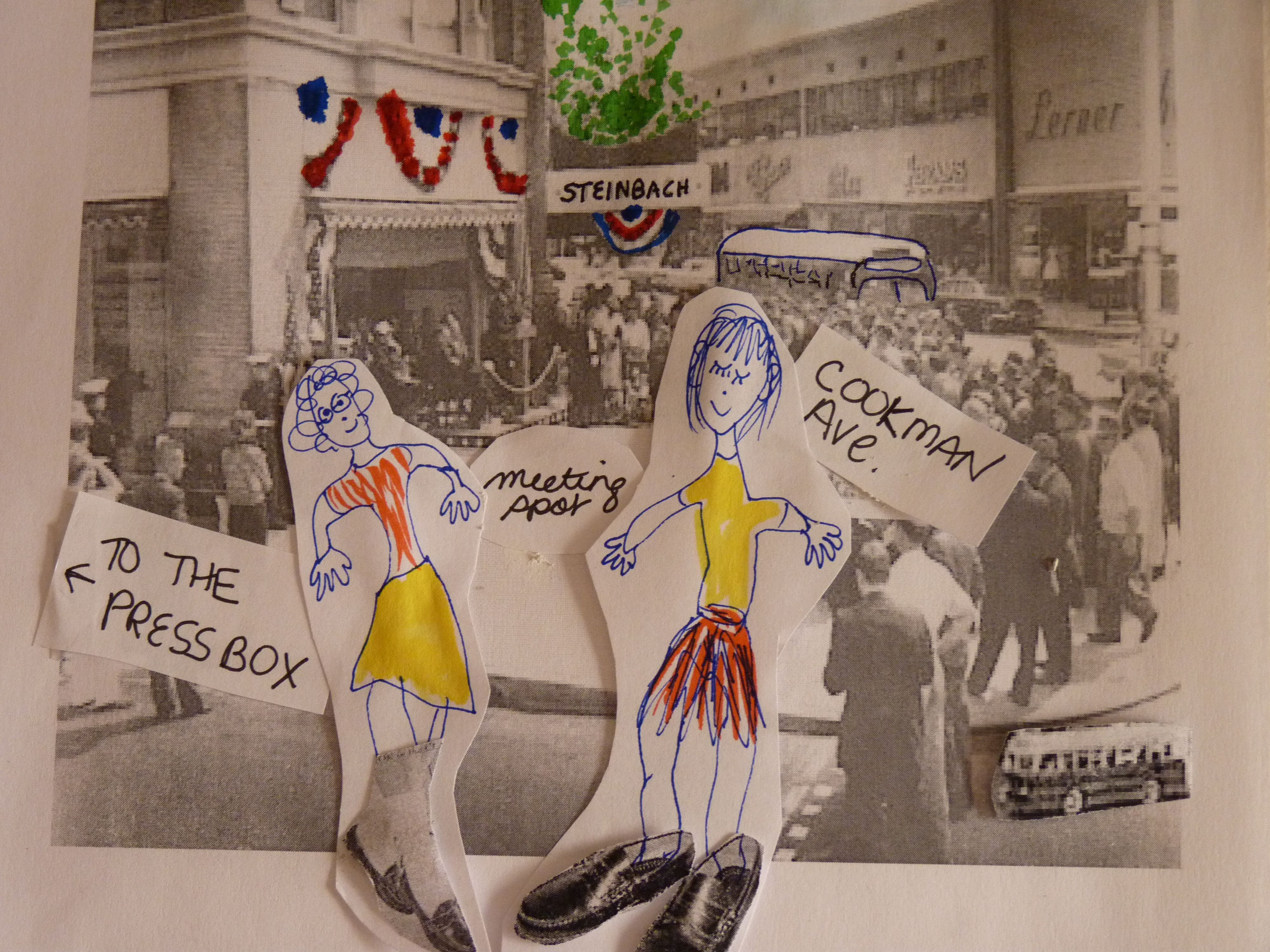
Rather, I was absorbed in my pre-high school world, overjoyed that I was a cheerleader, and on the cusp of entering the big league of “age”: my teens! In my memories, I see me and a girlfriend boarding Bus #31 on Monmouth Road on a Saturday afternoon to head into Asbury Park. We would meet up with a bunch of other friends at Steinbach’s, which at the time, was a premier department store that ruled Cookman Avenue.
Then we’d make our rounds to Canadian’s across the street, The Villager, and Country Fair, a sort of ultra-preppy shop, known for its Scottish-like kilts, and matching cable knit sweaters. Were we all wearing our Bass Weejun penny loafers? Afterwards, we would go to The Pressbox for lunch. We thought we were oh-so-sophisticated, if not actually old. Whatever we may have been, we were definitely innocent, and felt eminently safe and supreme in our niche. Although the dissension and anger between black and white America was in the news, it took another three years before the rage descended on Asbury Park.
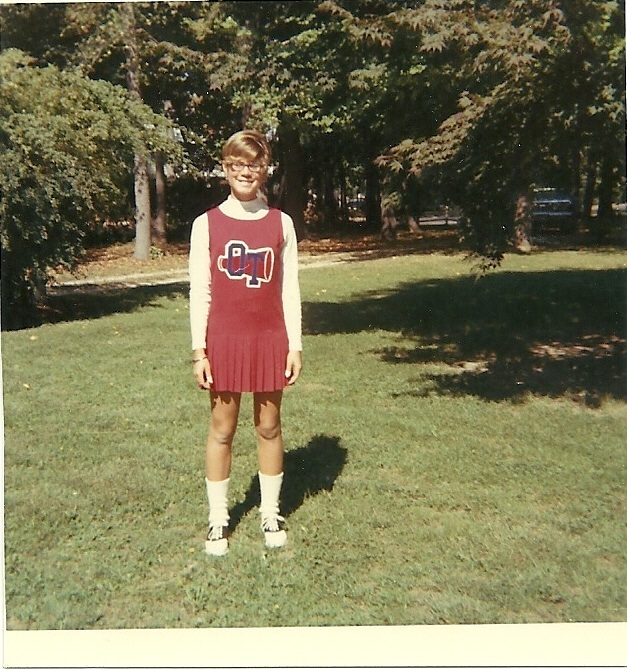
Me 1967.
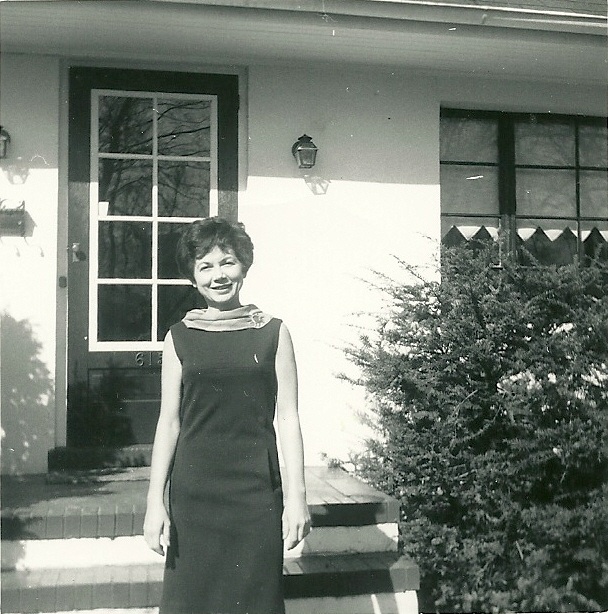
My mother 1967.
Amidst the reverie and pleasure of being a teenager, the age of 58 was unimaginable. Even my mother was only 39, and my grandmother, who was old, didn’t have a nameable age. It makes me wonder what it was like to be 58 in 1967. Did women fret over their wrinkles or did they benignly accept the change in skin texture with grace and a smile? (Collagen and Botox were non-existent.) While I definitely recall my old aunts and uncles discussing “health issues” (as I seem to do more and more these days), did they obsess over “growing old,” documenting every change in cheek and jowl? Was there a desperate quest to hold onto youth, or was their 58 our vision of 78?
Who knows. But I wonder what the world will be like for the 12 year olds of today in 2062, when they are 58. Will they look back fondly on the memories of their youth, and think how innocent it all was? Or maybe they will never have to look back because their entire life has been documented in real time online. And given that every generation gets “younger,” maybe their 58 will be the new 28.
07 Saturday Jun 2014
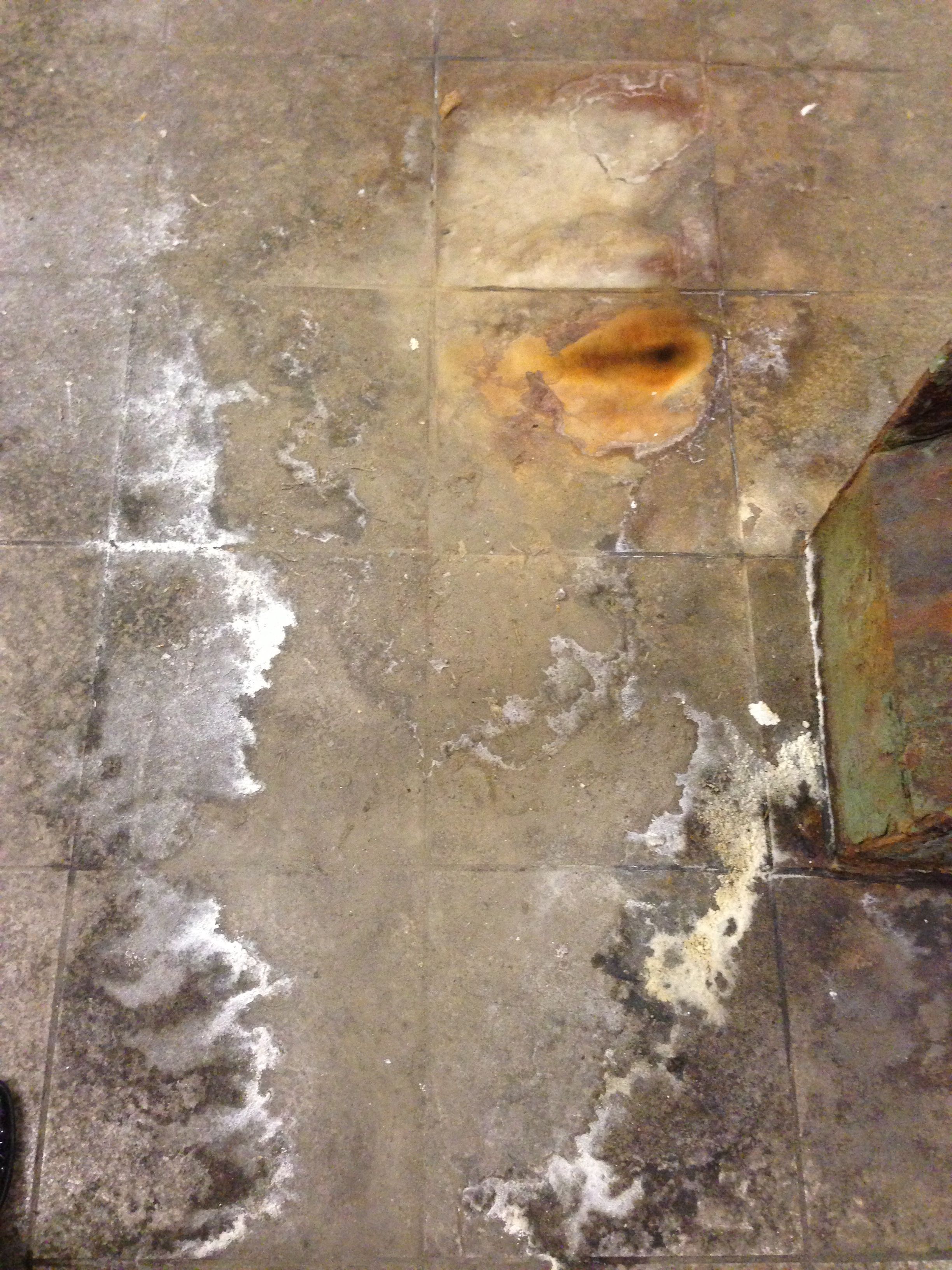
Subway floor. Manhattan.
06 Friday Jun 2014
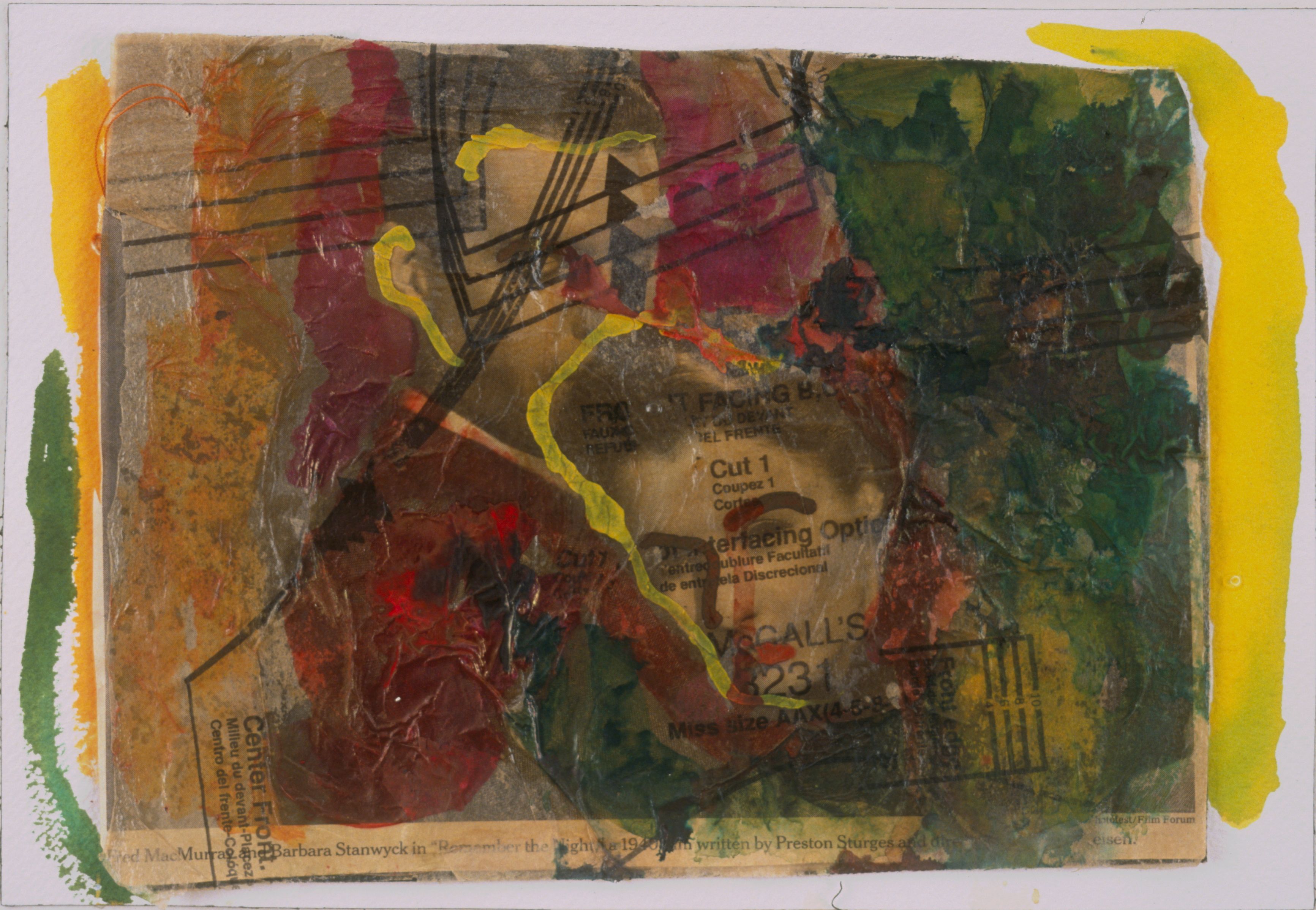
So, shockingly, no one got all of the answers right. Oh well. For those curious souls who want to know here you go. And all the movies can be seen at Film Forum or of course rented on Netflix.
1. “I caught the blackjack right behind my ear. A black pool opened at my feet. I dived in.”
MURDER, MY SWEET. (1944). Edward Dmytryk
2. “Nobody’s all bad, deep down. She comes the closest.”
OUT OF THE PAST. (1946). Jacques Tourneur
3. “Give me a kiss or I’ll sock ya.”
THE POSTMAN ALWAYS RINGS TWICE. (1946). Tay Garnett
4. “If I’d only known where it would end, I’d never have let anything start.”
THE LADY FROM SHANGHAI. 1948. Orson Welles.
5. “Whichever way you turn, Fate sticks out a foot to trip you.”
DETOUR. 1948. Edgar G. Ulmer
6. “If you shoot, baby, you’ll smear us all over the road.”
DEAD RECKONING. 1947. John Cromwell.
7. “You’re not too smart, are you? I like that in a man.”
BODY HEAT. 1981. Lawrence Kasdan.
8. “I will not be ignored.”
FATAL ATTRACTION. 1987. Adrian Lyne.
05 Thursday Jun 2014
Posted in Confessional

About twelve years ago, on a warm summer day, my world briefly disappeared. I’d gone to the gym with my sons Bob and Vincent, and Bob, a macho 17 years old, kept encouraging me to bench press heavier and heavier weights. I complied until my 47-year-old arms were limp noodles and I was drenched in sweat.
“You drive,” I told Bobby, tossing him the keys.
“Are you sure?” he asked – after all, he’d only had his learner’s permit for a few months.
“Absolutely,” I assured him.
I settled into the passenger seat for a well-deserved rest and to contemplate my plans for the day – fix the frayed clothesline, cut the grass, spend the afternoon at the beach. Then, just a half block from the gym, it happened.
I felt a tiny buzz at the base of my neck and as I tried to access my mental checklist my entire mind was wiped clean, as if an eraser were passing over a blackboard and leaving blackness behind. All memories, all names of things, every basic premise about where and who I was, evaporated from my consciousness like dew in the morning sun. Dizzy with vertigo, I desperately scoured my mind for any objective reality I could define.
I tried to think of simple things like the name of the town where we were – nothing. Who’s the President? What country is this? What’s today’s date?
I remembered I’d known all these things just moments ago. But like a morning dream, the harder I tried to recall any details, the further they receded from my grasp.
“What day is it?” I asked, my heart racing in panic. Bobby glanced at me as he drove, worried by my apparent bewilderment.
“Saturday.”
“No, what date?” I asked, feeling more confused every second. “What’s today’s date?”
“June 19th,” he replied, looking askance. “Why?”
In the back seat, my younger son Vincent sensed something wrong and tensed in his seat, listening. I was in free fall; I was lost and knew I needed help.
“Where’s…?,” I faltered as I gestured toward the east side of the road, where I had a vague recollection of a safe and familiar neighborhood. I could picture our house there and my wife Maria and our daughter Abby, and I knew they loved me and could help. But I couldn’t remember their names.
“Where are those…my…” I wanted to describe them; to say “people” or “women” or “wife” or “daughter,” but I couldn’t find those words, either. I had no labels to attach to my mental images.
“What are you talkin about?,” Bobby demanded, exasperated by my rambling.
“They’re at our…uh..our…the place, over there…” and I stopped again because I couldn’t recall the words “home” or “house.”
It had been less than two minutes, but then things changed again. Until that moment I’d been on funhouse stairs where the risers and treads suddenly fold down flat and it’s a ramp and you scream and fall, sliding helplessly with nothing to hold you back. But as I fell deeper into this bizarre state of unknowing, and the memory that I’d once known many things itself began to fade, my panic dissipated.
Wrapped in a private fog, I became quietly complacent. As I’d asked him to do before I was stricken, my son drove to the newspaper store and the bagel shop, but I had no recollection of why we were stopping, what newspapers I wanted to read, or what “bagel” could possibly mean. And I no longer cared.
When we pulled into the driveway fifteen minutes later Maria walked out to meet us and reality clicked back into place as all my memories flooded back. It was over, having ended as quickly as it had begun. But now that I’d awakened from the dream, I panicked again – was I crazy? Had I suffered a stroke?
I hurried to the bathroom to examine my face for droopy muscles or eye anomalies that would signify a stroke – nothing. Except for my anxiety over what had just happened, I felt fine. Nonetheless, I crawled into bed for an hour to calm down.
I lay there looking at the sun-streaked ceiling as the curtains surged across the windowsill, billowing in the breeze. I could hear a distant lawnmower; a buzzing fly; a chirping bird. I was terrified that my world might suddenly fall away again and that all these things, and more, would be lost.
The feeling wore off as the day went on; by dinnertime I was back to normal. My doctor a few days later diagnosed it as “Transient Global Amnesia” (TGA), which is a fancy name for what I’d experienced – you temporarily forget everything you ever knew. It might last a whole day, it’s unlikely to happen again, and no one really knows what causes it.
My TGA episode is instructive as my mother continues her sad, inexorable descent into the dark maze of dementia. I can sympathize with her panic when her memories first began to fade and she realized she could no longer name everyday things like “broccoli,” or “cookies,” or “shoes.” And as with Mom’s advanced dementia, in the midst of my TGA episode I was blissfully unaware of the profound extent of what I’d forgotten, settling into calm submission to my ignorance and leaving everyone else to deal with my incapacity.
But it took moments, not years, for my memories to fade. And minutes, not months, for me to settle into the relative comfort of total oblivion. And I came back.

 The Write Side of 59