Newark is Nothing New to Those of Us in the Know

Tags

, , , , , , ,

Forno's of Spain

Fornos of Spain. All photos by Julie Seyler.

BY LOIS DESOCIO AND JULIE SEYLER

My little New Jersey town conveniently straddles two big cities – Manhattan and Newark. I can make it to downtown Newark in 15 minutes, and on a Sunday, sans traffic, can drive to Manhattan in 20.

But it’s a hard sell to get my Manhattan friends to bridge or tunnel it over to the Jersey side for anything, much less dinner. Why would anyone leave Manhattan to eat? And eat in Newark? For the 25 years that I’ve lived nearby, a suggestion to dine in Newark has provoked comments from the uneducated about how they don’t understand how I could live so close to a city that they consider to only have bragging rights as a murder capital. Given that Newark’s Ironbound district rivals any Manhattan neighborhood for flavor of both the palatable and neighborhood kind – they are missing out.

But Julie was recently open to giving it a go, and took the PATH to Newark, where we met at Fornos of Spain – a somewhat touristy, but still tasty, Ironbound fixture. Shocking that Julie, a born-in-Jersey girl, who will fly for seven hours to eat tapas in Madrid, had never, in 50-plus years, ventured anywhere in Newark beyond its Penn Station platform. Dare I say – she and her camera were smitten? At least with the name:

In the Ironbound section of Newark, New Jersey there is a restaurant called Fornos of Spain. It is readily accessible from Manhattan via either the PATH or NJ Transit to Newark Penn Station. Last week, Lois and I dined there with our contributor buddies, Frank and Bob. We reveled in clams casino and gambas al ajillo; grilled grouper, paella valencia and filled-to-the-brim pitchers of sangria. I am pleased to say the sangria was not cloyingly sweet, as I, too, as this New York Times article points out, remember it being when I was drinking it in the 1970s.

Paella Valencia.

Paella Valencia.

Sangria.

Sangria.

The next day I set about looking for the Fornos, you know, the restaurant “of Spain.” I assumed that the Newark joint was a scion of a famous place in Spain, probably Madrid. An Internet search just turned up thousands of reviews of the Newark restaurant. I discussed the dilemma with Lois, who had a simple explanation: ‘Well, Jule, fornos means ovens in Portuguese, therefore the restaurant is actually called the Ovens of Spain.’ What? I mulled this over. That doesn’t make sense, because if fornos means ovens in Portuguese, why didn’t they call the restaurant Fornos of Portugal? And even that is not the final word on the subject because couldn’t there be a family named The Fornos? Maybe they came from Spain. So, what’s in a name? Whether it’s forno, or Newark? What I do know is that I want to go back to Newark’s Ironbound and find a Portuguese restaurant without “Spain” in the name.

Sign Says, “No Entry.” Some Say, “Let’s Pull In!”

Tags

, , ,

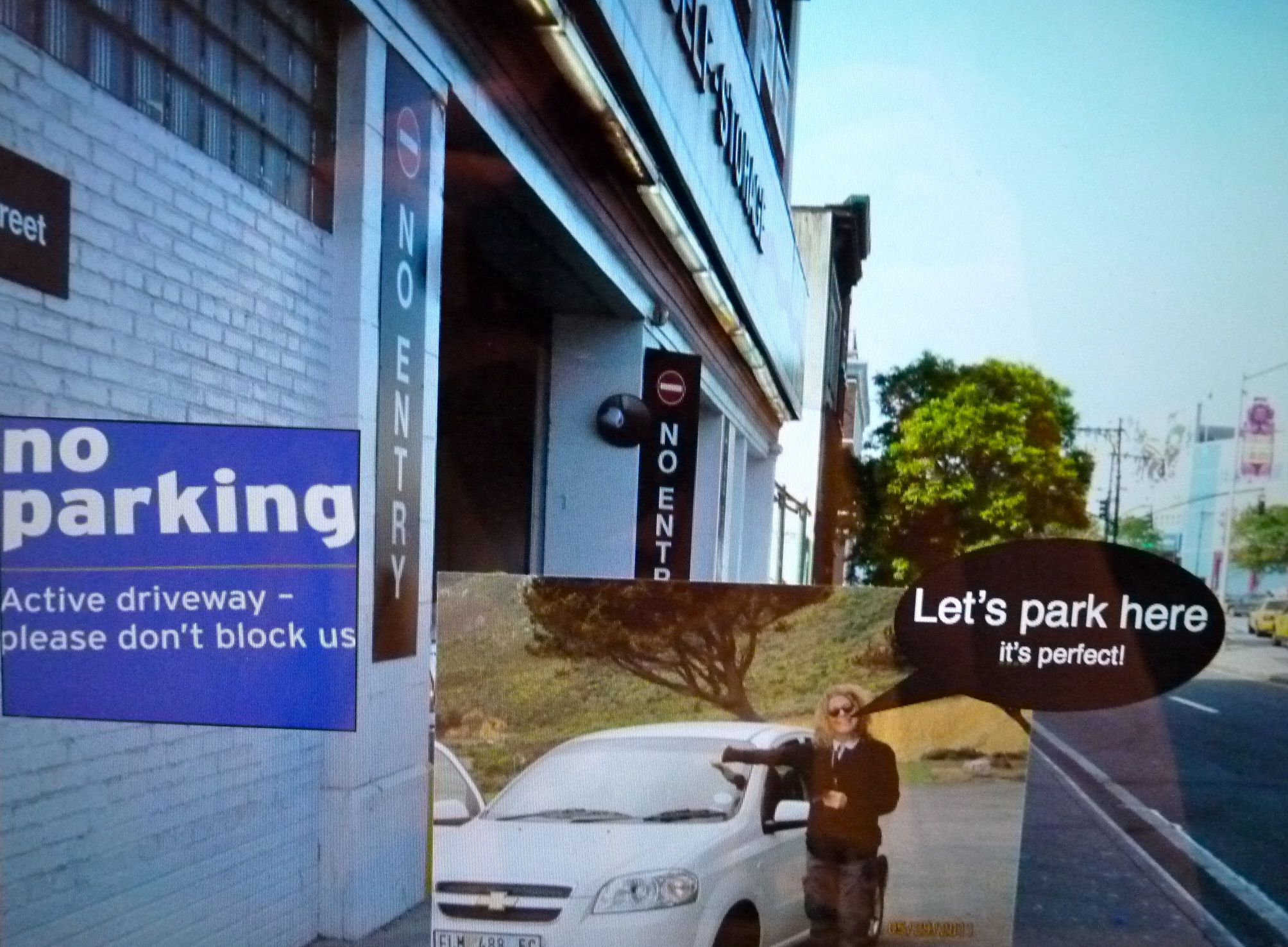
No entry. No parking. The perfect spot for the car!

No entry. No parking. Except for me. I’m special.

BY BOB SMITH

One of my pet peeves is people who are too special to follow the rules. You know who you are. You’re the guy in the express lane at the supermarket with 47 items piled in your shopping cart. You can’t read, even though, “8 ITEMS OR LESS,” is in bold red letters on the sign above your head. You can’t count. Or you just don’t care. You’re the gal who pulls up to the Dunkin’ Donuts, and parks in the space three feet from the front door. The only problem is, there are no white lines on the blacktop delineating that area because it’s the travel lane – it’s not a parking space at all. And there’s good reason for that. The parking lot is designed to allow two lanes of travel – one in, and the other out. You have just blocked one of those lanes. But hey, the guy who has a heart attack over his coffee and Munchkins won’t mind a bit if defibrillation is delayed a couple of minutes because your car prevents the ambulance from pulling up in front of the building.

But that’s an extreme example. Most days, there’s no need for an ambulance at the local Dunkin’ Donuts. The only consequence of your disregard for the rules is that the rest of us have to be careful as we jockey around your car so we don’t ram into it, or worse yet, hit someone else’s car as they enter the now, overly-narrow entrance to the parking lot. That’s a small price to pay to spare you the inconvenience of having to park in an actual parking space fifteen feet from the building with the rest of us poor slobs.

And how about those drivers who see the shoulder of the highway as their own personal escape route from traffic jams?  When I’m sitting in a miles-long, bumper-to-bumper 5 m.p.h. cluster-crawl on the Garden State Parkway, nothing warms my heart more than to see you whizzing by on the shoulder, happily making good time despite the heavy traffic. For some reason, you’re not affected by the nasty karma that comes with having someone in every other stationary vehicle you bypass look at you and think, “asshole.”

A recent extreme example of the, “I’m special” syndrome is a scam in which people hire disabled tour guides at Disney World. You might think being confined to a wheelchair would be a distinct disadvantage when your job is to guide people through a sprawling amusement park. Quite the contrary. Because these guides are on motorized scooters or wheelchairs, they qualify to use the auxiliary entrances to the rides and attractions, which typically have very short, or no lines at all. And each disabled guide can bring up to six guests through the express line with them, which prompts some families of means (and six or less members), to gladly fork over the $130 per-hour tour-guide fee to avoid interminable lines in the broiling Florida sun.

We should all drive to Disney World, using the shoulder to avoid traffic jams en route, then park wherever we want when we get there. We can hire wheelchair-bound tour guides to get us onto the express lane to every ride in the park. Why not? Let’s all be special together.

The Selfies Phenomenon: “Look at Me!” (Be My Friend)

Tags

, , , ,

Selfie photo

My selfie.

BY FRANK TERRANELLA

You know you’re getting old when you are bemused by new catchwords that creep into the pop culture. I recently overheard a young man tell a friend on a bus to work, “Wow, you should see her selfies online. She’s hot! But watch out, they’re NSFW.” I will admit that I had no idea what a selfie was, or what this NSFW was all about. So I consulted the online oracle, Yahoo, and found out that a selfie is a picture that people take of themselves. The pictures usually show the subject with a phone in his or hands. I also discovered that NSFW means “Not Suitable For Work.”

I find this selfie phenomenon to be absolutely fascinating from a sociological and psychological point of view. First, it appears that women take most of the selfies. Second, it appears that a good portion of the selfies are, shall we say, risqué. Women have been posing nude since long before Alexandros of Antioch got some beautiful Greek girl to pose for his Venus de Milo. There were probably prehistoric cave women who posed for cave artists. And the ability to take a photograph of yourself goes back to the dawn of photography. After all, all you need is a camera and a mirror. Yet I don’t remember seeing a single selfie back in the ‘60s and ‘70s. So why is it that there are so many women taking provocative pictures of themselves now that we even have Web sites that are devoted to this phenomenon?

I think the answer may lie in the fact that feminism, smartphones and the Internet came together to create a “perfect storm” that opened the floodgates. Feminism, beginning in the 1960s, freed women to be in touch with their bodies and their sexuality. Smartphones made it easy to take pictures that do not need to be developed. And the Internet made it easy to disseminate the pictures to create a phenomenon that spurs more pictures by more women (and sadly, girls).

But the selfie phenomenon goes far beyond photos that are not suitable for work. It seems to be part of this broad trend toward navel gazing of which Facebook and Twitter are the most visible signs. The same people who need to tell us that they are getting a latte at Starbucks also seem to need to take pictures of themselves and distribute them online. If Baby Boomers were the “me” generation, Millennials are the “look at me” generation.

So are women today more immodest than their mothers were? I don’t think so. I think that everyone (and especially all young people) makes poor decisions at times. The difference is that the technology now has made it so easy to take racy pictures of yourself that many more women are doing it. And that makes it socially acceptable. Back when we were young, you had to actually ask someone to take your picture. Can you imagine 40 years ago trying to hold a Polaroid camera in one hand while you took a picture of yourself in a mirror? No, it required the development of phone cameras that you can hold in your hand to make this activity do-able.

The Urban Dictionary gives one of the definitions of selfie as, “A strange phenomenon in which the photographer is also the subject of the photograph, in a subversive twist on the traditional understanding of the photograph. Usually conducted because the subject cannot locate a suitable photographer to take the photo, like a friend.”

The fact that people today would rather do it themselves shows a more individualistic time, where people have fewer close friends to ask to take a picture of them. The level of loneliness this projects is a bit sad. Paul Simon talked about this phenomenon more than 40 years ago in his song,” I Am a Rock” where he wrote: “I have my books and my poetry to protect me I am shielded in my armor, hiding in my room, safe within my womb I touch no one and no one touches me I am a rock, I am an island.”

Today, some people hide in their rooms and take pictures of themselves and then disseminate the pictures in an attempt to make a connection with another person. Rather than risk having a real in-person relationship in which they might get hurt, they are shielded by the armor of anonymity. Because “a rock can feel no pain. And an island never cries.”
Let’s hope this is just a passing fad.

There’s Beauty in the Beasts, Gargoyles, and Peacocks of Upper Manhattan

Tags

, , , ,

Jane Alexander

All photos by Julie Seyler.

BY JULIE SEYLER

If anyone has a chance to get up to the The Cathedral of St. John the Divine at 112th Street and Amsterdam Avenue by July 29, there is an exhibit up called, Jane Alexander: Surveys (from the Cape of Good Hope). It’s visually mesmerizing and provocative. If you decide to go, check the Web site because accessibility to the the show is limited.

Upon entry to the cathedral, head straight to the back right chapel named after St. James. There is a slideshow presented of black and white photos of the South African landscape, and the city of Cape Town. It contributes to appreciating the fantastical anthropomorphic animal humans Ms. Alexander constructs out of fiberglass. But it is not simply the figures that intrigue, it is how and where they are placed in space. Each scene is staged in a different chapel.

Infantry, 2008-2010

Infantry, 2008-2010.

The fact that a show evoking both the primal anger of wild animals, and the connection between all “different” types of people, fits seamlessly into the majestic and spiritual chapels of a 19th century cathedral is a testament to the artist’s vision that the world – segmented, divided, and scary as it might be – is, nonetheless, woven together as a whole.

African Adventure, 1999-2002.

African Adventure, 1999-2002.

I kept running back and forth and back and forth between the various chapels trying to absorb the work, and commit it to memory. It was fabulous!

But even before I entered the cathedral doors, I had encountered unexpected pleasures. Like 527 West 110th Street – a building festooned with human gargoyles, each separately depicting some unpleasant characteristic of the psyche. They were carved out of stone, and hung as appendages on the building’s facade:

Mistrust.

Mistrust.

Greedy.

Greedy.

Then I came upon the cathedral complex, which consists of the Synod House:

Doors into Synod House

Doors into Synod House.

And a green knoll known as the Pulpit Green, where a pure, white, peacock struts his stuff for the camera gawkers:

a gorgeous white peacock struts awayAnd then I was in the middle of Europe facing a cathedral built in the mode of Notre Dame in the middle ages.  It is vast and domineering.  It is somewhat difficult to capture the fullness of The Cathedral of St. John the Divine, a “chartered house of prayer for all people” erected in 1892.

Trying to take in St John the Divine.

Trying to take in St John the Divine.

Rose Window.

Rose Window.

My Weekend “Hangover” Keeps Me in Bed on Mondays

Tags

, , ,

nestbox margo

Early morning chirping in the nestbox, aside – I want to sleep in. Photo by Margo D. Beller.

BY MARGO D. BELLER

Another Monday morning and I’m hungover. Again.

Not from alcohol. From trying to outrun Father Time while cavorting with Mother Nature.

For over three decades, I would rise for breakfast, and rush for a train to take me to an office. About two-thirds of the way through those three decades, my husband and I moved to the suburbs, so that one train became two trains, and the longer commute meant I often had to rise before dawn.

That ended about two years ago.

I am lucky to have a job at my age. It was much harder for an unemployed someone, age 50 and older, to find a job during the recession. And it’s not much easier now, when things are allegedly improving. But I made friends along the way, and one of them found me my current job, for which I work from home.

When I had become a serious birder, I had wished I had more time out in the field – time that was spent working or commuting. But a funny thing happened now that I am home, with a commute measured in minutes rather than hours. I find I still don’t have enough time.

I used to get by on six to seven hours of sleep. Now, like a newborn baby, I crave eight to nine. It is a struggle some days, particularly Mondays, to rise from bed. I hear this year’s house wren busily singing his territorial song at the nestbox every dawn. Part of me wants to rise and see what else is out there. Usually, I go back to sleep.

Except on the weekends. After five days spent mainly in my house, I must get out. I must fit seven days of life into two: see my friends, work in my garden, walk in the woods, drive to another part of the state (with or without MH), and look for birds.

I rise early and walk and drive for miles. I climb. I pull weeds in the garden, and lift heavy pots. The hours fly by. I forget about things like age, and how I’m going to pay the bills.

Then, usually around 8 p.m. on Sunday, I pass out in my chair, spent. Somehow I get to bed. Suddenly, it’s Monday morning. Fifty-plus-year-old knees and back hurt. I’m exhausted, and I’m depressed – hungover yet again.

I don’t know if I am unusual. I see women older than I am walking every day on my street, no matter the weather. Most days I do take a pre-work walk and run short errands during my lunch break.

It’s just Mondays, when I am depressed, that I find that even though I work from home, I still don’t have the time to do what I want. Because this job is a contract position – the new reality for some of us in journalism – I get no paid holidays or personal days. No work, no pay. And so I must use the weekends to the fullest.

Welcome to the “golden years.”

The Saturday Blog: A Toast

Tags

, , , , , , ,

bottles and a glass.  photo by Julie Seyler

The stuff of celebration. Photo by Julie Seyler.

Tomorrow, The Write Side of 50 turns six months old. Since November 19, we have posted, without fail, six days a week, every week. We could not have done this without the consistency of our contributors. So we raise a glass to Bob and Frank (they’ve been with us from the get-go), Margo, and Jeannette. And a clink to our readers, for your continued comments, support, inspiration, and for giving us a reason to bring out the good glasses. Salud!

Our Cabin Brings Back Fever, As in the Spring Kind

Tags

, , , ,

parisandcabin 159

The years spent fixing up our ramshackle cabin, nurtured a 30-year marriage.

BY JEANNETTE GOBEL

A sudden realization came to me not long after we purchased our little cabin up at Priest Lake Idaho. This place was not like any standard construction. It was a “Frankencabin.” The inspector’s report must have been 10 pages long. It hit me that a project of this magnitude would be great for our 30-year-long marriage. Not just the common goal of refurbishing the place, but the romantic aspect as well. The benefits have definitely outweighed the negatives. Would most people take on this project? I think not.

Our family had been spending lots of vacation time up at Priest Lake in northern Idaho. This lake is probably one of the most gorgeous spots in the US. My grandparents used to bring my mother and her sisters up in the 1930s. I visited almost every weekend as a child growing up in the ’60s and ’70s.

In the early years of our marriage, we camped. When camping felt like hell as we aged, renting cabins became the norm. We loved everything the lake had to offer. Hiking the many trails, exploring the lake by power boat, or kayaking can fill many a day. One ritual we always look forward to is the boat ride through the mile-long thoroughfare between Lower Priest and Upper Priest Lake. More times than not, we have seen moose drinking at the shore, and ospreys tending to their young in treetop nests.

Financially, it made sense to buy this place. My husband Kevin and I bought the cabin when our youngest was a senior in college. We had been paying rent for the kids while they were at the university. Since we weren’t going to have rents to pay in the college town anymore, we should invest this money in a lake place of our own.

Since it is a summer-use-only place, we anticipate with much excitement, the precise weekend in late May when we open it up for the season. Not only is it an event that has to be done, it is a great romantic weekend. Closing up in the early autumn is also a time for an intimate dinner at nearby Elkin’s, a four-star restaurant.

parisandcabin 177

Built with a little spit, a little spackle, some steak and chardonnay.

I believe that a marriage survives on chemistry and common goals. We still have the chemistry, but the cabin sure provided us with many challenging goals and priorities. First up was rebuilding the exterior. Priming and painting took one full summer. But does a grilled steak and a bottle of red wine taste like heaven after a hard day of labor. The place looks like a real cabin now.

Next up was repairing water damage, and painting the interior. That was another feat of tenacity for the second summer of ownership. I believe we were more motivated by scrumptious meals, and wine on the deck, or a scenic hike on one the thousands of trails. Other projects have included tree felling, a new roof (which we hired out), bringing the fireplace up to code. We rest easy now knowing that a fire in our woodstove won’t result in a conflagration in the forest. I believe we had grilled salmon with chardonnay the night that work was over with.

Just last year, our entire section of the lake got sewers. (Yay! No more holding tank.) We had plenty of prep work for this to happen. Estimates had to be procured, decisions made as to which contractor won the bid, and then the actual work could begin. Is it ever a relief to flush the toilet, and not worry about backups in the pipes anymore.

On our way to the local hardware store for project supplies, we followed a young moose for a quarter of a mile until he disappeared into the forest. One last project to complete the big hook-up was to connect the cabin plumbing to the actual line. Kevin, being amazing, did this himself. It took most of a week. Boy, did we eat well that week. Cocktails by the fire pit outside at sunset tasted especially decadent as we watched a doe slowly make her way through our front yard.

We have certainly reaped many benefits from ownership of our lake place. Starting with a nurtured marriage. Not to mention projects accomplished, the physical activity, creative cuisine, and a place for retreat from the stress of life.

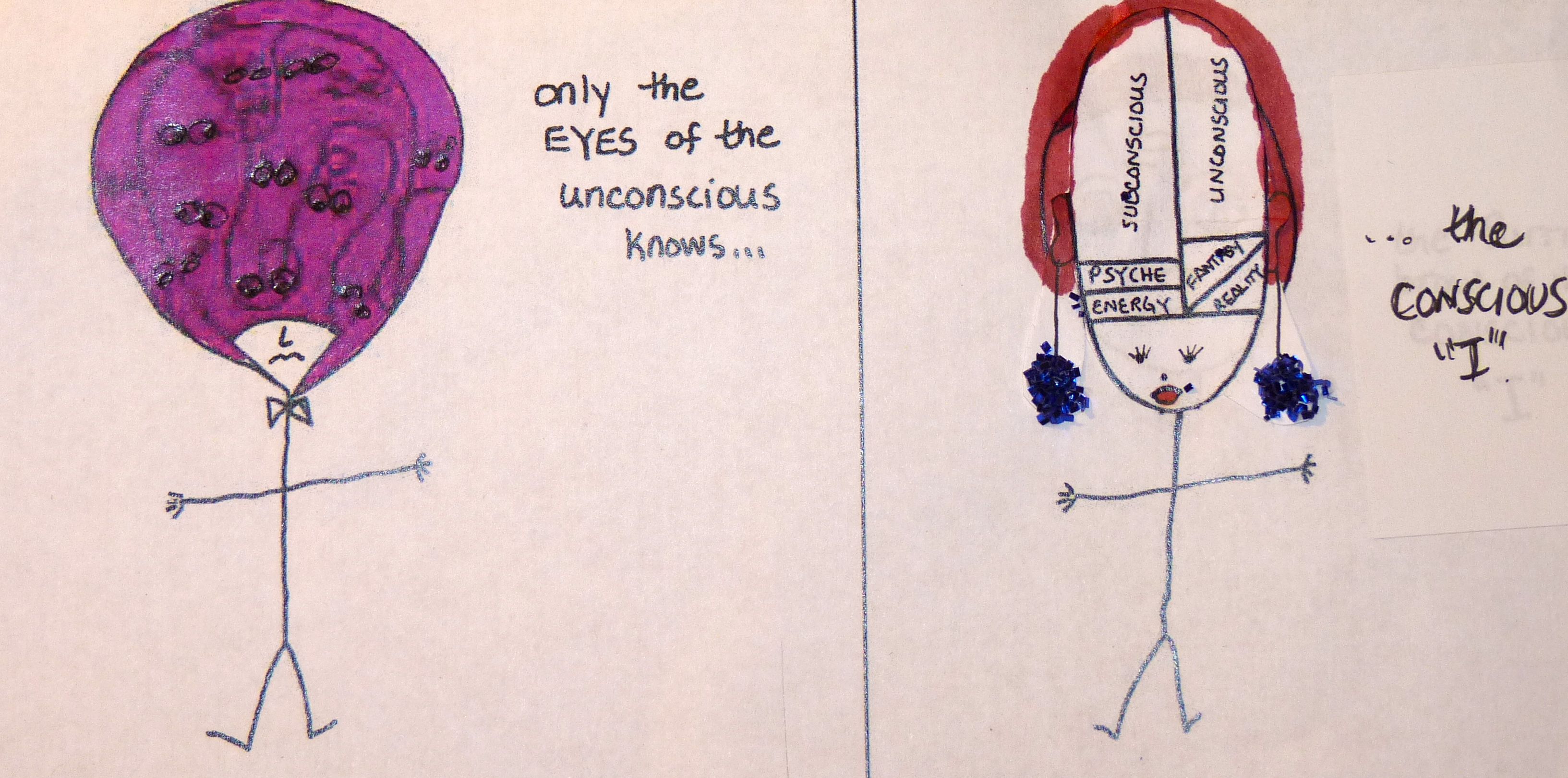
How Freud (and Montgomery Clift) Unlocked My Psyche

Tags

, , , ,

Sigmund Freud and Montgomery Clift.

Sigmund Freud and Montgomery Clift. By Julie Seyler.


BY JULIE SEYLER

Does anyone remember coming home from school and turning on Channel 9 at 4:00 to watch the Million Dollar Movie? When I was in my Clark Gable movie phase, I was able to catch a myriad of his pre and post “Gone with the Wind films” like, “Test Pilot” with Myrna Loy, and “China Seas” with Jean Harlow, while lying on my flower bedspread eating forbidden potato chips. But this was not the only station where we could indulge ourselves in Hollywood fantasy. Before Turner Classic Movies, there was also NBC Saturday Night at the Movies inviting us to an evening of at home entertainment. Anyway, this is a long-winded segue into to a movie I discovered when I was about 12 or so.

I remember it was a Saturday evening, and I was home babysitting my younger sisters. After the Swanson’s Turkey TV dinner (the ubiquitous fare on nights when my parents dined out), I settled in to watch the movie of the week. It was “Freud,” which I just learned was directed by John Huston. It starred a bearded Montgomery Clift as Dr. Sigmund Freud. The plot revolves around a woman patient riddled with issues – she is repressed, depressed, and hysterical but there are no physical symptoms that can explain her illness. Freud takes her on as a patient and after two hour’s worth of hypnosis, and lying on Freud’s famous couch, she is cured. Freud’s theories of the unconscious have helped unlock her buried memories and released her from emotional bondage so she can blossom again in the world. Hollywood schmaltz, no doubt, but it turned me on to the power of dreams; the notion that childhood events can shape one’s psyche. And rehashing it all can be a wondrous experience. A few years later, this was confirmed when I saw, “The Three Faces of Eve” with Joanne Woodward’s academy award winning portrayal of a woman with three separate and distinct personalities that had sprouted in response to a traumatic childhood event. Two hours later, she is completely cured by Lee J. Cobb.

These movies simplistically collapsed psychological theory into a 120 minute drama, but the message they contained – that the hidden psyche is a complex and perplexing phenomenon – resonated for me as a teenager. I cannot say that all these years later I have changed my opinion much.

Did the movies lead me to embrace the phenomenon of the psyche? I mean, Montgomery Clift as Freud is a pretty sexy role model. Or was I destined to discover the curious case of the unconscious mind, regardless. It does not matter. I remain a firm believer that the unconscious is way more powerful than what we think we “know.” In fact, I think if scientists could figure out a way to harness the unconscious, the energy problems of the world would be solved.

freud 2

Jersey Boy on Texas Grits: I Tried Them. I Liked ‘Em

Tags

, , , , , ,

How 'bout some bacon, eggs and grits?

How ’bout some bacon, eggs … and grits? By Julie Seyler.

BY BOB SMITH

Grits are a staple in Texas, but before I went there and tried them, I didn’t understand their appeal – I just didn’t get them. First of all, they present a grammatical problem: is “grits” singular or plural? No one ever offers you a single grit – it’s always a bowl or a pile (“pahl”) of grits. Maybe it’s a Texas thing – like “y’all,” which refers to one person, versus “all y’all,” for persons plural. I’ll just call ’em grits – if it’s all the same to all, y’all.

Where do grits come from? When I was a kid, “grit” meant granules of sand or rock. If you found grit in your food, you spit it out and rinsed your mouth. Chickens eat grit because they need it to help them digest their food (a convenient necessity given that they generally eat directly off the ground), but grits are something else.

According to Wikipedia: “Grits refers to a ground-corn food of Native American origin, that is common in the Southern United States and mainly eaten at breakfast. Modern grits are commonly made of alkali-treated corn known as hominy.”

Hominy? Isn’t that what Ralph Kramden stammers when he’s at a loss for words?

The Wiki definition continues: “Grits are similar to other thick maize-based porridges from around the world such as polenta or the thinner farina.”

Exactly – grits resemble watery couscous. Or, if prepared on the thicker side, a bowl of wallpaper paste. That’s not so far-fetched, by the way – wallpaper paste can readily be made using common corn starch.

To add insult to injury – or rather, starch to starch – eggs (“aigs”), in Texas restaurants are served with toast and home fries, as well as grits.

Frankly, I felt a little silly asking for grits. After all, I was ordering an egg-white vegetable omelette (the menu suggested the more manly “Hold the yolks, pardner”), and Canadian bacon (“city ham” on the menu, not conceding anything to our northern neighbor). Then I asked for rye bread, which made the waiter cock his head quizzically.

“You mean wheat?”

“No – do you have rye?”

“Wheat or white?” (Pronounced “what.”)

The unspoken question, apparent from the waiter’s slack gaze, was, “What the hell is rye?”(Pronounced “rah.”)

So, to lend some Texas cred to my East Coast milquetoast egg “what” omelette, I ordered a bowl of grits. Then, confronted with that steaming pile of gelatinous, tasteless mush, I did what anyone with pluck (or grit – or grits, for that matter) would do – reach for the spices and condiments. First, a sprinkle of salt and pepper overall. Then I had a shake of hot sauce on one spoonful, a dab of butter on another, and a slice of city ham with the next. This was getting to be fun. To carry on the maize theme, I even tried a spoonful with a squirt of maple-flavored high fructose corn syrup (“flapjack surp”), and it was pretty good.

I was starting to git grits! On their own, grits have little personality, and virtually no flavor. But as a substrate for spices, fats and unhealthy sweeteners, grits are magic – gladly taking on all flavors and conveying them to the tongue in a creamy soup that swirls happily around the mouth before sliding complacently down into your belly, warm and comforting as a fuzzy lapdog.

But are grits good for you? Years ago, these cute kids’ toys called Weebles were promoted with the advertising slogan, “Weebles wobble but they don’t fall down.” Weebles didn’t fall down because they couldn’t. Being egg-shaped, they merely rolled in place on their robust rounded bottoms. I suspect eating too many grits would eventually give you that Weeble look – along with heart disease, diabetes, and the need for hip replacement surgery, not to mention blown-out knees, varicose veins, and arthritis.

Git it? If you “git” grits, and eat them too often, grits will git you. But they’re not generally on the menu in any East Coast eateries, and I’m not rushing off to the supermarket to hunt down hominy for my breakfast porridge, so if I want to cultivate obesity, joint pain, and a propensity for heart disease, I’ll have to stick with old-school, Jersey-diner home fries cooked in bacon fat, and served with sass by a waitress shaped like a Weeble.

From Politics to Air Travel, Perspective Gained From Looking Back

Tags

, , , , ,

Back in the old days- Flying in Style.

Flying in style, back in the old days. By Julie Seyler.

BY FRANK TERRANELLA

A lot of what makes those of us on the right side of 50 special is the fact that we can remember the world of 50 years ago. There is an advantage to being able to take the long view of current events. For example, I think that we are uniquely situated to see the broad pendulum swing of majority political thought from the liberalism of the 1960s to 21st century conservatism. If you’re in your 30s, you have never experienced a world where liberal thought was dominant. It’s only when you’re as old as we are that you have the perspective in which to view debates about universal health care, gay marriage and equal rights. We have lived in a world where a president from Texas enacted government-provided health care for senior citizens. That same Texas president signed into law sweeping civil rights legislation that transformed America. With a stroke of the President’s pen, it became illegal to discriminate in employment and housing on the basis of gender or race. You have to be on the right side of 50 to remember classified advertising in newspapers where the columns were headed “Help Wanted – Male,” and “Help Wanted – Female.”

Contrast that with the current political climate out of Texas. Governor Rick Perry would consider President Johnson a socialist. No one under 50 can remember a time when Texas was a solidly Democratic state. They can’t imagine a time when that might happen again. But we on the right side of 50 know that the pendulum that swung all the way to the right can just as easily swing back to the left. Look at Vermont. In 1936 it was one of only two states that FDR did not carry (Maine was the other), and today Vermont is a bastion of liberalism.

I bring all this up because I recently traveled to Dallas and, like my colleague Bob Smith, visited the old Texas School Book Depository that is now a museum built around a crime scene. I walked through all the memories of that time.I choked up again as I watched Walter Cronkite report the president’s death. It brought me back to that time, nearly 50 years ago, when America lost its innocence. Just as 9/11 changed America forever, so, too, did November 22, 1963. But you have to be old enough to remember pre-assassination America in order to understand how profoundly this event affected the American psyche. The world depicted so accurately on the television series,”Mad Men,” disappeared by the end of the decade.

And nowhere is the change so apparent than at our airports. First off, in 1963, only a small fraction of Americans traveled by air. People routinely took the train to Florida, and the ship to Europe. Those who did travel by air were treated to an elite world of privilege with stewards and stewardesses (terms borrowed from the world of luxury steamships). Air travelers could walk directly to their gate without passing through any security. Then came the first hijackings to Cuba, and with it came the first metal detectors. And of course, after 9/11, airports became a world of shoeless, beltless passengers being patted down by Homeland Security agents.

On my flight out to Dallas the captain made an announcement that one of our female flight attendants (no longer stewardesses) was on her last flight after 49 years on the job. That’s right, this woman began as a stewardess for the now-defunct Eastern Airlines in 1964, and after that company folded, she moved to American Airlines. The entire cabin gave her a round of applause as she and her beverage cart made the final victory walk up the aisle. And while watching at this youthful-looking woman, who has to be older than me, I wondered what stories she could tell of her 49 years in the air. She began work at a time when airline passengers were a pampered elite, and lived to see the era where passengers have to pay for a cookie. This woman has perspective on air travel – the kind of perspective that comes with long experience.

And so I guess what all of us on the right side of 50 can claim is perspective. We can see the forest, not just the trees.  Maybe there is wisdom in age after all.