Same Awe at Magazine Centerfold, Just Different Limbs

Tags

, , , , ,

Bob tree

Quite the spread.

BY BOB SMITH

National Geographic magazine is famous for its often remarkable high-quality photos. I recently picked up an old issue that was lying around the house, and found a story on giant redwood trees. It featured a pullout photo that folds out, and keeps on folding out, until it’s at least 18 inches long.

And there, filling the entire surface of the page, was a phallic leviathan: a single full-length photo of the second largest giant sequoia tree on earth. At 247 feet high and 27 feet in diameter, it’s one of the most massive living things on the planet. It has two billion leaves. That number alone is mind-numbing – if you counted out one number every single second for twenty-four hours every day, you would be counting for the next 60 years before you reached 2 billion.

This tree is estimated to be 3,200 years old, which means when it was a sapling, humans were just discovering how to use iron to make cutting tools and weapons. Rome, much less the Roman Empire, wouldn’t emerge for another 500 years. But there was the President (its nickname from 90 years ago), quietly sprouting and growing taller and stronger in a snowy forest that, millennia later, would be called Northern California.

It’s so huge you can barely discern the intrepid scientists, and their climbing gear suspended among the upper branches. Wearing bright red and yellow parkas, they resemble apples and peaches nestled in the foliage.

As I stood there in my dining room admiring the centerfold, I felt a sense of displaced déjà vu. When I was a teenager (and beyond), centerfolds in magazines like Playboy and Penthouse featured oversized photos of oversexed women with their limbs splayed in provocative poses. Now I’m more impressed by a giant tree. How life has changed.

The Cicadas are Coming (Again). The Cicadas are Coming (Again). And I’m Not Jiggy With It.

Tags

, , , ,

The cicadas are coming. drawing/photocollage by Julie Seyler.

The cicadas are coming. Drawing/photocollage by Julie Seyler.

BY BOB SMITH

It’s an entomological Paul Revere moment: the cicadas are coming. Every 17 years these giant, ugly bugs burrow out of their holes in the ground and crawl up every tree in sight en route to the upper branches to mate. On the way,
they make a cacophonous clacking racket as they molt, leaving empty husks of themselves clinging to crevices in the bark. Once the ground temperature reaches 64 degrees Fahrenheit or so, here they come.

The first time cicadas appeared in my lifetime I was seven years old, in second grade at Merritt Memorial School. I was in love with my teacher and a little girl named Charlotte with curly brown hair. I remember reading aloud in class and feeling frustrated when my friend Pete struggled with simple words.

When they emerged again in 1979 I was 24. I was working full-time as a garbage man because it paid roughly twice what I’d earned as a textbook editor, the only job for which I was qualified by my undergraduate degree in English. I had been married for less than a year and was just beginning to realize that it was a disastrous mistake.

I was 41 when the cicadas came again in 1996. I was divorced and fourteen years into my second (much happier) marriage. With three kids between 6 and 11, and an intense career as an attorney, I was too busy to notice the emergence of lumbering red-eyed bugs.

This year’s appearance of the cicadas finds me approaching 60. The kids are fully grown and pursuing their own lives. (Although my youngest son, for now, is doing so under our roof.) The prospect of retirement is a cold reality as opposed to a theoretical, far-off possibility. And for some reason this year’s appearance of the cicadas fills me with foreboding.

Their raucous chorus of mating calls, alien eyes and zombie demeanor, and eerie exoskeleton shadows clinging to tree trunks are bad enough. But what makes me uneasy, what really knaws at me now, is their periodicity.

I’m looking at the timeline: when they come again, I’ll be 75. What quantum changes will have happened in my life by then? What will I have gained and lost in those years while the cicadas lay deep in their burrows, sucking at the tree roots and slowly maturing, marking time until their time comes to dig out again?

And the next time they emerge – as insurance salespeople are so fond of saying, “God willing” – I’ll be 92. Will I be able to see and hear them at all? Will I care? In the words of T.S. Eliot, do I dare to eat a peach?

My chances of living to see a third cicada emergence beyond the one expected this spring are nil. Chances are I will have been deposited into my own hole in the ground long before they crawl out of theirs.

In ancient China cicadas were viewed as symbols of rebirth. Many cultures today see this periodic influx as a gastronomic opportunity. After all, these are billions of slow-moving vegetarians that don’t fly away and can’t bite humans. They’re bundles of readily available nourishment on the hoof (or the wing or weird sticky leg, whatever). Yes, for many people, cicadas are what’s for dinner. Periodically.

I’m not a cicada, so I can’t crawl into a hole and count on coming back in 17 years to climb a tree and get jiggy. But I am a bipedal, meat-eating, surface-dwelling top predator, so why not revel in my role? These fugly bugs may have a high gag factor but they’re incredibly low in cholesterol, and they’re packed with protein and nutrients.

I’ve already found a couple of good recipes. If you can’t join them, eat them.

Maybe I’ll live longer.

Boomers Rocked AM Radio in the ’60s

Tags

, , , , , , ,

Transistor Head.  Collaged drawing by Julie Seyler

Transistor Head. Collaged drawing by Julie Seyler.

BY FRANK TERRANELLA

The Baby Boomer generation has some terrible PR. Most people see us as the selfish “Me Generation” – idealists who sold out. This is in stark contrast to our parents, whom I am convinced are called the “Greatest Generation” just to annoy us. Damn you, Tom Brokaw!

But whenever I get into a discussion about how little Baby Boomers have contributed to society, I always point to two things that our generation provided the world – rock music and personal computers. Interestingly, the brand name “Apple” covers both of those.

Now I don’t think that our music is better than the music of our parents or children. (Well, OK I do think it’s better than most of the music my children listened to when they were teenagers.) But obviously “better” is a function of taste, and our music appeals to our tastes just as big band music appealed to our parents, and rap appealed to our children.

Back in the ‘60s, most New York-area Baby Boomers got their music from AM radio. Our parents were listening to Dean Martin on the hi-fi, while we listened to our music on lo-fi (or no-fi) transistor radios. WABC was the perennial top dog in this market with talented people like Dan Ingram and Ron Lundy behind the microphone.

I was reminded of this recently because back on July 3, 1981, I ran my reel-to-reel tape recorder while Dan Ingram celebrated his 20th anniversary on WABC. I put the tape away and forgot about it. A few weeks ago this musical time capsule resurfaced at my house. I carefully threaded the take-up reel and hit the Play button. I was instantly transported back to my youth. The music was there, and that iconic voice, who referred to his audience as “Kemosabe,” and in beach weather told you when to “roll your bod,” presided over “the Ingram mess.”

For much of our youth in New York, WABC was our music. And then on May 10, 1982 the music died, as WABC changed to an all-news station. I think that for many Baby Boomers, that day marked the end of our youth. Our music was gone from the mainstream.

Well, of course it wasn’t gone altogether. It had just migrated to FM. But it wasn’t the same after WABC. I never listened to Top 40 radio again. And certainly the music post-1982 was less “our music” than the music that had dominated the airwaves for the 20 years before that. So Baby Boomer music became oldies, and some of the former WABC disk jockeys migrated to the oldies station -WCBS-FM.

But now I know that whenever I want to be transported back to the heyday of AM radio I have that WABC time capsule on my tape deck. And there is a website called http://www.musicradio77.com/ that is full of recordings and information about this New York radio institution from our youth.

Clearly WABC was not the only radio station in New York that played rock music. It was simply the most popular. It provided that community of common experience that is so hard to find today in our fragmented media world. It was the chief outlet for Baby Boomer music in the New York area, and I will put the music that Baby Boomers produced up against the best of any other generation.

When an Old Box Camera Gives You Bulbs, Make Vases

Tags

, , , , ,

Flash bulb vases.  Made and photographed by Bob Smith

Flash bulb vases. Made and photographed by Bob Smith.

BY BOB SMITH

At the old family house in Cresskill, I found a dusty yellow box bearing the name Kodak DUAFLEX IV Flash Outfit. It was that brown box camera that I recently wrote about – the one Mom had used to take our pictures when we were kids. Tucked away inside was the original receipt dated March 1956 for $22.85 – starting with a $10 deposit. Evidently, Mom and Dad didn’t have enough nickels to rub together to buy it all at once.

The Kodak Duaflex.  Photo by Bob Smith

The Kodak Duaflex. Photo by Bob Smith.

I decided to get it working again and perhaps recapture some of the magic that camera had seen. A haze of dust had accumulated on the inside of the lenses over the years, so first it had to be taken apart and cleaned. The Duaflex is a simple leather-textured cardboard box with lenses mounted on the front and a viewfinder through the top. Nothing to it.

Well, not completely. I’m mechanically challenged, so once I take something apart, there’s a good chance it’s not getting put back together the same way again. Within 25 minutes, I had screws the size of mustard seeds, lozenge-shaped lenses, metal springs and parts, and the three sections of the leatherette box spread across my kitchen table. Cleaning the lenses took 30 seconds – dab alcohol on a cotton swab, three swipes per side. Done.

Two tense hours later, after numerous cocked screws, a slightly bent viewfinder, and one ugly crease in the cardboard box where I had jammed on the faceplate at the wrong angle, Humpty Dumpty was back together again, nearly as good as new.

But I couldn’t snap pictures yet. Kodak still makes film wide enough for the camera, but not mounted on a spool that fits the brackets on the Duaflex IV. My local camera shop guru cheerfully explained that I could easily adjust the diameter of the plastic spool so it would fit inside the camera housing.

Back to the tools. With X-Acto knife and metal file, I sliced and shaved a 16th of an inch off the perimeter of each end of the film spool so it would fit into the camera. The hour was laced with epithets and sliced fingers, but at the end, that spool had roughly rounded ends that not only fit inside the camera, but actually (with some effort) rolled to allow the film to advance. Photo ready!

Not. You needed a flash for indoor shots. Luckily the kit included the flash attachment, complete with a half dozen old-fashioned flash bulbs. Of course, installing batteries in the flash unit also required a screwdriver, but there was only one screw holding the hard plastic housing together, and even I couldn’t screw up unscrewing that.

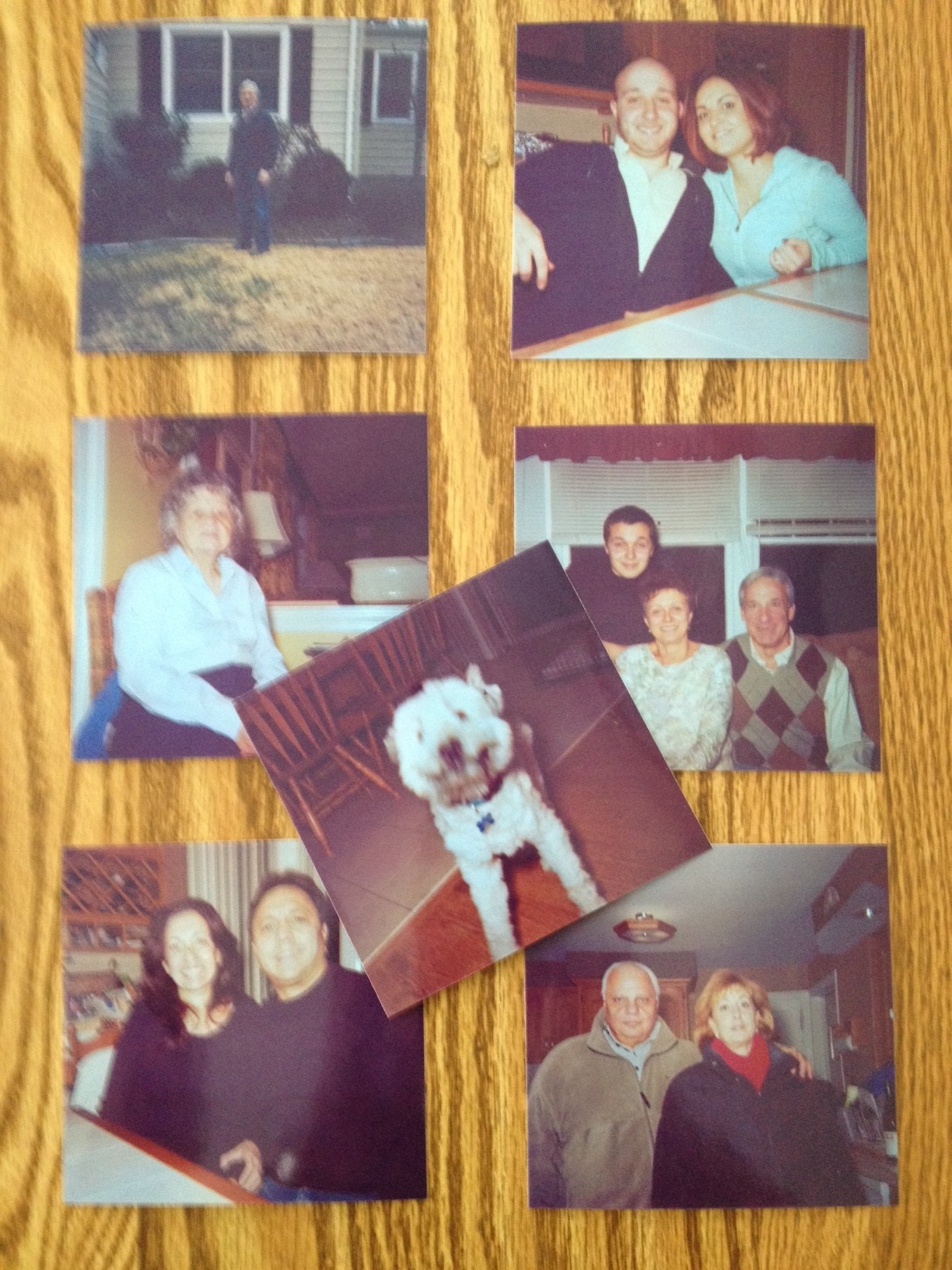
Family photos, courtesy of the Duaflex.

Family photos, courtesy of the Duaflex.

I was finally ready for a test shot of the family dog. The flash was accompanied by a crackle-popping sound like a small explosion, and the inside of the bulb turned hazy and gray with smoke – one step removed from flash powder. Its hot surface had partially melted and was bubbled with caramel-colored burnt spots. The dog was so startled, he spent the next hour cowering under the kitchen table.

I moved on to human subjects, snapping my wife and son, my son with his girlfriend, and even one shot of Mom. With each snap, I reflexively looked down at the camera, seeking digital gratification. No such luck. Once you finished a roll, you sent the whole thing away to be developed and wouldn’t know for a week or more if any pictures had turned out well.

As it turned out, none did. Apart from one backyard shot of the dog (which has gone missing – the photo, not the dog, who’s probably still under the table), they’re all dark, out of focus, or both. Either my technique, or the old equipment itself, was not up to the task.

But Maria liked the spent flashbulbs. Online she learned that people make vases out of light bulbs, and suggested we try the same thing. You removed the metal contact at the end of the bulb to create the opening, which was right up my alley: breaking things. I grabbed the nubby metal tip with pliers and twisted. It made a satisfying glassy crunching sound as I turned it back and forth to free it from the edge. Then I pulled the nub out of the bulb, still trailing gossamer traces of filament. I jammed a screwdriver into the hole, and rotated it to smooth the opening and clear away the underbrush of cloudy stuff filling the bulb. I shook out the tiny glass fragments, and the bulb was ready for mounting.

With synthetic modeling clay, we fashioned circular disks and baked them for 10 minutes to make them hard. Then we glued one onto the bottom of each bulb to create a flat platform, and the transformation was complete: each flashbulb was now a freestanding bud vase. Those unique handmade vases are now proudly collecting dust on a shelf in our family room.

The old camera had given us lemons, and we made more lemons.

Boiler Number 3: A Blast (of Soot, Sweat, and Broken Spirits) from the Past

Tags

, , , ,


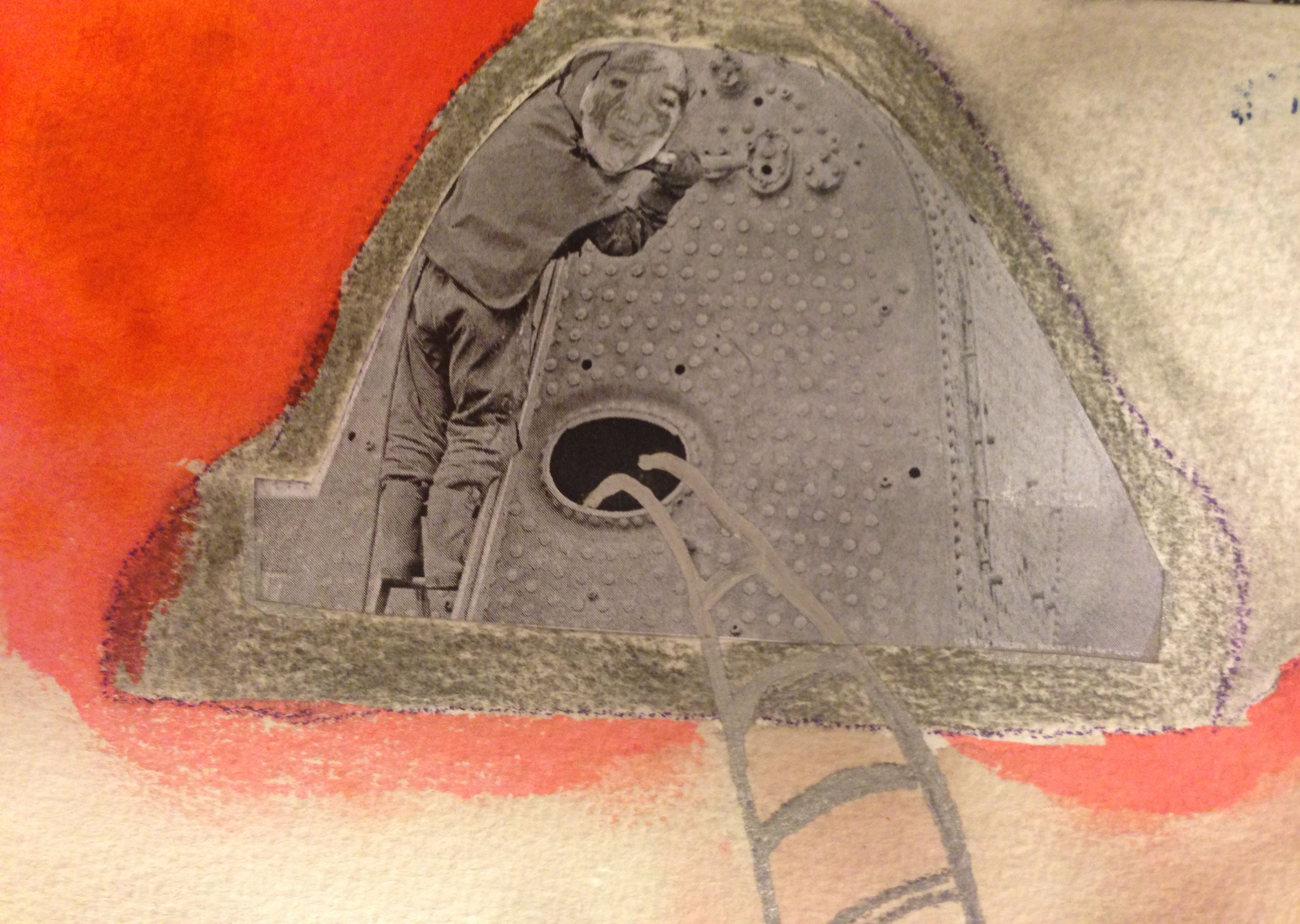
Bob and the boiler

Bob and the boiler

BY BOB SMITH

When my brother’s friend told us he knew a guy who would pay us $50 a day to clean boilers at some factory in Hackensack, it sounded too good to be true. It was the summer of 1971, I was 16, and that was roughly quadruple the then-prevailing minimum wage of $1.60 an hour. How bad could it be? We eagerly agreed.

The factory was a series of drab brick buildings in an industrial section of town near the railroad tracks. A grizzled guy in a uniform sat in the guardhouse – an upended glass and metal coffin in the middle of the driveway. He looked up from his magazine just long enough to direct us to the “power house,” a two-story brick building at the back of the property.

In front of the power house there were eight monster gas meters with round riveted faces the size of pizza pies. As we stood on the concrete platform waiting for someone to answer the buzzer, we could hear pressurized gas hissing in the pipes.

“You smell anything?” Jimmy asked, looking askance at the meters.

The foreman brought us into an open room where two 12-foot high, 12-foot square, concrete structures squatted, side by side, under long fluorescent lights. The hulks had “Boiler No. 2” and “Boiler No. 3” stenciled on their sides in alarming fire-engine red block letters.

“Okay guys, you’ll be starting on No. 3 today,” said the foreman. His name was Steve, and he ran this business cleaning boilers. But Steve didn’t actually do any work. He just supervised hapless suckers like us.

Steve quickly showed us what to do and hurried away.

“I got another job going across town. I’ll be back at lunchtime with sandwiches and sodas.”

It was simple. You crawled inside the boiler through a cast iron access door barely big enough to allow one person to wriggle through, carrying a narrow brush on a stick and a work light on a long extension cord. Once inside the boiler, you laid on the pipes that spanned the length and width of the unit, and used the brush to sweep piles of soot off the top surface of each pipe.

You started at the far end of the boiler, about eight feet from the access door, and worked your way down the length of the boiler. After knocking the soot off all the pipes, you opened another access door at floor level and shoveled the grimy, black powder into barrels for disposal. (This being New Jersey, probably in a landfill near a major source of drinking water.)

The soot built up on top of the pipes because the boilers were really gigantic ovens. When the array of gas burners at the bottom were fired up, the space inside was a blazing, white-hot inferno. That fact was not lost on me as I lay at the far end of the unit, far from that tiny access door, hoping the guy in the control room didn’t forget No. 3 was supposed to be down today for cleaning.

Then there was the soot. Steve insisted that before we went into the boiler we put on paper breathing masks, purportedly to prevent us from breathing in the black dust. However, within 15 minutes, the mask was useless – a sodden mass of soot, saturated with sweat. You had to pull it off your face to breathe at all – dust be damned.

By the end of the day, our clothes were heavy with embedded black ash, our hair matted tangles of soot, and our spirits broken. Like the Peanuts character Pig Pen, we exuded a cloud of dust with every step.

When we got home, I showered for a full half hour, watching the water run black as I scrubbed that persistent blackness from every pore, follicle, and crevice of my body. I spat and blew black from my nose for a week.

Being successful at a job, or at anything in life for that matter, often is a matter of just showing up. But sometimes not showing up is the better way to go.

Jim and I didn’t return for day two in Boiler No. 3.

My Sixth, Zero-Birthday, and Counting (On Two Hands)

Tags

, , , , ,

Frank bday

It’s my birthday.

BY FRANK TERRANELLA

Fingers. We have 10 of them. So ancient people decided that our numbering system would be based on 10 – one number for each finger. I bring this up because it causes us to get all worked up about birthdays ending in a zero. Does turning 50 or 60 or 70 really mean anything? The answer is that it does for many people.

The first zero-birthday that mattered to me was when I turned 30. Having grown up at a time when we were warned not to trust anyone over 30, there was some trepidation at reaching that milestone. Turning 40 was a bit more traumatic. It’s the entrance to “middle age.” It would have been tough to take no longer being “young,” except that by this time, I had two young children, and I knew full well what young was.

I can honestly say that turning 50 was a big snore. Oh sure, it’s a half-century, and that sounds really old. And the AARP comes to claim you. But all in all, it’s no worse than turning 40. That being said, my body sure knew the difference between 40 and 50. Cancer,” the “Big C,” hit me at 52, and again at 57.

That old saying is correct – you’re as old as you feel. Billy Crystal’s Fernando character on “Saturday Night Live” used to say that it doesn’t matter how you feel, as long as you look “mahvalus.” But I think it’s just the opposite. It doesn’t matter how you look, as long as you feel “mahvalus.”

All this is apropos of my turning 60 today. I have survived a decade that was hard on my health. But I can truthfully say that I am as healthy today as I was when I was 40. So for me, the idea that turning 60 is a milestone is strange. I don’t feel any older. That is not to say that I won’t take advantage of the senior citizen discounts that will now come my way. I certainly will. (If I remember I’m 60.)

Frank bday 2

I was “Medieval” in the ’60s.

Back in the summer of 1967, the Beatles released Sgt. Pepper’s Lonely Hearts Club Band. I was 14, and was playing lead guitar in a garage band called, The Medievals.

We played local dances, and actually got paid for it. My band mates and I sat and listened to Sgt. Pepper’s as soon as it came out. On Side 2 was a song called, “When I’m Sixty-Four,” that imagined a distant future, and the uncertainty of love surviving. At the time, I couldn’t imagine a time 50 years into the future when I would be 64. Now, it’s just four years away.

When I started writing for this blog, I wrote an article about the sands of an hourglass, and the days of our lives. I have had 21,915 days so far. Some of them have been dull; some exciting. Some lovely. Some terrifying. Many of them have been memorable. On my 60th birthday, I look forward to several thousand more memorable days. On to 70!

It’s All Relative: I’m Counting the Ways I Can Die

Tags

, , , ,

here and then there

Some of my relatives were here. And then there. Photo by Julie Seyler.

BY BOB SMITH

As I approach 60, I can’t help but speculate about how I’m going to leave this world. It’s not a morbid preoccupation, but a simple fact of life. As my generation grows older, more and more of us will die.

I’m fortunate to have been born into a large family. My father was one of nine children, and my mother, incredibly, was one of 21. Of course, there were two mothers in that family – my maternal grandfather had 10 or 11 children with his first wife, who was the oldest in a family of five girls. When she died (in childbirth, of course), he went back to Italy, married her youngest sister, and brought his new wife back to the United States where she bore him 10 or 11 more kids.

As Dad used to say: “He shoulda bought a TV.”

So now, as my aunts and uncles reach their 80s, and beyond, I’m learning what tends to kill my closest relatives. My generation’s on deck, and barring a catastrophic accident, there’s a pretty good chance that what’s killing them will also kill me.

First, my father’s side: Claiming primarily Irish lineage, they were talkers and jokers and partiers. True to stereotype, there seem to be an inordinate number of heavy drinkers among his siblings.

Take Dad’s older brother, Uncle Warren, a barrel-chested career cop who chain-smoked unfiltered Camel cigarettes, and drank Boilermakers (a shot of rye whiskey with a beer chaser). In his 60s, he got cancer of the larynx, and they removed his voicebox. The summer after his operation, Warren got an electrolarynx, a battery-operated device that resembles a microphone. You hold it up under your chin, and it vibrates to allow you to form robotic, but discernible words. Uncle Warren came to a backyard barbeque with Aunt Margie, a conservative ultra-religious woman, and used the electrolarynx to alternately tell jokes and goose his mortified wife.

About a year later, he developed cancer of everything and died at 68.

Dad’s youngest sister, Madeline, was diagnosed with liver cancer at age 64. The disease was swift and merciless, and she wasted to a frail shadow of herself before she died six months later. Dad died at 76 of congestive heart failure after a failed operation to repair a faulty valve. Uncle Bob, Dad’s younger brother and my namesake, died of lung cancer at 79. He briefly went through lung removal, and the indignity of chemotherapy, but still died within two summers of being diagnosed. Decades of heavy smoking, and heavier drinking, didn’t help any of them.

Dad’s oldest brother, Artie, died in his late 70s in a head-on collision as he drove the wrong way on a one-way street leaving an airport. There was no indication that drugs or alcohol were involved in the crash. Uncle Artie, the sweetest guy in the world, had spent years as a commercial pilot on transatlantic flights without a single incident. Uncle Norton, the next oldest brother and a heavy drinker for years, died of heart failure at 81.

So the score on my Dad’s side of the family: One brother, 80, and two sisters, in their late 60s/early 70s, still living and in good health. Cause of death for the six deceased siblings: Cancer (3), heart disease (2), accident (1).

My Mom’s side of the family is a different story. At 86, Mom thankfully has no serious life-threatening ailments. She does have creeping dementia, and takes medication for blood pressure and whatnot, but physically, she’s pretty much fine. Her older sister, Louise, died at age 90-something of old-age onset breast cancer. Her brother, Billy, died at 80-something of old-age onset kidney failure. Her father died in his 80s of old-age-onset diabetes. Another sister died of old-age-onset, period – at 98 or so, she just stopped breathing. Lots of them are still around, and getting older all the time. You get the picture.

So from my Dad’s side it looks like cancer or heart disease are good bets, but I don’t smoke or drink heavily so maybe I’m improving those odds. Thankfully, I look more like my mother’s side of the family. In fact, Mom says I look a lot like her dad (of the two wives and kids in litters), which gives me hope. If it weren’t for menopause, I suppose that might also give my wife (or her younger sister) jitters, but they’ll get over it.